

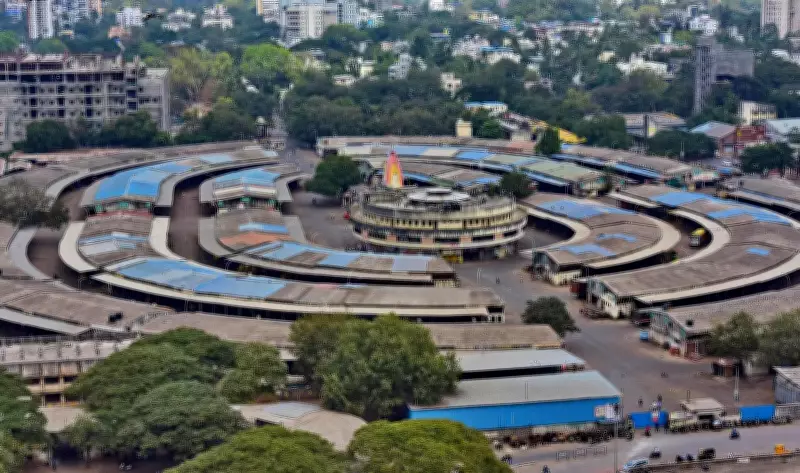
Traders and market unions at the Agricultural Produce Market Committee (APMC) in Pune have strongly opposed the market committee's decision to impose an additional 1% user charge on unregulated commodities that are currently exempt from cess tax. They warn that this move will increase business costs, push up prices of essential goods, and ultimately burden consumers. The traders have threatened to launch an indefinite strike from June 13 if the decision is not withdrawn.
Impact on Commodity Prices
According to traders, the levy will increase the cost of handling and trading commodities such as sugar, edible oil, pulses, dry fruits, and other goods sold in the Market Yard. They claim that the additional burden will inevitably be passed on to consumers, leading to higher retail prices and adding to inflationary pressures. Rajendra Bathia, president of the Poona Merchants' Chamber, stated that consumers are already struggling with rising fuel prices, increased transportation costs, and higher prices of essential commodities amid geopolitical tensions in West Asia.
Bathia elaborated: Imposing an additional 1% user charge will only fuel inflation, as the burden of the levy will ultimately be borne by consumers. The price of pulses could rise by around Rs 150 per quintal, sugar by Rs 50 per quintal, atta, rava, and maida by nearly Rs 40 per quintal, while edible oil may become costlier by about Rs 30 per tin. Currently, traders pay annual maintenance charges of around Rs 60,000 for a 3,000 sq ft godown and about Rs 40,000 for tin sheds within the Market Yard. Once implemented, the new levy would require traders to pay Rs 1 for every Rs 100 worth of transactions involving non-regulated commodities.

Traders' Concerns
Trader Raikumar Nahar highlighted the thin profit margins: We operate on extremely thin margins. Our profit on an oil can worth Rs 2,500 to Rs 2,600 is barely Rs 10 to Rs 15. Paying an additional 1% charge to the APMC would wipe out our earnings and push us into losses. Another trader, Ashish Duggad, said prices of commonly consumed items such as pohe, rice, rava, and sabudana would also increase if the levy is enforced.
Background of the Levy
The proposal stems from a 2022 government resolution empowering local APMCs to levy user charges on commodities exempt from cess tax. Officials said Pune APMC sought approval from the Maharashtra State Agricultural Marketing Board before deciding to implement the charge. A circular regarding the levy was issued last week. APMC chairman Prakash Jagtap defended the move, stating that the levy is expected to generate an additional revenue of Rs 10 crore to Rs 15 crore and is being introduced in accordance with existing regulations.
Jagtap said: The additional revenue will be used to improve infrastructure, maintain cleanliness, and strengthen security arrangements within the Market Yard. Complaints of theft are reported frequently, and these funds will help us provide better facilities to traders. The proposal has triggered a wider debate across Maharashtra, with trader associations and consumer groups, including Grahak Panchayat, discussing its likely impact at a meeting held on Sunday. Several participants expressed concern that if implemented in Pune, the levy could become a model for APMCs across the state.
Regulatory Perspective
A senior APMC official said nearly 1,000 commodities are traded commercially at Pune APMC, but only 66 currently fall under the cess-tax category. The remaining commodities are exempt and therefore remain outside the regulatory framework. APMC secretary Rajaram Dhondhkar said the levy would help the committee maintain records of trade in these commodities and improve market regulation.
Dhondhkar explained: At present, we do not have accurate data on the volume of these goods being traded. The user charge will help us regulate such transactions, maintain records, and plan commodity-specific initiatives. Since the charge applies only within the APMC premises, it will also help us identify and act against unlicensed traders operating illegally outside the Market Yard.






