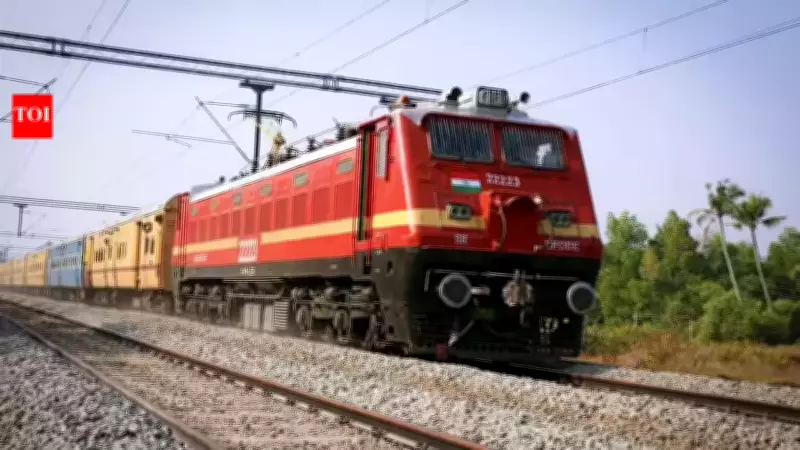
NEW DELHI: Indian Railways has projected its earnings from passenger movement to reach Rs 87,300 crore in the financial year 2026-27, marking a modest increase of just over 9% compared to the revised estimate for the current fiscal year. This growth is attributed to the ongoing introduction of new-age trains, including Vande Bharat chair car and sleeper variants, as well as Amrit Bharat trains, alongside the addition of conventional train services.
Passenger Revenue Adjustments and Freight Projections
However, the railways has revised downward its passenger transport revenue for the current year from the Budget Estimate of Rs 92,800 crore. This adjustment stems from an anticipated nearly 10.6% decline in the kilometers traveled by passengers by March 2026, reflecting changing travel patterns or external factors affecting demand.
In the freight segment, the ministry has set an earning target of approximately Rs 1.88 lakh crore for FY 2026-27. This figure matches the Budget Estimate for FY 2025-26 and represents a 6% increase over the revised estimate for the current fiscal year. Despite this optimistic projection, data indicates that railways is likely to generate around Rs 1.78 lakh crore by March of the current year, falling short by about 5.5% from the initial target.

Factors Behind Revenue Shortfalls
Significantly, the revenue from goods transport is expected to miss its target even though railways has maintained its freight loading goal of 1,700 million tonnes for this year. Analysis of the data reveals that the shortfall is primarily due to a reduction of approximately 1% in the distance over which goods are transported by rail. This suggests that shipments may be covering shorter routes than initially estimated, impacting overall earnings.
Minister's Insights on Railway Performance
Responding to queries about the national transporter's earnings, Railway Minister Ashwini Vaishnaw addressed the media on Monday, emphasizing that railways has consistently increased revenue from both passenger and freight operations. He provided detailed figures, noting that passenger revenue rose from Rs 70,693 crore in FY 2023-24 to Rs 1.75 lakh crore in 2024-25, with the revised estimate for FY 2025-26 standing at Rs 80,000 crore.
Similarly, in the freight segment, revenue increased from Rs 1.68 lakh crore in FY 2023-24 to Rs 1.71 lakh crore in 2024-25, and is pegged at Rs 1.78 lakh crore in the revised estimate for the current fiscal year. Vaishnaw highlighted this upward trajectory as evidence of railways' operational efficiency and growth.
Explaining Target Misses and Future Goals
When questioned about why railways is unlikely to meet its Budget Estimate targets, Minister Vaishnaw explained that the government sets "aspirational" goals to motivate higher performance levels. He added that railways has recorded net revenue for the past three consecutive years, demonstrating robust management of day-to-day operations and financial health.
According to budget documents, with higher projected income, railways aims to improve its operating ratio from 98.82% in the current fiscal year to 98.4% in FY 2026-27. The operating ratio measures the amount spent to earn every Rs 100, with a lower ratio indicating better efficiency. Furthermore, railways targets closing the next fiscal year with a net revenue of Rs 3,000 crore, which would be approximately 35% higher than the Rs 1,957 crore estimated for FY 2025-26.