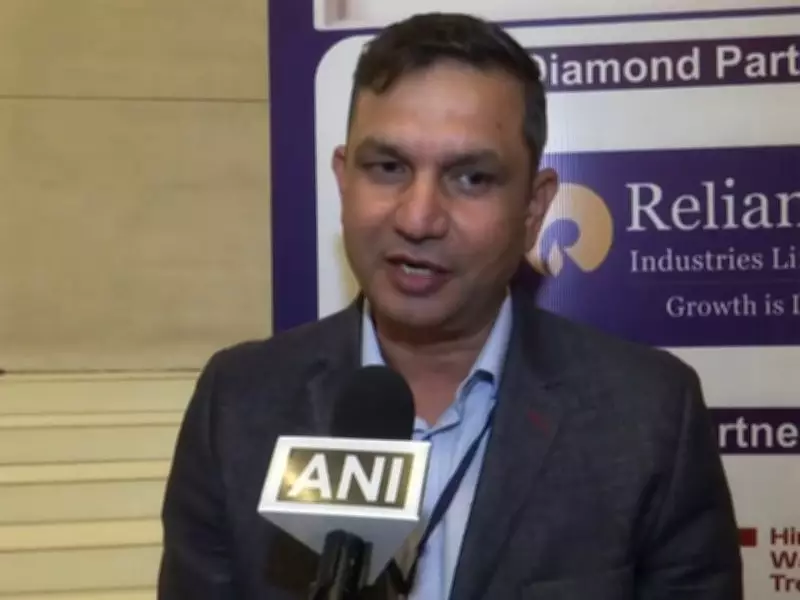
Reliance Industries has invested approximately Rs 6,500 crore in the compressed biogas (CBG) sector, with 55 plants currently under execution and 41 already operational, according to Ashwani Kumar, Senior Executive Vice President of Reliance Industries Ltd. These plants account for nearly 25 percent of India's planned CBG ecosystem, and the company has a long-term target of establishing 500 CBG plants.
Reliance's CBG Investment and Current Operations
Speaking to ANI on the sidelines of a CII event in New Delhi, Kumar stated, "We have already put in our commitment by putting 6,500 crores, 55 plants. Out of the entire (CBG plants in India) almost 25% of the CBG plants are from Reliance. We want to expand it to another 500." This investment underscores Reliance's leadership in India's CBG push.
Kumar highlighted that CBG is emerging as a key clean energy carrier beyond its traditional role in waste management and nutrient recovery. It produces methane, which can be integrated into existing gas infrastructure and used across multiple applications, thereby reducing dependence on imported fossil fuels.

CBG Integration and Applications
"The good thing with CBG is that it generates a molecule which is methane. You can use methane and convert it into jet fuel, aviation fuel and other kinds of energy. It can be used directly and we can inject it in the pipe," Kumar explained. He noted that integration of CBG into city gas distribution (CGD) networks is technically feasible and already being implemented in developed markets such as the United States and Europe, subject to strict quality monitoring systems.
"This is a very common thing in the United States and across Europe. The gas distribution line gets a tapping and it is injected in those lines. There is a strict monitoring protocol through gas chromatographs to ensure the right molecules are being put in the pipeline," he said.
Long-Term Roadmap and Energy Transition
Kumar said Reliance has a long-term roadmap for scaling up its presence in the CBG sector as part of its broader clean energy strategy. He emphasized that CBG should be seen as a structural pillar of India's energy transition, especially as countries globally move towards cleaner and more domestic fuel systems amid supply disruptions and geopolitical uncertainty.
"The world has changed forever. Everyone is looking for alternate ways of energy after massive disruptions in supply," he said. India's energy transition is being driven through a hybrid approach that combines multiple fuels and technologies rather than relying on a single pathway. "India has taken a hybrid kind of approach. We are using ethanol, we are banking on CBG," Kumar added.
Ethanol and Self-Sufficiency
Kumar also underlined that India's energy strategy is focused on long-term self-sufficiency and diversification of fuel sources. He noted that ethanol is fully capable of replacing petrol as a transport fuel and that India can learn from Brazil's long experience in ethanol adoption since the 1970s. The transition will depend on execution, technology integration, and coordination with automobile manufacturers to ensure engine readiness for higher ethanol blends.