

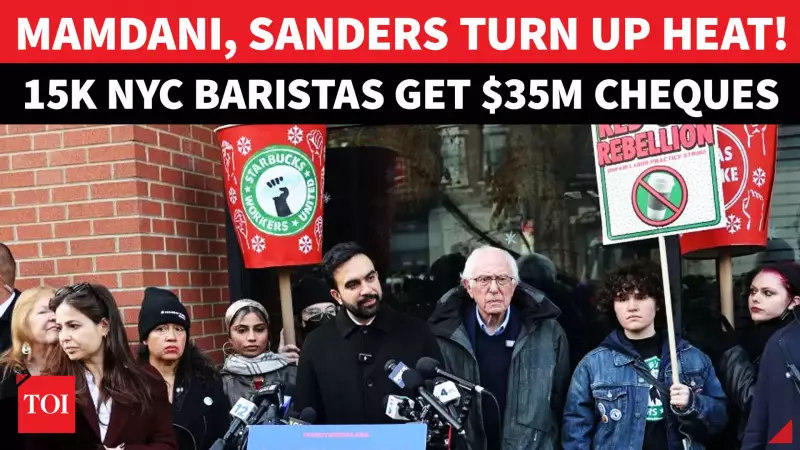
In a significant victory for labour rights, over 15,000 Starbucks baristas in New York City have secured a landmark $35 million settlement from the coffee giant. The breakthrough came just hours after a massive picket line in Brooklyn received high-profile backing from US Senator Bernie Sanders and New York City Mayor-elect Zohran Mamdani.
Political Heavyweights Back Worker Demands
The sight of prominent political figures joining the striking workers sent a powerful message. Senator Bernie Sanders, a long-time advocate for workers' rights, and Mayor-elect Zohran Mamdani stood shoulder-to-shoulder with baristas demanding fair treatment. Their presence amplified the workers' struggle for stable schedules and adequate staffing across hundreds of unionised Starbucks stores in the city. This public demonstration of solidarity underscored the growing political support for the labour movement's fight against corporate practices.
Details of the Landmark Settlement
The $35 million settlement, announced by city officials, addresses critical grievances held by the workforce. The payout is designed to cover back pay and violations of the city's Fair Workweek law. This legislation is crucial for service industry workers, as it mandates predictable schedules and protects against last-minute shift changes. Beyond the financial compensation, Starbucks has also agreed to future compliance with these labour regulations, marking a substantial concession from the company.

The settlement is a direct result of the persistent organising efforts by Starbucks Workers United. The strike highlighted the ongoing battle for dignity and respect in the fast-food and service sectors, where erratic scheduling and understaffing have been persistent issues.
A Powerful Message and a Path Forward
For the thousands of baristas involved, this outcome is more than just a financial win; it is a validation of their collective voice. Workers are celebrating the result as a decisive step toward being heard and respected by their employer. The agreement sends an unambiguous message to large corporations: that fair treatment and adherence to labour laws are non-negotiable.
This event in New York City is likely to resonate with organised labour movements across the United States and beyond. It demonstrates the potent combination of worker solidarity, unionisation, and political advocacy in achieving tangible results. The success sets a precedent and could inspire similar actions in other cities where workers are fighting for better conditions.






