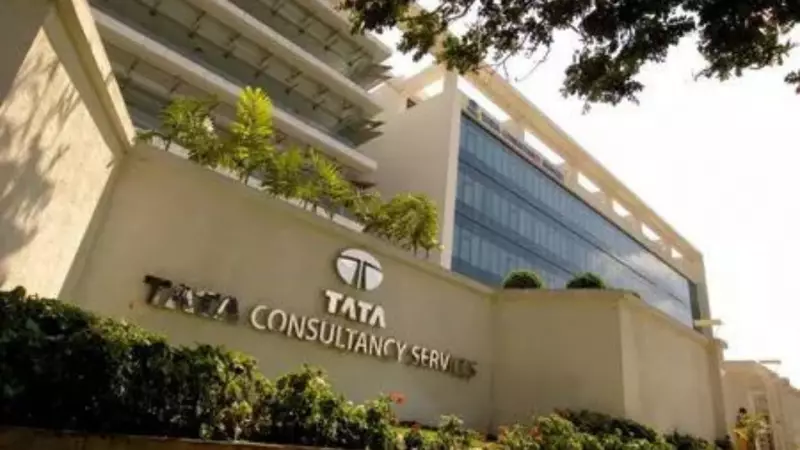
TCS Reports Mixed Q3 Results: Revenue Misses, AI Growth Shines
Bengaluru-based Tata Consultancy Services (TCS) delivered a December quarter performance that did not meet market expectations. Analysts had projected stronger numbers for both revenue growth and earnings margins. The global economic uncertainty continues to impact client spending patterns across various sectors.
CEO Krithivasan Expresses Confidence in Sustained Momentum
In an exclusive interview, TCS CEO K Krithivasan addressed the company's outlook. He pointed to positive indicators suggesting the current demand improvement will continue into 2026. "The total contract value remains robust, even though this is traditionally a weaker quarter," Krithivasan stated. He emphasized that clients are now moving beyond experimentation with artificial intelligence.
"Many real AI projects are going live in production environments," the CEO explained. "Customers are signing new projects based on clear return on investment calculations and payback periods. This demonstrates their willingness to engage with us on both cost optimization and digital transformation initiatives."

AI Services Revenue Shows Impressive Growth Trajectory
TCS reported significant progress in its artificial intelligence business. The company's AI services revenue reached $1.8 billion on an annualized basis this quarter. This represents a substantial increase from the $1.5 billion reported in the previous quarter.
Krithivasan highlighted why rapid AI projects are gaining traction. "These projects deliver defined, committed outcomes within short timeframes," he said. "While AI currently contributes incrementally to our revenue, we expect it to become materially significant over time."
Hiring Strategy Adapts to Changing Technology Landscape
TCS Chief Human Resources Officer Sudeep Kunnumal addressed questions about the company's workforce strategy. Despite a reduction of approximately 31,000 employees over the last two quarters, Kunnumal emphasized that demand for high-quality talent remains strong.
"We continue to hire actively while making substantial investments in upskilling our existing workforce," Kunnumal confirmed. The company maintains a multi-channel hiring approach, recruiting from campuses, lateral markets, and leadership roles globally.
Regarding campus hiring targets, Kunnumal declined to commit to specific numbers. "Demand is robust, and traction remains strong," he said. "We are actively hiring from campuses at scale. Over recent years, we have implemented a tiered salary and talent structure, with significantly increased hiring in higher tiers."
US Hiring Strategy Reduces Dependency on H-1B Visas
TCS has adjusted its approach to the United States market. The company applied for approximately 1,000 H-1B visas but may not utilize all of them. "We invested heavily in building strong local employer brands over many years," Kunnumal explained.
"During the current quarter, we met most requirements through local hiring in the US," he added. "This has reduced our dependency on H-1B visas. We remain committed to hiring around 15,000 people locally in the United States over the next three to five years."
Data Center Investments Focus on Cost Advantages
CEO Krithivasan addressed investor concerns about data center investments. He emphasized that TCS's investment strategy is grounded in strong domestic demand. "Data center costs in India are approximately 30% lower than in western markets," Krithivasan noted.
This cost advantage makes India particularly attractive for AI training and inference operations. The growing need for sovereign data centers further supports this investment thesis. "With a balanced mix of debt and equity financing, we do not see material downside risks," Krithivasan concluded.
The company maintains that while discretionary spending remains selective among clients, demand for technology-led transformation shows resilience. TCS continues to navigate the evolving technology landscape while positioning itself for future growth opportunities.