Tim Cook's White House Appearance Sparks Political Controversy Amid National Unrest
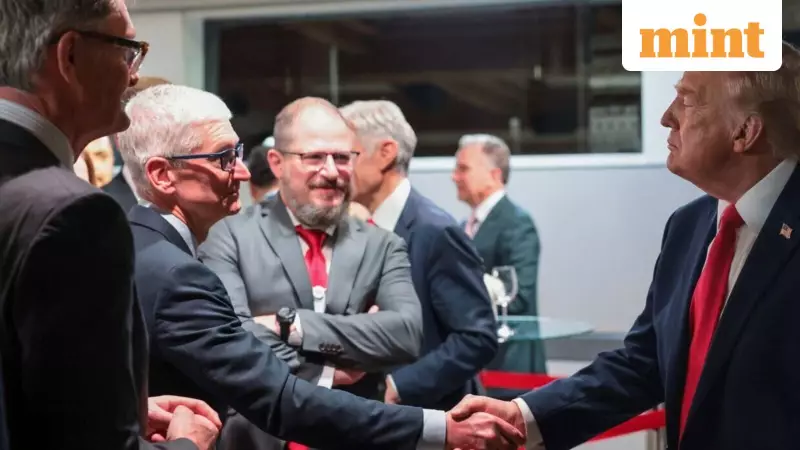
The delicate balancing act of corporate leadership in polarized political times faced a severe test this weekend as Apple CEO Tim Cook found himself at the center of a brewing storm. While protests erupted in Minneapolis following the death of Alex Pretti at the hands of federal immigration agents, Cook was photographed smiling in a tuxedo at a White House event honoring President Trump and the first lady.
The Stark Contrast That Exposed Corporate Political Navigation
The visual juxtaposition could not have been more dramatic. On one hand, social media feeds filled with videos of street protests and community outrage in Minnesota. On the other, circulated images showed Cook alongside filmmaker Brett Ratner at an exclusive screening of a documentary about Melania Trump. This moment crystallized the fraught position that Cook and the broader technology industry increasingly occupy: maintaining access to political power while attempting to project an apolitical public image.
Other technology titans including Amazon CEO Andy Jassy also attended the VIP gathering, but Cook's presence proved particularly controversial given Apple's global brand recognition and the CEO's carefully cultivated reputation as a social justice advocate. While some traditional administration allies expressed concerns about the Minnesota situation, Cook maintained public silence, with Apple declining to comment on the matter.

Swift Public Backlash and Corporate Reckoning
The reaction against Cook was immediate and intense across social media platforms. Calls to boycott Apple products trended alongside declarations from users about switching to Google's mobile operating system. Dan Pfeiffer, prominent liberal commentator and former Obama administration official, captured the sentiment on X: "This is so embarrassing for Tim Cook."
The weekend's events fueled broader populist anger about how technology companies have benefited from their relationships with the Trump administration. Critics noted that Apple received special tariff exemptions for iPhones manufactured overseas while other companies and consumers faced economic uncertainty. This highlighted how corporate political engagement can become a liability when political winds shift, particularly if midterm elections alter the balance of power in Congress.
Cook's Washington Playbook: Behind-the-Scenes Influence
For business leaders navigating today's divisive political landscape, Cook had previously served as something of a template. He demonstrated how corporate executives could engage with the Trump administration to secure advantages for their companies while ostensibly remaining on the political sidelines. Operating largely behind closed doors, Cook developed what observers described as a genuine rapport with the president.
Earlier this month in Davos, Trump publicly praised Cook, stating simply: "He's great." This relationship-building approach mirrored Cook's strategy in other global markets, including China, where he has worked closely with local governments to create favorable conditions for Apple's operations.
The Technology That Enabled the Political Moment
A profound irony underlies the current controversy: Cook is arguably most responsible for popularizing the very technology that has made this political moment possible. The widespread availability of camera phones, particularly iPhones, has transformed how citizens document and share instances of government action.
Numerous videos of federal officials' actions during the Minnesota incidents have circulated widely, often contradicting official accounts from administration representatives. This has fueled a powerful rallying cry: "Believe your eyes, not the lies." Cook himself has acknowledged this transformative power, telling CBS's "60 Minutes" in 2020: "If you look back in time, some of the most dramatic societal changes have occurred because someone captured video."
He made those comments following George Floyd's killing in Minneapolis, when cellphone footage helped spark nationwide protests during Trump's first term. That moment of national uncertainty bears striking resemblance to current circumstances, yet Cook's response has been markedly different this time.

The Evolving Corporate-Political Relationship
Cook's approach to Washington has evolved significantly since Trump's first term. In early 2017, the Apple CEO publicly challenged the administration, telling The Wall Street Journal that Apple was considering legal action over immigration policies. The start of the second term presented a different dynamic, with Cook and other technology leaders standing alongside Trump during his second inauguration.
Since Trump's re-election, industry leaders have generally maintained lower public profiles regarding political matters compared to the early days of the first administration. The VIP screening Cook attended was for a documentary that Amazon financed substantially, scheduled just before Trump's return to office.
The New Risks of Corporate Political Engagement
While Cook has largely avoided the direct political blowback that figures like Elon Musk have experienced—Apple stores haven't faced protests, investors have remained supportive, and iPhone sales continue—this weekend's backlash suggests there are limits to corporate political navigation. The balancing act that once seemed masterful now appears increasingly precarious.
Cook's current position represents a significant departure from his previous public stance. During earlier moments of national crisis, he invoked Martin Luther King Jr.'s words and called for action. Today, his strategic silence places him on the sidelines during another period of national reckoning, creating new uncertainties for Apple, the broader technology sector, and Cook's own legacy as a corporate leader.
The Minneapolis situation continues to develop as federal agents clash with local protesters amid deportation efforts targeting immigrants who entered the country illegally. As videos documenting these events circulate globally—many captured on iPhones—the technology that Cook helped popularize continues to shape political discourse, even as the corporate leader who championed it faces mounting criticism for his political positioning.