Nationwide Trade Union Strike Disrupts Normal Life in Bihar Capital
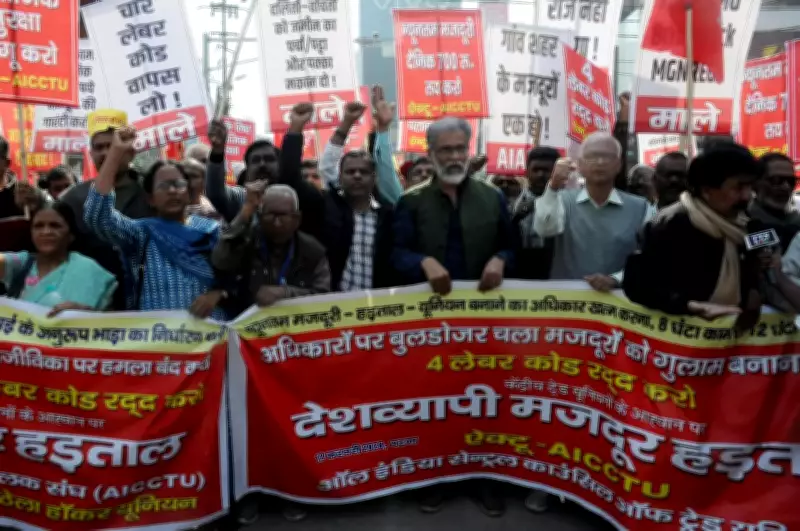
A one-day nationwide strike organized by trade unions to protest against the central government's alleged anti-worker policies partially affected normal life in Patna, the capital of Bihar, on Thursday. The demonstration specifically targeted the proposed four Labour Codes, which unions claim undermine workers' rights.
Massive Protest March and Road Blockade
The protest, spearheaded by the All India Trade Union Congress (AITUC), witnessed a significant turnout of workers, employees, and union members. Participants marched from the General Post Office (GPO) to Dak Bungalow Chauraha, where they effectively blocked the intersection for nearly two hours, bringing traffic to a standstill in the area.
Banking Sector Paralyzed Across Bihar
The strike's most substantial impact was felt in Bihar's banking sector, where approximately 9,000 bank branches and the majority of the state's 4,200 ATMs were affected. This widespread disruption halted business transactions worth crores of rupees, creating significant inconvenience for customers and businesses alike.

Transport Services Grind to a Halt
The transport sector remained completely paralyzed throughout the strike action. Members of the All India Road Transport Workers Federation, the Patna District Autorickshaw Drivers Union, and the Bihar Motor Cab Drivers Union collectively halted operations, leaving commuters stranded and disrupting daily movement across the state.
Key Demands from Banking Sector Representatives
Utpal Kant, General Secretary of the Indian Bank Employees Union (Bihar), articulated several critical demands from the financial sector. These included comprehensive pension reforms and improved working conditions for bank employees. Kant specifically reiterated the unions' demand for implementing a non-contributory Old Pension Scheme (OPS) for all bank employees appointed after April 2010.
"We are calling for the immediate implementation of a five-day banking system and adequate recruitment in all nationalized banks," Kant emphasized during the protest.
Widespread Participation Across Bihar
Ajay Kumar, Bihar General Secretary of AITUC, reported that nearly 15 lakh employees participated in the strike across Bihar, with approximately three lakh participants in Patna alone. Kumar issued a stern warning to the government, stating that if their concerns remain unaddressed, unions would reconvene in March to consider organizing a week-long strike across various sectors.
Political Support and Parallels Drawn with Farm Laws
CPI(ML) General Secretary Dipankar Bhattacharya joined the protest at Dak Bungalow Chauraha, delivering a strong condemnation of the four Labour Codes. "These codes represent a conspiracy to strip workers of their rights and provide legal protection to the whims of capitalists," Bhattacharya declared.
Drawing direct parallels with the recently repealed farm laws, Bhattacharya asserted that workers would similarly force the withdrawal of these labor reforms through sustained protest. He further highlighted the plight of rural laborers, noting that unions are demanding 200 days of work and a minimum wage of Rs 600 per day under the Mahatma Gandhi National Rural Employment Guarantee Act (MGNREGA).
Strike Success Acknowledged with Public Apology
Rajkumar Jha, General Secretary of the All India Road Transport Workers Federation (Bihar), expressed satisfaction over the strike's success in achieving its intended disruption. However, he extended a formal apology to the public for the inconvenience caused to commuters during the shutdown, acknowledging the broader impact on daily life.
The nationwide strike has brought renewed attention to labor rights issues in India, with trade unions demonstrating their organizational strength and willingness to disrupt economic activity to press their demands for worker protections and improved working conditions.