The Unlikely Industrialist: How T.V. Sundram Iyengar Built an Empire
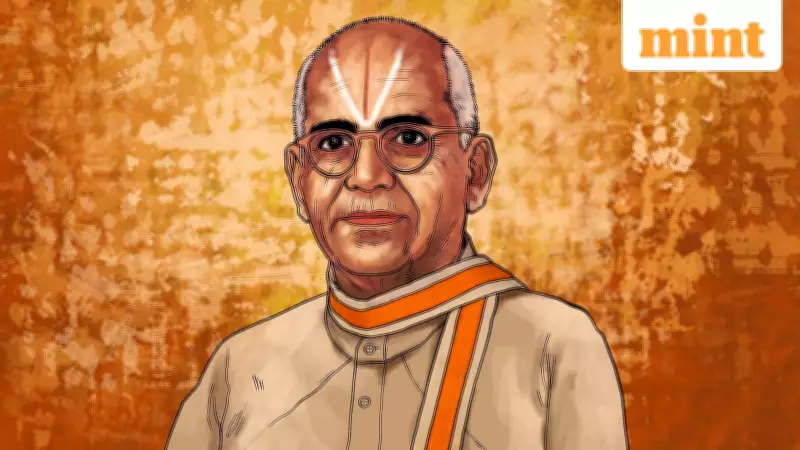
In the 1930s, the air in Madurai carried a peculiar blend of scents. Within the home of Thirukkurungudi Vengaram Sundram Iyengar, the traditional fragrance of sandalwood incense mingled with the sharp odor of motor oil. This olfactory paradox perfectly captured the essence of the man himself—a figure rooted in Brahminical tradition who would become one of India's pioneering industrialists.
From Banking Rejection to Business Revolution
Born in 1877 in Thirukkurungudi, Iyengar trained as a lawyer and worked as a clerk at the Bank of Madras. His career trajectory seemed set until a pivotal moment changed everything. After taking leave to attend his father's funeral, the bank passed him over for promotion. This professional slight became the catalyst for his extraordinary journey.
Walking away from the security of a fixed salary, Iyengar first ventured into the timber trade before discovering his true calling in transportation. In 1911, he founded T.V. Sundram Iyengar and Sons in Madurai. Just one year later, he launched what would become one of India's first organized passenger bus services.

Pioneering Transportation with Precision
With two imported Dennis and Commer buses running between Madurai and Devakottai, Iyengar's service covered 64 miles at a cost of ₹4, including a complimentary meal. At a time when internal movement for Indians was largely restricted to slow-moving bullock carts, this represented an administrative miracle.
But Iyengar didn't just launch the service—he ensured it operated with military precision. Historian V. Sriram notes: "The TVS group was built on the bedrock of a single individual's integrity... It was said that you could set your watch by a TVS bus, and if it was late, it was because the sun had risen late."
Strategic Expansion and Wartime Innovation
The business grew steadily through strategic moves. By 1929, TVS secured a General Motors dealership for southern Tamil Nadu. The company expanded further with a tyre retreading factory in Pudukottai and, in 1936, acquired Madras Auto Service Ltd, which became one of India's largest General Motors distributors.
World War II presented both challenges and opportunities. When petrol became scarce, threatening transportation across India, Iyengar demonstrated remarkable ingenuity. He had his son T.S. Krishna design a charcoal-powered gas generator. Not only did Iyengar retrofit his own fleet with this innovation, but he manufactured 12,000 units and sold them across the country, keeping Ford and Chevrolet trucks operational during the fuel crisis.
The Personal Revolution Beneath the Orthodoxy
The true measure of T.V. Sundram Iyengar extended far beyond business ledgers. A teetotaler, vegetarian, and practitioner of extreme discipline who rose long before dawn, he appeared the epitome of traditional asceticism. Yet beneath this orthodoxy beat the heart of a social radical.
When his daughter, T.S. Soundram, was widowed in her late teens during the 1920s, tradition dictated a life of shaven-headed seclusion. Instead, influenced by Mahatma Gandhi—who served as spiritual guide to the family—Iyengar did the unthinkable. He refused to let tradition bury his daughter's future, urging her to continue her studies and later blessing her remarriage to fellow freedom fighter G. Ramachandran in November 1940.
In a society where widow remarriage was taboo, this constituted social rebellion. Soundram went on to become a powerhouse in her own right, founding Gandhigram Rural Institute in 1947, becoming a doctor, and serving as Union deputy minister for education in 1962.
Building a Lasting Legacy
By the time of his death in 1955, the TVS Group had become one of South India's largest conglomerates, with Sundaram Motors established in 1945 and Sundaram Finance in 1954. Under successive generations of leadership—including grandsons Suresh Krishna, Venu Srinivasan, and Gopal Srinivasan—the group achieved a rare feat in Indian business: scaling to multi-billion-dollar size without losing the founder's obsession with ethical practices.

In an economy often criticized for shortcuts, TVS became a global standard-bearer for quality. In 1998, Sundram Fasteners became the first Indian company to win Japan's prestigious Deming Prize for quality management. Sundaram Finance built its reputation on a foundational principle: a customer's word was binding, even without collateral.
The Industrialist's Ethos
T.V. Sundram Iyengar's combination of business audacity and strong social ethos was characteristic of India's early industrialists. Like J.N. Tata, who built the country's first steel plant and endowed its first research institute, and G.D. Birla, who funded Gandhi's ashrams while running textile mills, Iyengar operated with an acute understanding that profit was a means, not an end.
His legacy endures not just in the corporate empire he built, but in the values he embedded within it—integrity, innovation, and the courage to challenge convention both in business and society.