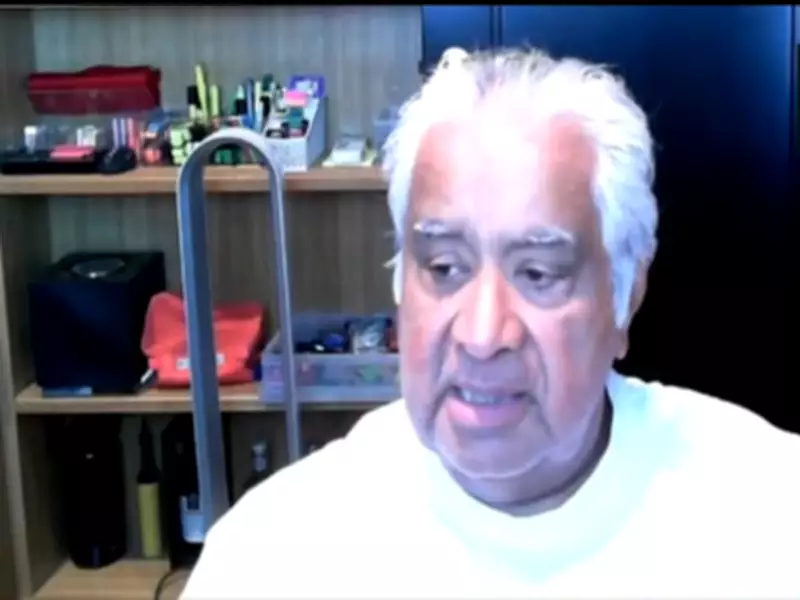
Salve Calls US Case Against Adani a Political Move
Senior Advocate Harish Salve has asserted that the US Department of Justice (DoJ) case against Gautam Adani and others was filed merely as a 'name and shame' exercise designed to levy accusations without any prospect of a trial occurring. Speaking to ANI, Salve stated that the original indictment reflected a broader political agenda rather than a standard legal proceeding.
Biden Administration's Anti-India Narrative Alleged
Salve said, "This is what I have always said, at least it was my view, that the timing of this was such that the Biden administration had a constant anti-India narrative running." He added that certain US senators constantly try to paint India in a bad light on issues like human rights and corruption. "They were trying to pressure India. I don't think it's any secret. The Biden administration was not in love with India," Salve remarked.
US DoJ Defends Dropping Charges
The US Department of Justice strongly defended its decision to drop the high-profile charges, citing evidentiary weakness, jurisdictional overreach, and constitutional limits on judicial power. In its reply, the DoJ argued that forcing prosecutors to spell out their reasoning in detail could undermine constitutional authority over prosecutorial decisions. Prosecutors noted that the alleged case took place in India, making it inappropriate for US prosecutors to pursue.

Evidentiary Problems and Jurisdictional Issues
The DoJ stated that the case was weak due to evidentiary problems, with most alleged evidence based in India, complicating US prosecution. Legal experts observed that the firm stance taken by the DoJ leaves the presiding judge with very little room to keep the matter alive.
Judge Likely to Close Case Soon
Salve commented on the likely outcome: "Will the judge close the case soon? I think he will have to. After this, he may have to. I don't see why he will not close it." He emphasized the constitutional separation of powers, noting that prosecutorial power lies with the executive, not the judiciary. "They are telling the judge whether to prosecute or not is for us to decide, not for you," Salve added.
Unusually Firm Language from DoJ
Salve observed that the tone used by the US Justice Department in its response was remarkably firm, even by American standards. "American English, the way they address courts and the way they write, is very different from even the British here in England. India is even more deferential. America is more direct. Even their judgments are in more direct language. So you have to account for that. Even by the American standard, this is a pretty hard-hitting statement," Salve explained. He added, "They even said that they were not satisfied. They should never have brought this case."
Background of the Case
The case against Gautam Adani and others had alleged a bribery scheme linked to solar power contracts in India, which further allegedly misled US investors. In May 2026, the US DoJ moved to dismiss these charges, after which the US Court of the Eastern District of New York sought a reply from the DoJ. With that reply cementing the DoJ's position, legal experts argue that the judge in all likelihood will back the DoJ stand.