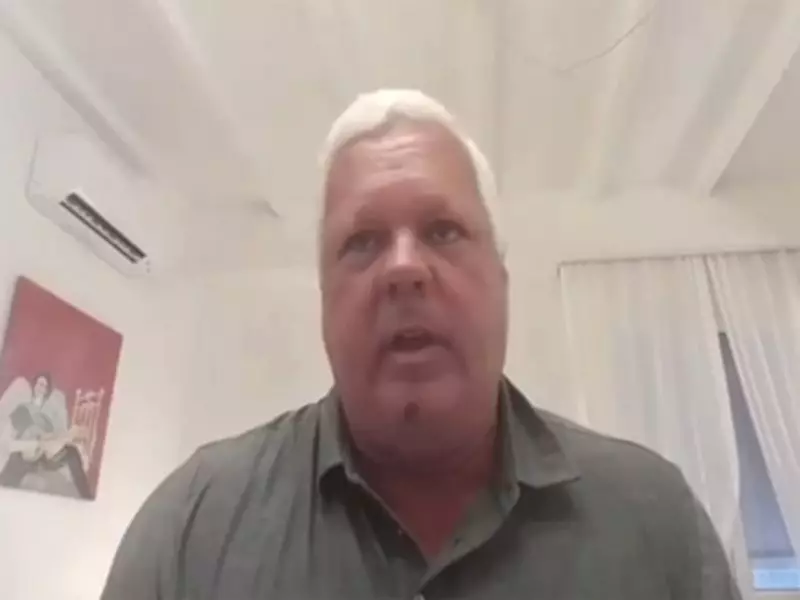
US legal expert Chris Man has described Judge Nicholas Garaufis's recent order regarding the Department of Justice's (DOJ) motion to dismiss the indictment against the Adani Group as a routine procedural step, noting that such judicial oversight is standard practice rather than an indication of a major legal hurdle.
Judge Orders Justification for Dropping Charges
Judge Nicholas Garaufis had passed an order asking the US Department of Justice to justify dropping charges against Gautam Adani and Sagar Adani. Speaking with ANI, Chris Man, a partner at the prominent law firm Steptoe and a recognised leader in international white-collar and corporate defence, weighed in on the matter. With a distinguished track record of representing high-profile individuals, including Hunter Biden, and major corporations like Walmart in complex DOJ and SEC investigations, Chris Man is widely regarded as a significant legal voice on cross-border criminal and regulatory proceedings.
Routine Process Under Federal Rules
He explained that while the court has a "leave of court" requirement under federal criminal rules to consider a prosecutor's motion to dismiss, the executive branch maintains significant discretion. "It is a fairly routine process. The Department of Justice has great discretion in deciding whether to bring a case and whether to dismiss it," Chris Man stated. "Once a case is filed, the judge has to approve the dismissal, but I'm not aware of any instance where any judge has ever refused that happening."

Limited Judicial Power to Block Dismissal
Addressing whether the court could effectively block the DOJ's request, Chris Man emphasised the constitutional limits of judicial intervention in prosecutorial decisions. "The judge would have no power to force the government to prosecute a case that it doesn't want to prosecute," he told ANI. Legal sources familiar with the matter suggest that the order may actually fast-track the resolution, as the court has mandated that the US government submit a formal response by July 13, 2026.
DOJ Likely to Provide Thorough Analysis
Experts believe the DOJ is unlikely to be deterred by the request for further explanation and will likely provide a more detailed analysis to satisfy the court's requirements. "I don't think the DOJ will be phased. They will come back with a more thorough analysis, and I think that will be sufficient for the judge," Chris Man remarked, estimating that the entire process will likely conclude in a matter of weeks rather than months.
Background of the Case
Earlier, the US DoJ had decided to permanently drop all criminal charges against Gautam Adani and Sagar Adani in an alleged securities and wire fraud case pending in New York. Prosecutors had concluded that they could not sustain the allegations. In another development, the U.S. Securities and Exchange Commission had also settled civil allegations relating to disclosures made to investors in connection with solar energy projects in India.
Adani Group's Defense
The Adani Group has maintained that the case against it suffered from fatal flaws. In a letter to the Court dated June 24, 2026, the company highlighted that the transactions were conducted by non-US issuers and lenders, governed by English law, and fell outside the scope of US securities law under the Supreme Court's ruling in Morrison v. National Australia Bank. Furthermore, the defence highlighted that the bribery allegations lacked substance, supported by expert testimony from a former senior Indian regulatory official, which indicated that the alleged payments were transparent price reductions rather than illegal inducements. Adani also noted that there were no investor losses, as all bond and loan obligations have been met or are in good standing.
Potential Appeal Options
"If the judge were to deny the request to have the indictment dismissed, the government and Adani would both have the right to appeal," Chris Man added regarding potential next steps. Legal analysts point out that the principal intent of the "leave of court" requirement in Rule 48(a) is to protect defendants from prosecutorial harassment, a principle recently affirmed by Judge Chen of the Eastern District of New York in the FIFA case, where the court recognised it holds "very little authority" to deny a DOJ motion to dismiss.