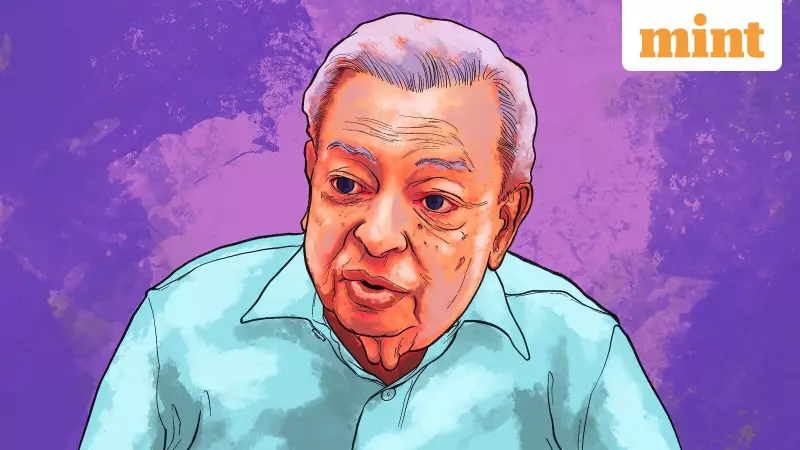
Verghese Kurien, born in 1921 into a prosperous Syrian Christian family in Kerala, charted a path that would redefine rural India's economic landscape. Trained as a physicist and mechanical engineer, his destiny shifted when a government scholarship took him to Michigan State University for dairy engineering. Returning to India in 1949, he was posted to Anand, Gujarat, to fulfil his scholarship bond, with little intention of staying. What he encountered there, however, ignited a lifelong mission.
The Anand Epiphany: Birth of the White Revolution
In Anand, Kurien witnessed the plight of small milk producers trapped by exploitative private traders who set arbitrary prices and made unreliable payments. He met Tribhuvandas Patel, a Gandhian leading the Kaira District Cooperative Milk Producers' Union, who persuaded him to stay and help. Kurien agreed to a short assignment, which became his life's work.
His first major challenge was a technological one. Experts deemed it impossible to produce skimmed milk powder from buffalo milk on a commercial scale, as it behaved differently from cow's milk. This forced India to rely heavily on imports. Kurien, with fellow engineer Harichand Megha Dalaya, embarked on sustained experimentation. By the mid-1950s, they had developed an indigenous, viable process for spray-drying buffalo milk. This breakthrough became the technological cornerstone for Amul and India's dairy self-reliance.

The impact was monumental. The Amul cooperative model ensured fair prices and regular payments by connecting producers directly to markets. Millions of small farmers found a stable income, and milk evolved from a nutrition source into the backbone of a self-sustaining rural industry, turning India into the world's largest milk producer.
Beyond Milk: The Yellow Revolution and Institution Building
Kurien's vision extended beyond dairy. Beginning in 1979, he applied cooperative principles to oilseeds, taking on entrenched trading networks. This initiative, part of the later-called Yellow Revolution, led to the launch of the Dhara brand in the late 1980s, boosting domestic oilseed production and connecting farmers to consumers.
That same year, he founded the Institute of Rural Management Anand (IRMA), an institution dear to him. Kurien insisted against a rustic, village-like campus, believing rural India needed professionals trained to think and act at scale. He was also a master storyteller. He helped filmmaker Shyam Benegal crowdfund the film Manthan by asking farmers to accept a small, one-time reduction in milk payments. The film won a National Film Award and was India's Oscar entry.
A Complex Legacy and Enduring Systems
Despite his colossal influence, Kurien lived simply in Anand and was an avowed atheist, sceptical of personal glorification. His final years were marked by a painful exit from the very institutions he built at Anand and IRMA, a wound he bore silently. He passed away on 9 September 2012.
His legacy, however, is defined by systems built to outlast their creator. Amul flourished, IRMA endured, and the cooperative model continued to empower millions. Verghese Kurien proved that social entrepreneurship could engineer not just products, but profound and lasting societal change.