

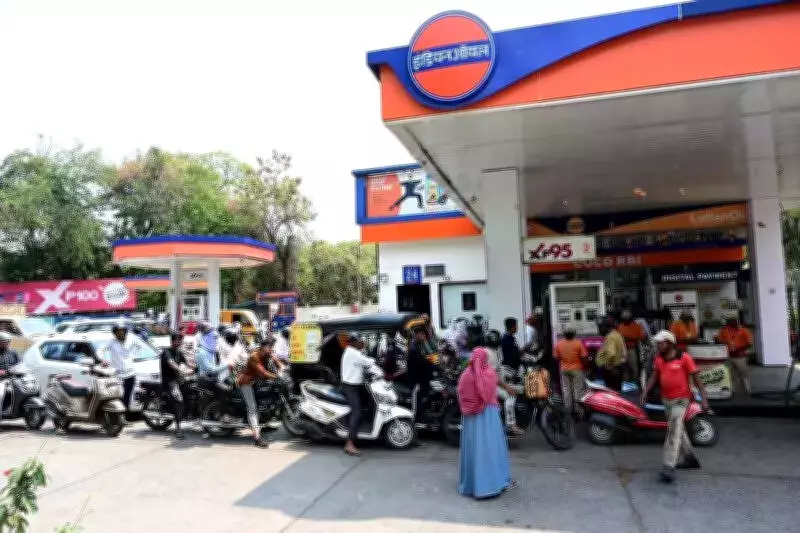
Panic Buying Grips Vidarbha as Petrol Sales Double Amid Regional Tensions
The Vidarbha region of Maharashtra experienced a severe fuel crisis this week, with petrol sales skyrocketing to more than double the normal daily quota. According to senior officials from public sector oil companies, the panic buying began on Tuesday and continued unabated into Wednesday, leading to widespread drying of petrol pumps across the area.
Unprecedented Surge in Fuel Consumption
Normally, a single oil marketing company sells approximately 800 kilolitres (KL) of petrol daily in Vidarbha. However, on Tuesday, sales surged dramatically to nearly 2,200 KL, marking an alarming increase. Diesel sales also spiked, rising by one and a half times the usual volume. In Nagpur city, the sale of both fuels doubled on Tuesday and maintained a similar pace on Wednesday.
This rapid consumption overwhelmed the replenishment systems, causing many pumps to run dry as supply could not keep up with demand. The three major public sector oil companies—each holding a market share of 30% to 35%—collectively sold an estimated 6,000 KL of petrol and around 10,000 KL of diesel throughout the region. This volume is equivalent to the total daily stock held in a single large petroleum depot that supplies retail outlets.

Root Causes of the Crisis
The panic buying originated in Gujarat a few days prior and quickly spread to Maharashtra, fueled by anxieties related to the ongoing West Asia crisis. Sources indicate that the high-speed sales were met with slow stock replenishment from depots due to several factors:
- Credit System Stoppage: Oil companies have halted the credit system, now insisting on advance payments from petrol pumps before refilling.
- Payment Delays: Dealers must deposit daily cash in banks, with funds transferred via RTGS, taking two to three hours to credit. Payments received after 2:30 PM often result in no refills on the same day.
- Operational Changes: Nayara Energy's depot in Wardha shuts down after 2:30 PM, while BPCL's depot in Borkhedi observes a similar payment deadline, limiting supply.
Amit Gupta, president of the Federation of Maharashtra Petroleum Dealers Association (FAMPEDA), explained, "Earlier, stock could be lifted on credit, but now the process has become stringent, exacerbating the situation." Additionally, companies have imposed quotas based on last year's offtake and, in some cases, require pumps to lift lubricants to receive fuel supplies.
Impact on Nagpur and Regional Supply Chains
In Nagpur city, which has 64 petrol pumps, each company typically sells 170-240 KL of petrol daily. This figure doubled due to panic sales, with diesel following a similar trend. The region's fuel supplies come from depots operated by BPCL, Nayara Energy, and IOCL in Akola and Chandrapur.
As of Wednesday, Nayara Energy held 2,900 KL of petrol and 9,800 KL of diesel, with additional stocks en route. BPCL's depot reported 3,500 KL of petrol and 10,500 KL of diesel, while IOCL's depots maintained substantial reserves. Despite this, the closure of IOCL's Khapri depot—due to land acquisition by railways—has increased pressure on the remaining supply channels.
Broader Implications and Industry Response
Sources suggest that in times of high crude prices, slowing sales can help companies mitigate losses. Both dealers and companies emphasize that there is no shortage of stock at depots, but panic buying worsens the crisis. The recent changes in payment and credit policies are seen as responses to the West Asia conflict, aiming to stabilize operations amid uncertainty.
Officials warn that continued panic buying will only deepen the fuel shortage, urging consumers to avoid hoarding. The situation highlights the fragile balance between supply chain logistics and regional geopolitical tensions, with Vidarbha serving as a microcosm of broader challenges in India's fuel distribution network.






