

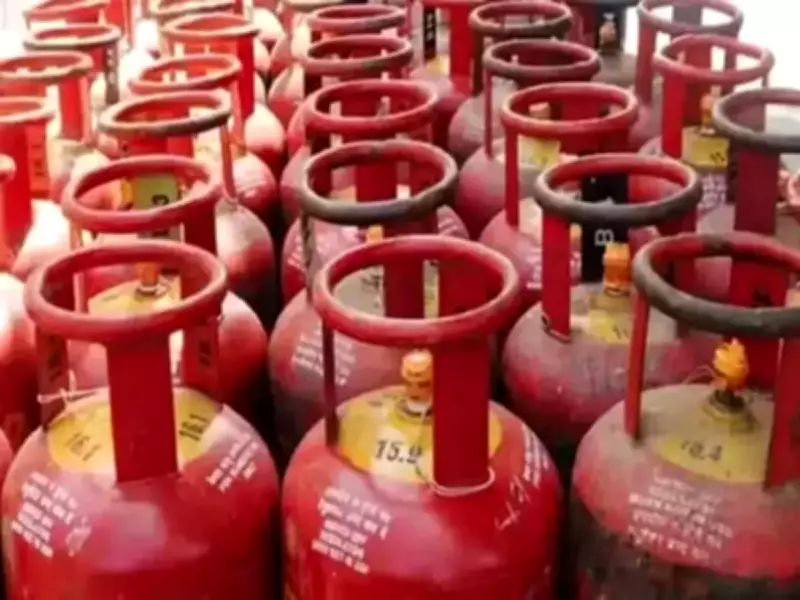
Government Confirms Stable LPG Supply Amidst Middle East Unrest
The Central government has provided firm assurances that liquefied petroleum gas (LPG) supply across India remains completely normal, despite escalating tensions in the Middle East region. Officials confirmed that shipments continue to sail through the strategically vital Strait of Hormuz without any disruption to maritime traffic or delivery schedules.
Official Statements Dismiss Shortage Concerns
Petroleum and Natural Gas Secretary Neeraj Mittal, speaking at a conference on Thursday, categorically dismissed fears of any potential shortage affecting the nation. "I don't see any problem anywhere. All domestic supplies are at 100 per cent," Mittal stated emphatically. He further revealed that approximately 70 per cent of packed LPG has already been released into the distribution system, ensuring adequate availability for consumers nationwide.
While acknowledging that minor, localized supply bottlenecks might occasionally occur, Mittal clarified that such issues represent routine operational challenges that are managed effectively on a day-to-day basis. "These are normal logistical matters that we handle regularly," he explained during his address to industry stakeholders.

Maritime Movement Remains Unaffected
The petroleum secretary directly addressed growing concerns about maritime movement through the volatile region, confirming that vessel traffic has not experienced any significant delays. "Ships have been continuously coming even when there was a blockage. It takes its normal travel time. We are not talking about any delay in crossing the Strait," Mittal emphasized, referring specifically to the Strait of Hormuz.
To illustrate this point, officials noted that the fuel carrier Green Asha, carrying over 15,400 tonnes of LPG, successfully arrived in India on Thursday after crossing the Strait of Hormuz earlier in the week without incident.
Government Monitoring and Preparedness
According to Mittal, the government maintains constant vigilance over regional developments and remains prepared to implement contingency measures if necessary. "The government is reviewing this on a daily basis. If any change has to be made, it will be done," he assured attendees at the energy security conference.
The secretary highlighted several critical statistics that underscore India's strategic approach to energy security:
- Nearly 90% of India's crude oil imports pass through the Strait of Hormuz
- India sources crude oil from 41 different countries worldwide
- Natural gas is imported from 30 different nations
- LPG supplies come from 13 different source countries
"This diversification plays a key role in shaping our future energy policies and ensuring resilience," Mittal explained.
Energy Security Conference Highlights
The conference, organized by the Petroleum and Natural Gas Regulatory Board (PNGRB) in partnership with Indraprastha Gas Limited (IGL), brought together numerous stakeholders to discuss the expanding role of natural gas in India's evolving energy mix. "The government is committed to ensuring that gas is available to all entities, and we are also focusing on diversification so that such crises do not impact supplies," Mittal reiterated during his presentation.
Discussions during the two-day event focused on several critical areas:
- Infrastructure investment requirements for enhanced energy security
- Regulatory support mechanisms for the natural gas sector
- Addressing sectoral challenges in distribution and pricing
- Encouraging innovation in energy technologies and systems
Participants emphasized that these initiatives are particularly important as India works to strengthen its energy security framework in the face of persistent global uncertainties and geopolitical tensions that could potentially affect supply chains.






