West Asia Conflict Contributes to Sharp Decline in India's PE-VC Investments
Data released by research firm Venture Intelligence on Wednesday reveals a significant downturn in private equity and venture capital (PE-VC) investments in India during the first quarter of 2026. The ongoing conflict in West Asia has emerged as a notable factor influencing this trend, contributing to broader economic uncertainties.
Investment Figures Show Substantial Drop
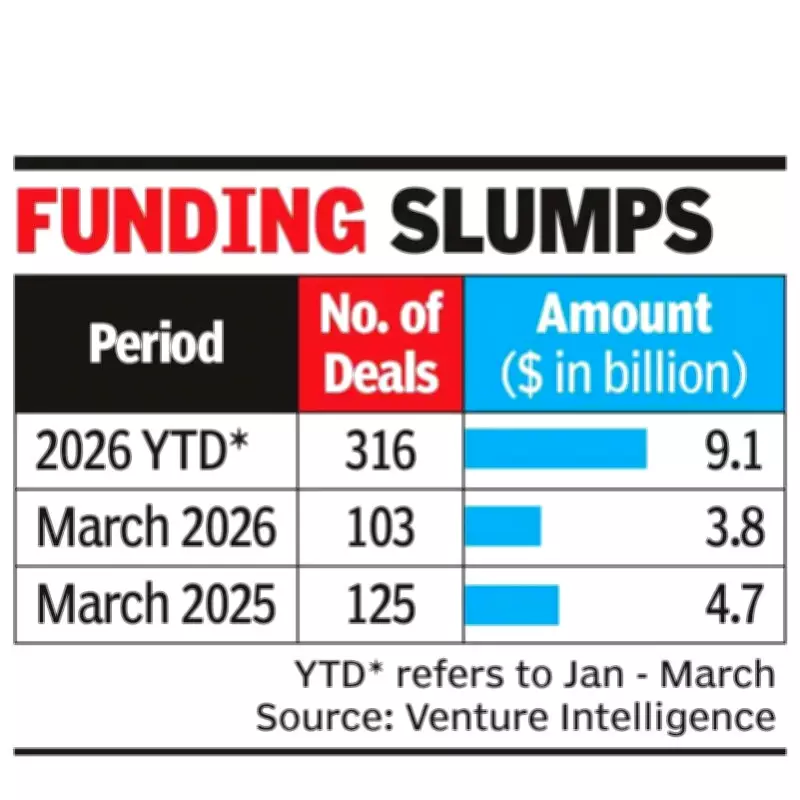
PE-VC investments in India plunged by 22% in the January to March period of calendar year 2026, falling to $9.1 billion from $11.7 billion in the same quarter of the previous year. This decline reflects a challenging environment for deal-making amid geopolitical tensions.
Further analysis shows that investments also decreased by 19% in March 2026 alone, dropping to $3.8 billion compared to $4.7 billion in March 2025. This represents a reduction of approximately $900 million in monthly investment activity.

Mega Deals Experience Notable Reduction
The number of large-scale transactions, specifically mega deals valued at $100 million or more, declined significantly from 29 in the first quarter of 2025 to just 17 during the same period in 2026. This reduction in high-value investments underscores the cautious approach adopted by investors in the current climate.
It is important to note that these PE-VC deal figures exclude investments in the real estate sector, focusing specifically on other business areas.
Industry Experts Cite Multiple Contributing Factors
Arun Natarajan, founder of Venture Intelligence, explained to TOI how the West Asia conflict is affecting specific sectors. "Sectors experiencing raw material shortages due to the ongoing war—from quick-service restaurants impacted by LPG restrictions to semiconductors facing supply constraints for materials like helium and aluminium—are likely to see investors adopting a wait-and-watch approach," he stated.
Shishir Vayttaden, partner at Khaitan & Co, provided additional insight into investor behavior. "In listed companies, investors typically prefer to observe where stock prices stabilize before committing to off-market valuations. For unlisted businesses facing immediate supply chain disruptions, the priority often shifts to maintaining stability rather than pursuing capital raising activities," he noted. Vayttaden further highlighted that currency depreciation tends to broadly slow down deal activity across markets.
Medium-Term Outlook Remains Cautiously Optimistic
Despite the current challenges, industry professionals anticipate a potential recovery later in the year. Navin Honagudi, managing partner at Elev8 Venture Partners, suggested that while geopolitical uncertainties may delay some investment decisions in the near term, activity is expected to pick up in the second half of 2026 as visibility improves and interest rate cycles stabilize.
"From a medium-term perspective, sectors like financial services, fintech, and domestic consumption will continue to attract strong PE-VC interest, driven by structural growth tailwinds," Honagudi emphasized, pointing to underlying strengths in the Indian economy that could support future investment recovery.
The combination of geopolitical tensions, supply chain disruptions, and broader economic factors has created a complex environment for private equity and venture capital investments in India, with the West Asia conflict serving as a significant contributing element to the current slowdown.