Yotta Data Services Reverses Course, Prioritizes Domestic IPO Over US Listing
In a significant strategic pivot, Yotta Data Services, a prominent Mumbai-based data centre and artificial intelligence infrastructure firm, has announced a reversal of its initial public offering (IPO) plans. The company, which operates major campuses in Navi Mumbai, Noida, and GIFT City, will now prioritize a domestic stock market listing in India, stepping back from its earlier intention to tap the US capital markets and list on the Nasdaq exchange.
Strategic Shift Driven by Domestic Investor Appetite
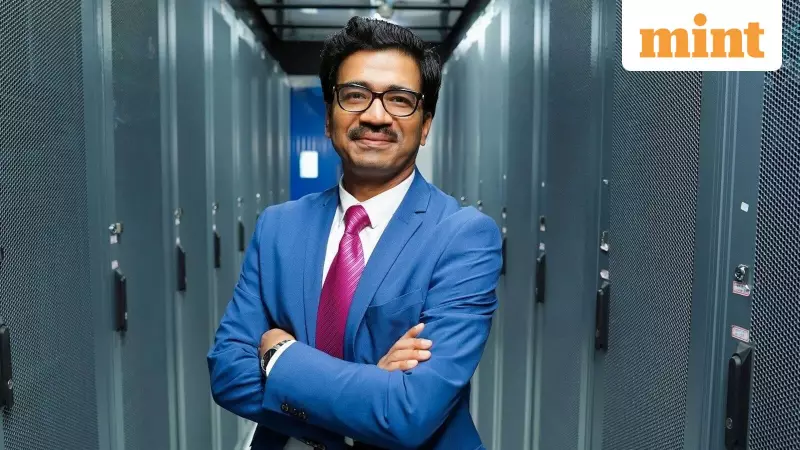
Sunil Gupta, co-founder, managing director, and chief executive officer of Yotta, revealed in an exclusive interview that the decision stems from rising domestic investor enthusiasm for digital infrastructure and AI-linked assets. "Our current plan is to raise capital in India first. The structure allows us to keep the US option open; it's a question of sequencing," Gupta explained. He indicated that if all proceeds smoothly, the company could approach the Indian market in the next financial year.
Gupta highlighted that Yotta had secured all necessary regulatory approvals for a Nasdaq listing by late 2025. However, the company chose to prioritize the Indian markets due to its sovereign positioning, India-centric operations, and the robust response from domestic investors during pre-IPO fundraising discussions. "Indian investors are already factoring India risk when they invest. For overseas investors, India is still an external risk," he noted, emphasizing the advantage of local market familiarity.

Background on the Abandoned US Listing Plan
Previously, Yotta's parent entity, Nidar Infrastructure, had planned to list on the Nasdaq through a merger with Cartica Acquisition Corp, a special purpose acquisition company (SPAC). This transaction valued the business at $2.75 billion pre-transaction, with the combined entity expected to trade under the tickers YTTA and YTTAW. However, in a filing dated 7 January, Nidar Infrastructure stated it had elected not to proceed with the business combination outlined in the Form F-4 registration statement.
Gupta confirmed that the SPAC transaction is now off the table, and any future US listing would require a fresh process. He believes an India-first listing will allow Yotta to build scale and valuation before exploring overseas markets. "Once we are listed in India, we can approach overseas markets with much higher strength," he asserted.
Market Trends and Investor Sentiment
This shift aligns with broader market trends, as India's public markets show increasing warmth towards AI-adjacent and data centre listings. Shivam Bajaj, founder and CEO of Avener Capital, observed, "India's capital market investors are showing strong appetite for AI-adjacent public listings, particularly across AI software, data centres, cloud services, and application-layer technology." He pointed out that the current listed universe offers limited pure-play AI exposure, creating opportunities for companies like Yotta.
Bajaj added that a key consideration for AI builders will be how public market investors value the business—whether as a data centre-led infrastructure platform with stable cash flows or as a strategic AI company with technology-driven upside. The healthy pipeline of upcoming data centre IPOs, including Sify Infinit Spaces Ltd's approved ₹3,700 crore IPO and CtrlS Datacenters' exploration of a public listing, underscores this growing interest.
Financial Performance and Growth Projections
Yotta's financial trajectory reflects its expansion focus. The company's revenue more than doubled to an estimated $49.2 million in FY24 from $22 million in FY23, while its net loss narrowed marginally to $52.8 million. For FY25, Yotta projects revenue of $156 million alongside a deeper net loss of $113.4 million as it accelerates capital expenditure.
According to Mordor Intelligence, India's data centre and AI infrastructure market is poised for substantial growth, expected to expand from about $11.76 billion in early 2026 to $25.07 billion by 2031. This growth is driven by factors such as cloud adoption, data localization requirements, and increasing AI workloads.

Expansion Plans and Capacity Projections
Yotta is aggressively expanding its infrastructure to capitalize on this demand. At its flagship Panvel campus near Navi Mumbai, the company has increased its land bank from an initial 20 acres to about 70 acres, enabling the development of up to 22 data centre buildings. Gupta declined to specify a completion timeline, noting that construction will be driven by customer contracts and demand visibility. "We won't build blindly. The pace depends entirely on the deals we win," he stated.
Once fully developed, the Panvel campus alone will have power feasibility of up to 2 GW, supported by land, fibre, and grid connectivity. Gupta also suggested that India's data centre capacity projections may be conservative, estimating that with AI demand, India could reach 6 to 7 GW by 2028-2030, compared to earlier projections of around 3 GW without AI.
Revenue Mix and Investment Dynamics
Yotta's revenue mix has evolved significantly, with higher layers of the stack now dominating. Co-location contributes about 20% of revenue, sovereign cloud and managed services account for roughly 30%, while GPU and AI services make up 40-50%. The economics across these layers vary widely: building a traditional co-location facility typically requires $5-6 million per megawatt of IT load, whereas fully GPU-based AI infrastructure can demand investments of up to $40 million per megawatt.
"Capex is much higher, but returns are also significantly higher," Gupta remarked. The total investment for Yotta's 22-building plan could reach up to $10 billion. Despite strong demand, he identified access to risk capital as the biggest constraint for India's AI infrastructure ecosystem.
Call for Increased Government Funding
Gupta also advocated for a substantial increase in government funding for the IndiaAI Mission in the upcoming FY27 budget. He argued that the current allocation of about ₹11,000 crore over five years is insufficient for a country of India's scale, proposing that the budget should be raised to at least ₹50,000 crore. The government had allocated ₹2,000 crore for the IndiaAI Mission in the FY26 budget, a significant increase from ₹173 crore in the previous year.
In summary, Yotta Data Services' strategic pivot to an India-first IPO reflects a calculated move to leverage domestic investor enthusiasm and build a stronger foundation before potentially tapping international markets. This decision underscores the growing confidence in India's capital markets and the burgeoning demand for AI and digital infrastructure investments.