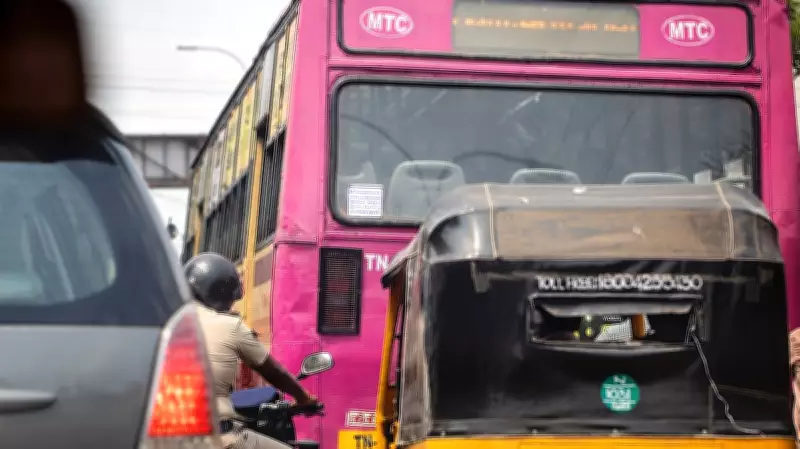
India's cities are choking on congestion and pollution, with vehicles accounting for a major share of emissions. The article argues that the solution lies not in building more roads but in prioritizing public transport, walking, and cycling.
The Current Crisis
According to the article, India has seen a 33% increase in vehicle registrations over the past five years, while road length has grown only 4%. This imbalance has led to worsening traffic jams and air quality. In Delhi, for instance, vehicles contribute 40% of PM2.5 pollution.
Why Car-Centric Planning Fails
The author points out that expanding road capacity only induces demand, as per the phenomenon known as 'induced traffic.' More lanes lead to more cars, not less congestion. Instead, the focus should be on moving people, not vehicles.

Successful Models
Cities like Bogotá and Curitiba have shown that investing in Bus Rapid Transit (BRT) systems and dedicated cycle lanes can drastically improve mobility. In India, the Ahmedabad BRT has reduced travel time by 30% for users.
Policy Recommendations
The article suggests a package of measures: increasing fuel taxes to fund public transport, implementing congestion pricing in central business districts, and mandating that new developments be transit-oriented. It also calls for a national urban mobility fund to support states.
Conclusion
The author concludes that a 'ticket to change' is available—but only if policymakers have the courage to prioritize people over cars. Without decisive action, Indian cities will become unlivable.