

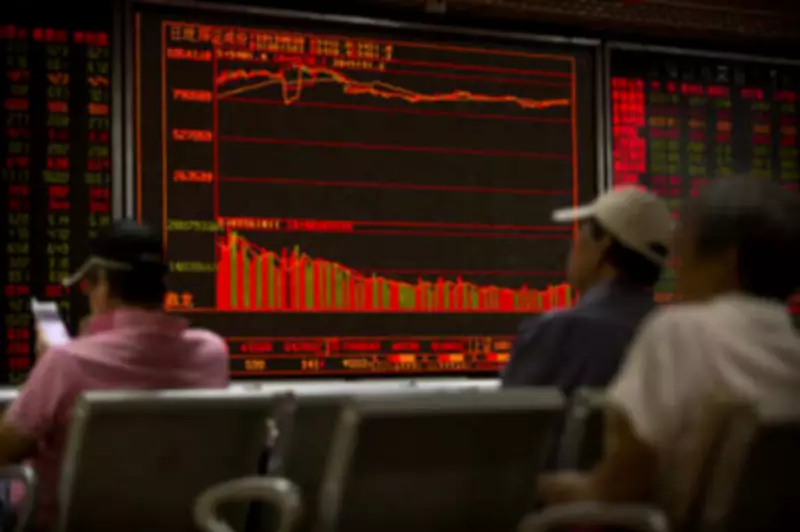
Asian Markets Plunge Amid Soaring Oil Prices and Geopolitical Tensions
Asian stock markets opened sharply lower on Monday, facing significant pressure from surging oil prices and heightened concerns over economies heavily reliant on energy imports from the Middle East. The sell-off was widespread, reflecting investor anxiety about the escalating conflict in the region and its potential to disrupt global oil supplies.
Major Indexes Hit Hard as Energy Costs Skyrocket
South Korea's Kospi emerged as the hardest-hit index, tumbling over 7.8% or 437 points to close at 5,147. Japan's Nikkei also suffered a steep decline, plunging 6.6% or 3,683 points to 51,937. In Hong Kong, the Hang Seng Index (HSI) was down 626 points or 2.4%, reaching 25,131 around 11 am IST. The sharp declines were triggered by a dramatic spike in oil prices, with Brent crude, the global benchmark, shooting above $118 a barrel.
US West Texas Intermediate (WTI) crude climbed sharply, up around 30% from Friday's close of $90.90. At 0230 GMT, WTI reached $118.21 per barrel, a 30.04% rise, before retreating slightly, while Brent traded 27.54% higher at $118.22. Oil has now climbed to its highest point in 14 years, with the last time prices moved above the $100 mark occurring shortly after Russia launched its invasion of Ukraine in 2022.

Drivers of the Oil Price Surge and Economic Implications
The latest surge in oil prices has been driven by worries that the conflict in the Middle East could affect exports from the Persian Gulf, a key route for global oil and gas supplies. This spike in energy prices is adding substantial pressure on the global economy, particularly for countries that depend heavily on imported crude and gas. Analysts warn that if the rise in oil and gas costs continues, the impact could spread across economies already adjusting to higher tariffs on exports to the United States under President Donald Trump.
Oil prices have risen more than 60% since the conflict began and entered its second week, drawing in countries and locations vital to the production and transportation of oil and gas from the Persian Gulf. According to analysts and investors, sustained oil prices above $100 per barrel could inflict serious harm on the global economy, exacerbating inflationary pressures and slowing growth.
Wall Street and Global Market Reactions
The unease was already visible on Wall Street at the end of last week. On Friday, the S&P 500 declined 1.3% after data showed US employers cut more jobs last month than they created, while oil prices also climbed above $90 a barrel. Investors see the combination of slowing economic activity and high inflation as particularly troubling, as the Federal Reserve has limited tools to tackle both problems simultaneously.
During Friday's session, the Dow Jones Industrial Average dropped by as much as 945 points before closing down 453 points, or 0.9%. The Nasdaq composite finished 1.6% lower. Meanwhile, the US dollar strengthened in early Monday trading as investors sought safe-haven assets amid heightened uncertainty. The dollar rose 0.9% against the Japanese yen to 158.87, while the euro slipped to $1.1513 from $1.1618.
Key factors contributing to the market turmoil include:
- Geopolitical tensions in the Middle East affecting oil exports.
- Rising inflation and slowing economic growth globally.
- Increased demand for safe-haven assets like the US dollar.
- Historical comparisons to previous oil price spikes, such as during the Ukraine invasion.
This market volatility underscores the fragile state of the global economy as it navigates multiple challenges, from energy crises to geopolitical conflicts. Investors are advised to monitor developments closely, as further escalations could lead to more significant economic disruptions.






