

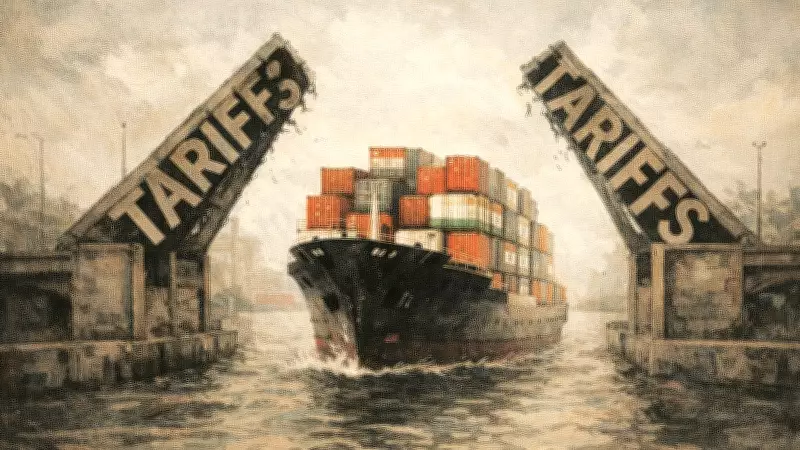
In a significant move aimed at revitalizing India's manufacturing landscape, Finance Minister Nirmala Sitharaman announced substantial reductions in basic customs duties (BCD) during the Union Budget 2026-27 presentation on Sunday. These strategic cuts are designed to alleviate structural challenges and provide a much-needed impetus to domestic production across key industries.
Targeted Relief for Labor-Intensive Sectors
The duty reductions are primarily focused on supporting three crucial labor-intensive sectors: textiles, footwear, and marine products. This decision arrives against a backdrop of heightened economic pressure, particularly stemming from the 50 percent tariffs imposed by the United States, which have been in effect since August 27, 2025. These tariffs have placed considerable strain on Indian exporters, making government intervention essential for maintaining competitiveness.
For the marine sector, Sitharaman proposed increasing the limit for duty-free imports of specified inputs used in processing seafood for export. The threshold will rise from the current 1 percent to 3 percent of the Free on Board (FOB) value of the previous year's export turnover. This measure is expected to enhance the cost-effectiveness of seafood exports and boost foreign exchange earnings.

In the footwear industry, the budget extends duty-free import benefits for specified inputs. Previously available only for exports of leather or synthetic footwear, this facility will now also cover exports of shoe uppers. This expansion aims to streamline production processes and reduce manufacturing costs for footwear makers.
Addressing Critical Input Shortages
Recognizing the importance of raw material availability, the Finance Minister announced the elimination of basic customs duties on several key industrial inputs. The duty on rare-earth elements like Monazite has been removed from 2.5 percent, while Sodium Antimonate, used in manufacturing solar glass, sees its duty eliminated from 7.5 percent.
This move gains additional significance considering recent coercive measures by China restricting rare earth magnet exports. By reducing import costs for these critical materials, the government aims to strengthen India's position in strategic manufacturing sectors and reduce dependency on foreign suppliers.
Boosting Aerospace and Electronics Manufacturing
The budget introduces several measures to enhance domestic capabilities in advanced manufacturing sectors. Customs duties on components and parts for aircraft manufacturing, including aircraft engines, have been completely eliminated. Furthermore, raw materials imported by Public Sector Units under the Ministry of Defence for manufacturing aircraft parts for maintenance, repair, or overhaul (MRO) operations will also attract zero duty.
These initiatives align with the government's broader push to establish India as a hub for both military and civil aircraft assembly while building robust domestic MRO capabilities. In the consumer electronics sector, specified parts used in microwave oven manufacturing will now enjoy basic customs duty exemption, encouraging deeper value addition within the country.
Trade Facilitation and Ease of Doing Business
Beyond direct duty reductions, the budget introduces several trade facilitation measures designed to streamline import-export processes. The duty deferral period for Tier 2 and Tier 3 Authorised Economic Operators (AEOs) has been extended from 15 days to 30 days, providing businesses with improved cash flow management.
Sitharaman also proposed extending the validity period of advance rulings binding on Customs from three years to five years, offering greater certainty for business planning. Regular importers with trusted supply chains will receive recognition in the risk management system, minimizing the need for repeated cargo verification.
For export cargo using electronic sealing, clearance will be facilitated from factory premises directly to ships. Similarly, trusted importers bringing in goods requiring no compliance checks will benefit from automated clearance notifications, enabling immediate release of goods upon arrival.

These comprehensive measures represent a multi-pronged approach to strengthening India's manufacturing ecosystem. While negotiations continue with the United States regarding a free trade agreement, the government's focus remains on addressing immediate structural impediments and creating a more conducive environment for domestic production across traditional and emerging sectors.





