

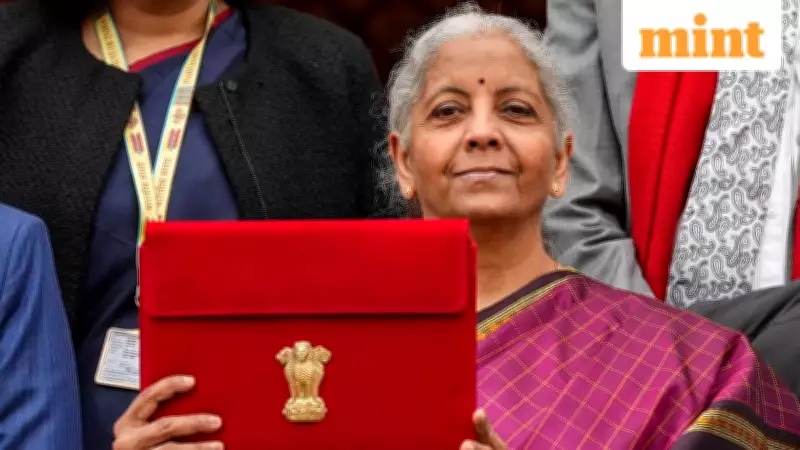
Finance Minister Nirmala Sitharaman presented the Union Budget for 2026 in the Lok Sabha on Sunday, 1 February, outlining a strategic fiscal roadmap for India's economic future. The budget pegs the fiscal deficit at 4.3% of gross domestic product (GDP) for the financial year 2026-27 (FY27), a slight reduction from the 4.4% estimated for FY26. This move underscores the government's commitment to fiscal discipline while addressing developmental needs.
Fiscal Deficit and Debt Management Targets
In her budget speech, Sitharaman emphasized the government's consistent delivery on fiscal commitments without compromising social welfare. She highlighted that the fiscal deficit in the Revised Estimate (RE) for 2025-26 is estimated at 4.4% of GDP, meeting the commitment made in FY22 to reduce it below 4.5% by 2025-26. For FY27, the fiscal deficit is projected at 4.3% of GDP, aligning with a new path of debt consolidation.
The debt-to-GDP ratio is estimated at 55.6% in the Budget Estimate (BE) for 2026-27, down from 56.1% in RE 2025-26. Sitharaman noted that a declining debt ratio will free up resources for priority sectors by reducing interest payments. The government aims to achieve a debt-to-GDP ratio of 50±1% by 2030-31, as indicated in previous budgets, to ensure long-term economic stability.

Capital Expenditure Boost for Infrastructure
Highlighting the sustained growth in public capital expenditure, Sitharaman proposed an increase to ₹12.2 lakh crore for FY27, up from ₹11.2 lakh crore in FY26. This represents an 8.9% rise, continuing the momentum from a manifold increase since FY14-15, when capex was ₹2 lakh crore.
According to Crisil, this outlay is in line with market expectations but may be lower than the actual need for infrastructure development. The focus on capex aims to stimulate economic growth and enhance India's manufacturing and tourism sectors, as highlighted in budget announcements.
Key Budget Estimates and Revised Figures
The budget provides detailed estimates for FY27 and revised figures for FY26, offering a clear financial picture:
- Revised Estimates 2025-26: Non-debt receipts are ₹34 lakh crore, with net tax receipts at ₹26.7 lakh crore. Total expenditure is ₹49.6 lakh crore, including capital expenditure of approximately ₹11 lakh crore.
- Budget Estimates 2026-27: Non-debt receipts are estimated at ₹36.5 lakh crore, and total expenditure at ₹53.5 lakh crore. Net tax receipts are projected at ₹28.7 lakh crore.
To finance the fiscal deficit of ₹16,95,768 crore in absolute terms for FY27, net market borrowings from dated securities are estimated at ₹11.7 lakh crore, with gross borrowings at ₹17.2 lakh crore. Additional financing will come from small savings and other sources.
Market Reactions and Economic Implications
Basant Bafna, head of fixed income at Mirae Asset Investment Managers (India), commented that the net market borrowing of ₹11.7 lakh crores is broadly in line with market expectations. A fiscal deficit of 3-4% is considered comfortable for a developing economy like India, balancing growth with financial stability.
The general government debt-to-GDP ratio was 85% in 2024, including central government debt of 57%. The Centre's commitment to reducing this ratio to about 50±1% by 2031 reflects a focus on sustainable economic management.
Conclusion: Strategic Fiscal Prudence
Budget 2026 sets a cautious yet growth-oriented tone, with a slight reduction in fiscal deficit, increased capital expenditure, and a clear debt consolidation path. These measures aim to bolster infrastructure, support MSMEs, and maintain economic stability, positioning India for robust growth in the coming years.






