

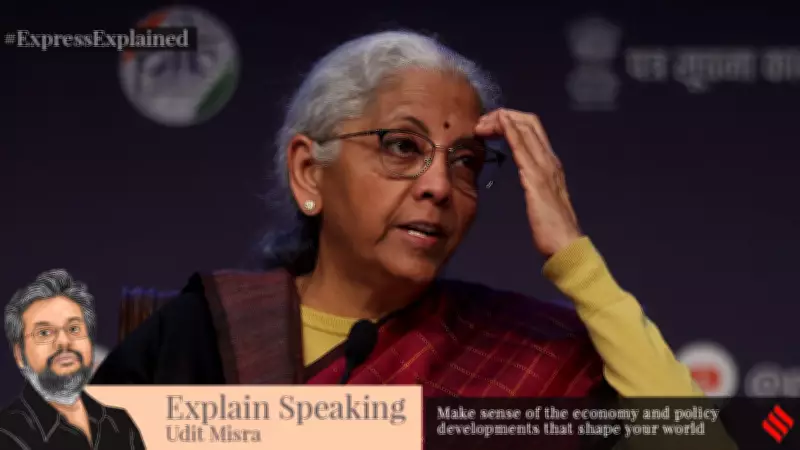
Budget 2026-27: A Strategic Pivot to Supply-Side Economics
The Union Budget for the financial year 2026-27 represents a significant strategic shift in the government's economic approach. After three consecutive budgets focused on stimulating consumption through tax reliefs and GST reductions, the administration has now returned its attention to the supply side of the economy. This change comes at a critical juncture for India's economic trajectory.
The Economic Context: Goldilocks Period or Underlying Weakness?
India's economy presents a complex picture. On one hand, the country boasts a robust 7.4% GDP growth rate for the current financial year, maintaining its position as the world's fastest-growing major economy. Inflation remains remarkably low at around 2%, well below the Reserve Bank of India's 4% target. This combination of high growth and low inflation has been described by the RBI Governor as a "rare goldilocks period."
However, an alternative perspective reveals concerning indicators. Nominal GDP growth—which includes inflation and reflects actual economic activity—stands at just 8%, significantly below the traditional 12% benchmark. This marks the second consecutive year of single-digit nominal growth, creating several challenges:

- Reduced government revenue generation and spending capacity
- Limited borrowing potential due to fiscal deficit constraints
- Weak income growth across the economy
The low inflation rate, while seemingly positive, may actually signal economic weakness in a developing economy like India. It suggests slack in consumer demand and employment markets, compounded by rupee depreciation, modest corporate sales growth, and capital flight from India.
Evolution of Government Strategy Since 2014
The current government's economic philosophy has consistently emphasized "minimum government, maximum governance." This approach involved:
- Structural reforms including GST implementation and the Insolvency and Bankruptcy Code
- The historic 2019 corporate tax cut
- Production-Linked Incentive schemes to boost manufacturing
- Reduced government borrowing to create space for private sector investment
- Shift from revenue expenditure to capital expenditure for long-term asset creation
Despite these efforts, private sector investment has remained below pre-pandemic levels. The anticipated demand surge failed to materialize due to high inflation, low wage growth, and persistent unemployment—particularly among educated youth and those under 30.
Budget 2026-27: Fiscal Discipline and Strategic Reorientation
The budget demonstrates remarkable fiscal discipline, achieving the targeted fiscal deficit of 4.4% of GDP despite weak nominal growth. However, this achievement came at a cost. The government had to curtail expenditures across several key areas due to:
- Lower-than-expected revenue collection
- Tax buoyancy below 1
- Increased outgoes on subsidies, pensions, and defense
Notably, capital expenditure growth slowed to just 4% over the previous financial year. Spending on health, education, social welfare, and urban development fell significantly short of budgeted allocations, with urban development expenditure missing targets by 40%.
The Supply-Side Focus: Targeted Interventions for Manufacturing
The budget's most significant departure from recent years is its renewed emphasis on supply-side measures. Most announcements represent targeted interventions designed to alleviate economic stress in specific sectors:
- Manufacturing, particularly micro, small, and medium enterprises
- Tier 2 and tier 3 cities
- Sectors affected by domestic and international disruptions
This focus acknowledges that India's manufacturing landscape has faced multiple challenges since 2016, including demonetization, GST implementation, MSME financial crises, pandemic lockdowns, and Trump-era tariffs.

Looking Ahead: Challenges and Opportunities
The budget projects a 10% nominal GDP growth rate for 2026-27, with the Economic Survey expecting real GDP growth around 7%. This suggests that much of the nominal growth increase will come from higher inflation rather than real economic expansion.
With limited fiscal space for dramatic announcements, the government has chosen a targeted approach rather than a "big-bang" strategy. The question remains whether this represents a missed opportunity to provide a cohesive new economic strategy or a pragmatic response to challenging global and domestic conditions.
The budget's success will ultimately depend on its ability to stimulate private investment, address structural weaknesses in the tax system, and create sustainable growth pathways for India's diverse economic sectors.





