

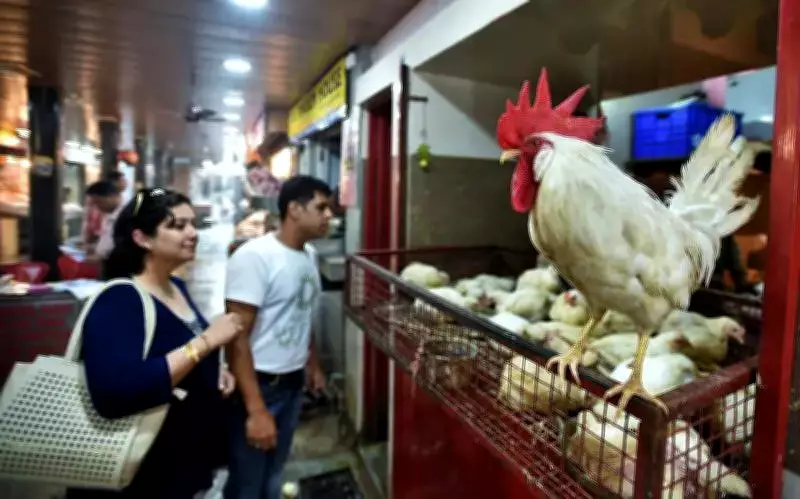
Chandigarh Consumers Face Steep Meat Price Surge as Supply Chain Strains
Residents of Chandigarh are grappling with significant increases in retail meat prices, with broiler chicken witnessing a sharp 20–25% jump and mutton becoming costlier by 5–7%, according to traders reporting on Tuesday. The price escalation has been driven by a combination of higher livestock prices, rising transportation costs, and notable supply constraints, with sellers also pointing to disruptions linked to the ongoing Middle East crisis as a contributing factor.
Poultry Prices Skyrocket at Sector 21 Market
At the bustling Sector 21 meat market, poultry vendors revealed that farms have substantially increased live bird rates from approximately Rs 105–110 per kg to Rs 150–155 per kg with immediate effect. This dramatic farm-level price revision has directly pushed up retail broiler chicken prices by about Rs 60 per kg, soaring from Rs 240 to nearly Rs 300 per kg.
Pawan Kumar, a local chicken shop owner, explained that soaring input costs have left retailers with little choice but to revise their pricing structures. He detailed that rates for specific cuts have also surged significantly. For instance, leg and chest portions now sell at Rs 320 per kg, up from Rs 260, while boneless chicken has risen from Rs 300 to Rs 360 per kg.

Grill and barbecue chicken vendors operating in Sector 22 confirmed that they, too, have been forced to revise menu prices to offset the higher raw material costs impacting their businesses.
Mutton Prices Experience Moderate Increase
While poultry prices have spiked dramatically, mutton prices have seen a relatively more moderate increase. Goat meat now sells at around Rs 740 per kg, up from Rs 700. Premium cuts such as legs and ribs, which were earlier priced at Rs 740 per kg, have climbed to about Rs 780 per kg.
Neeraj Kumar, a mutton trader, provided insight into the supply chain challenges. He noted that wholesale prices at Ambala — where livestock is sourced from Rajasthan districts including Sikar, Jaisalmer, Ajmer, and Kota — have risen due to higher transportation costs and lower availability of animals in the market.
Supply Chain Pressures and Demand Outlook
Traders across Chandigarh emphasized that logistics costs, encompassing fuel prices and interstate transportation expenses, have risen considerably in recent weeks, adding substantially to overall procurement costs. Seasonal factors and tightening livestock supply have further contributed to the price escalation.
Industry observers note that poultry feed prices and farm-level revisions tend to pass through to retail markets much more quickly than other commodities, resulting in steeper and more immediate spikes in chicken prices compared to mutton. This rapid transmission mechanism explains the disproportionate impact on poultry products.
Consumers Express Growing Concern Over Budget Strain
Regular meat buyers in Chandigarh have voiced significant concern over the frequent price hikes, stating that the rising rates are putting considerable strain on household budgets. Some consumers have questioned the direct linkage between international developments, such as the Middle East crisis, and local meat prices, noting that retail rates rarely fall once they have been increased.
Market participants and analysts suggest that prices are likely to remain elevated in the near term unless supply conditions improve substantially and input costs stabilize. The current inflationary trend reflects broader economic pressures affecting the food supply chain, with consumers bearing the brunt of these market adjustments.






