

Iran-Israel Conflict Triggers Cooking Oil Price Hike in Vijayawada
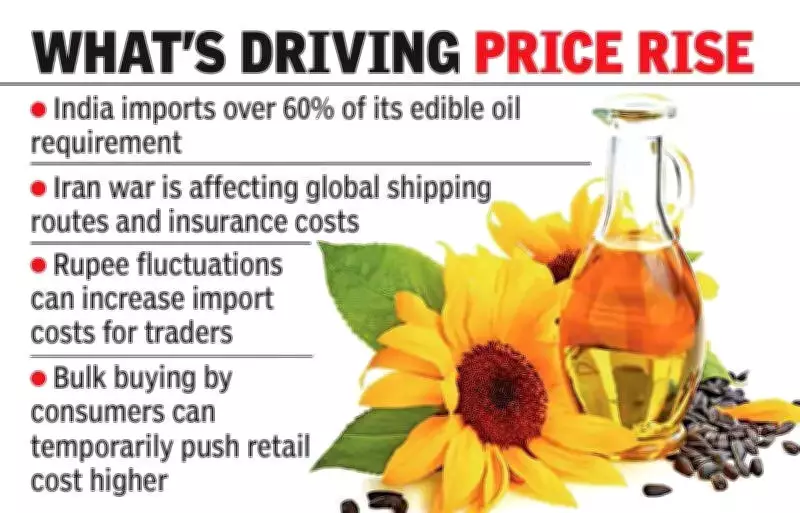
The escalating geopolitical tensions between Iran and Israel are now directly impacting household budgets in Vijayawada, with cooking oil prices experiencing a sharp upward trajectory. Over recent days, supermarkets and local kirana stores across the city have witnessed a surge in panic buying as residents rush to purchase cooking oils in bulk, fueled by fears of potential supply shortages due to the ongoing Middle Eastern conflict.
Panic Buying and Price Increases
Consumers are actively seeking out oil packets bearing the old maximum retail price (MRP) labels, hoping to secure supplies before anticipated further price hikes take effect. This sudden spike in demand has resulted in thinning stocks at numerous retail outlets and has already pushed market prices higher. Refined sunflower oil, which was retailing at approximately ₹150 per kilogram on February 26, has now climbed to nearly ₹170 per kilogram as of this past Saturday.
Similarly, palm oil prices have increased by about ₹15 to ₹20 per kilogram according to local wholesalers. Market observers note that this situation bears a striking resemblance to the edible oil price surge witnessed during the Russia-Ukraine war, when costs soared dramatically before eventually stabilizing several months later.

Global Factors Driving Domestic Prices
India imports a significant portion of its crude edible oils, which are subsequently refined and distributed to consumers nationwide. Traders report that the current global geopolitical uncertainties are creating volatility in international markets, which is rapidly translating into higher domestic prices. "The demand suddenly shot up. People are buying multiple tins at once because they want to avoid paying higher prices later," explained Koppuravuri Sobhan, a wholesale oil trader operating in Vijayawada.
JN Mallikarjuna Rao, a supermarket retailer, added: "Customers are specifically asking for oil packets with the old MRP printed on them. Many believe the prices will definitely increase further if the war continues."
Expert Warnings and Official Reassurances
Economic experts caution that if the Middle East conflict intensifies or becomes prolonged, global supply chain disruptions combined with increased transportation costs could drive cooking oil prices even higher in the coming months. This would place additional financial pressure on household expenses across the region.
Meanwhile, government officials have urged citizens to refrain from panic buying, assuring the public that supply chains remain stable at present. However, they acknowledge that markets remain highly sensitive to international developments, and price fluctuations may continue depending on how the geopolitical situation evolves.
The current scenario highlights how distant international conflicts can have immediate and tangible effects on local economies and daily living expenses, with Vijayawada residents now facing the direct consequences of tensions halfway across the world.






