LPG Shortage Cripples Delhi Street Vendors, Black Market Flourishes
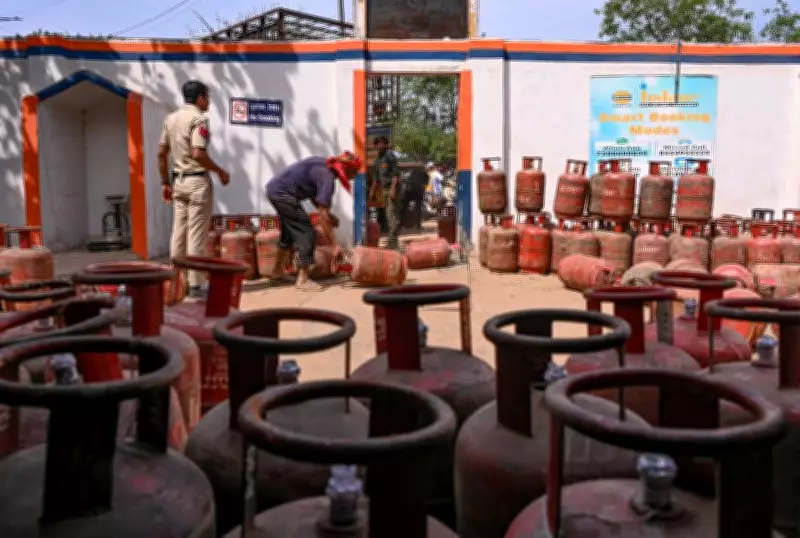
New Delhi, March 13, 2026: A critical shortage of Liquified Petroleum Gas (LPG) cylinders is wreaking havoc on the livelihoods of street vendors across India's national capital, Delhi. The scarcity has forced numerous small-scale food stall operators to either suspend their businesses entirely or resort to purchasing cylinders at exorbitant black market rates, plunging many into severe financial distress.
Vendors Forced to Borrow and Deplete Savings
Many vendors report they are now dipping into their life savings or taking high-interest loans simply to manage daily household expenses and keep their stalls running. The disruption is not just a business issue; it threatens the survival of entire families dependent on these micro-enterprises.
"One small shop supports eight to ten livelihoods," explained Naresh Chawla, who operates a fast-food stall near PVR Saket. "I employ three to four workers who have migrated from villages. Many of us have already taken loans to run these stalls. If this continues, 30 percent of street vendors will lose their means of survival."

Chawla added that the exhaustion of personal savings is making it increasingly difficult for vendors to meet basic household responsibilities, including caring for elderly parents.
Black Market Thrives as Official Supply Falters
The supply gap has created a lucrative black market, where vendors are compelled to pay significantly inflated prices. In Adarsh Nagar, a food vendor named Vicky said he paid approximately Rs 4,000 for a small cylinder, a price far above the standard rate. To offset this cost, he increased his dish prices by Rs 10, only to witness customers immediately walk away.
"Customers at street stalls are not wealthy," Vicky lamented. "They tell me if they had more money, they would dine at restaurants." He further revealed that after paying his staff, he lacked funds to purchase basic ingredients like paneer, having already borrowed money for his mother's medical treatment.
In Sangam Vihar, tea and samosa vendor Upendra Gupta managed to stay open only after buying a small LPG cylinder for around Rs 2,200 from the black market. Meanwhile, in northwest Delhi, 'pani puri' seller Rafiq Ahmed was forced to close his stall entirely on Thursday afternoon.
"I simply could not arrange a cylinder," Ahmed stated, expressing deep concern for his workers who send their earnings back to families in rural areas. "They come from very poor backgrounds. I don't know how to face them when I am struggling to make ends meet myself."
Long Queues and Domestic Dilemmas
The shortage has also resulted in long, uncertain queues at official gas agencies. Manoj Kumar, a chaat vendor in southeast Delhi, highlighted the impossible choice many face. "We cannot take the LPG cylinder from our homes and use it at the stall because then what will we cook for our children?" he asked. By the time vendors reach these agencies, the stock is often already exhausted.
Policy Context and a Precarious Future
This supply crisis follows a recent government revision of the priority order for allocating domestically produced natural gas, a move driven by energy supply disruptions linked to the widening West Asia conflict. A gazette notification placed LPG production, along with CNG and piped cooking gas, at the top of the allocation list to ensure these sectors are fully met before gas is supplied elsewhere.
Despite these policy measures, street vendors—who lack the financial reserves of established restaurants—continue to face a precarious and uncertain future. Many are now reportedly looking for temporary manual labor jobs until the situation improves, a stark indicator of the depth of this livelihood crisis affecting one of Delhi's most vulnerable economic segments.