

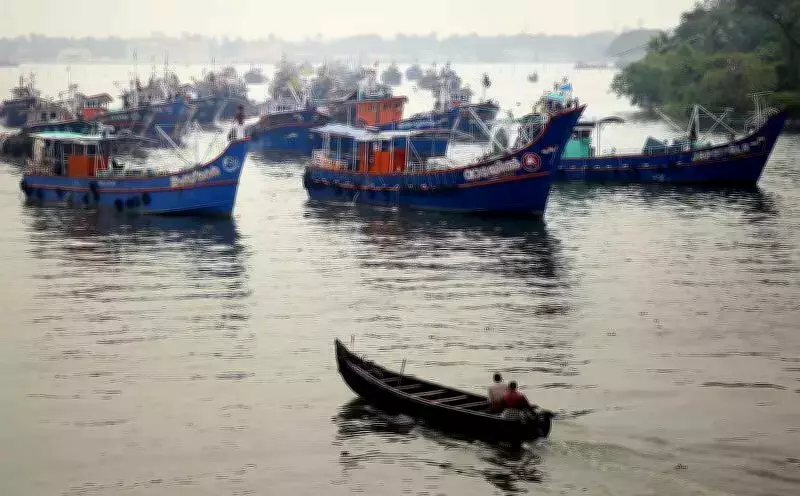
Fishermen Decry Budget's Duty-Free Incentives for Large Vessels as Threat to Local Livelihoods
Fishermen across India, particularly in coastal states like Kerala, have expressed deep concern over the Union Budget 2026-27's provision of duty-free incentives for large fishing vessels. These vessels are permitted to operate both inside and beyond India's exclusive economic zone (EEZ), which extends 200 nautical miles from the shore. Local fisher communities, who rely on small boats for their livelihood, fear this move will severely impact their traditional fishing practices and economic stability.
Voices of Protest from Kerala's Fishing Community
Charles George, the state president of the Kerala Fishermen's Coordination Committee (TUCI), has been vocal in his criticism. He described the budget proposals as "drastic" and warned that they could enable large corporate entities to dominate India's fishing sector. "These proposals align with globalisation policies and blue economy initiatives, potentially destroying and eradicating the industry," George stated. He highlighted that India currently has an excessive number of vessels in its waters—3.14 lakh, including 64,000 small trawlers—far exceeding the sustainable limit of 93,767 vessels.
George pointed out a significant policy shift: while previous regulations barred foreign vessels from India's EEZ, they are now permitted within it. "Due to declining fish stocks in deep-sea areas, all vessels are moving closer to the shore, threatening small and traditional fishing jobs," he explained. Vessels can now fish as close as 12 nautical miles, which adversely affects local vessels and depletes fish resources. This not only impoverishes local communities but also jeopardizes the long-term sustainability of marine ecosystems.

Global Precedents and Local Repercussions
The fisherman leader referenced global concerns, noting that industrial fishing has led to the depletion of fish stocks worldwide. Organizations like the International Union for Conservation of Nature (IUCN) under the United Nations have reported that 1,616 major fish species are facing depletion due to industrial fishing, particularly in Europe. "India did not learn from this, and the government did not consider the repercussions of introducing capital-intensive industries in a labour-intensive sector," George lamented.
He emphasized that these policies focus solely on products while ignoring producer communities, calling them "highly objectionable." In response, George announced plans for a nationwide protest against the budget provisions. Echoing these sentiments, Robert Panipilla of Friends of Marine Life criticized the encouragement of large-scale fishing without enhancing the capacity of local fishermen. He warned that practices like using high-powered lights to attract fish en masse from the coast would be harmful to fishing communities.
Seafood Exporters Welcome the Move
In contrast, the seafood processing industry has welcomed the budget's decision to exempt duty-free landings from outside the EEZ. K N Raghavan, president of the Seafood Exporters Association of India (SEAI), described this as a "necessary first step" for activating and making the high-sea fishing industry functional. "We are in a very nascent stage as far as high-sea fishing is concerned. Normally, when you bring from outside India, you need to pay duty, but this was exempted," Raghavan explained.
He highlighted the practical benefits, noting that depletion of catches on the western coast has left factories operating at just 30% capacity. "That scarcity of resource in seafood processing would be addressed, making the units more profitable," Raghavan added. SEAI also welcomed the decision to allow duty-free imports of 18 processing inputs used in seafood exports, raising the limit from 1% to 3% of the free on board (FOB) value. This move is expected to reduce processing costs and enhance competitiveness in the global market.

Balancing Growth and Sustainability
The Union Budget 2026-27 has thus sparked a heated debate between traditional fishing communities and the seafood export industry. While local fishermen fear the erosion of their livelihoods and environmental sustainability, seafood processors see the duty-free incentives as a boost for economic growth and resource management. This conflict underscores the broader challenge of balancing industrial development with the protection of vulnerable communities and natural resources in India's fishing sector.





