

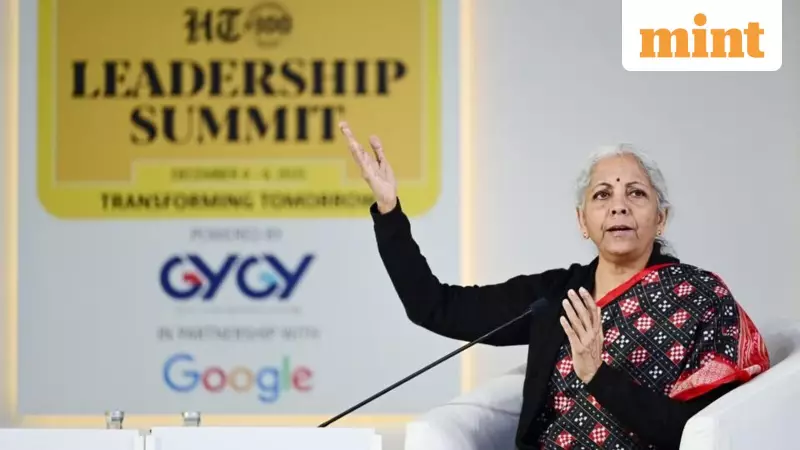
Finance Minister Nirmala Sitharaman has declared that the government's next major regulatory push will be a comprehensive overhaul of India's customs duty structure and procedures. Speaking at the HT Leadership Summit 2025, she expressed confidence that the economy is on track to expand by 7% or more in the current fiscal year, buoyed by recent tax relief measures aimed at stimulating consumer spending.
A Simpler, More Transparent Customs System
Sitharaman stated that a complete revamp of the customs framework is due, moving beyond the recent big-bang reforms like GST and income-tax changes. The goal is to create a system that is far simpler, less tedious for compliance, and more transparent. While India remains aligned with World Customs Organization standards, the minister emphasized that execution on the ground is key.
Drawing a parallel with the transformation of the income tax administration, which faced criticism for being "painful" and led to the term "tax terrorism," Sitharaman said similar principles must now guide customs reform. The focus will be on minimizing physical interface and reducing discretionary powers of officials, while still effectively managing the risk of illicit goods entering the country.

The government has already been reducing customs duties over the past two years, and Sitharaman indicated that in areas where rates remain above optimal levels, further reductions are planned. She termed this her next major "clean-up exercise."
Rupee's Strength Tied to Economic Fundamentals
Addressing questions about the Indian rupee's movement, the Finance Minister urged that it be viewed in the context of India's broader economic story. While acknowledging that her party had effectively criticized the government on currency weakness when in opposition, she highlighted the changed economic fundamentals today.
India's position as the world's fourth-largest economy, soon to be third, places it on a different footing, she argued. Sitharaman noted that while a weaker rupee can benefit exporters, she is not complacent about its level. The rupee, like other economic indicators, will find its natural level based on the economy's underlying strength, she asserted.
Addressing State Finances and Populist Freebies
On the issue of rising populist spending and freebies by state governments, Sitharaman drew a clear distinction between essential welfare and electorally motivated giveaways. Her primary concern, she clarified, is whether states can afford such schemes, especially when they borrow heavily to finance them.
The minister revealed she has held constructive one-on-one conversations with state finance ministers, offering guidance from central departments to help restructure expensive debt. She warned that borrowing to repay old loans is extremely poor-quality borrowing and creates an unfair intergenerational burden.
Growth Drivers and Changing Savings Patterns
Regarding the impact of recent fiscal measures, Sitharaman said the income-tax changes effective from April 1 will show their full effect on collections next year, but increased spending is already visible. The GST rationalization's impact should be assessed over the medium term across all sectors, not just one.
Responding to concerns about falling household savings, the Finance Minister presented a nuanced view. She argued that while traditional savings in banks and post offices may not be growing rapidly, retail investments in markets, mutual funds, and physical assets are rising. Savings are being channeled differently into investments and assets, not necessarily declining.
Reflecting on her tenure, marked by the pandemic, supply chain disruptions, and global headwinds, Sitharaman credited the Indian economy's resilience to stable leadership and consistent policies. She also commended Indian retail investors for their growing market understanding and risk-calibrated approach.






