India's Fuel Supply Crisis: A Tale of National Stability and Localized Disruptions
The ongoing fuel supply adjustments in India highlight a significant challenge in managing energy security amidst global geopolitical disruptions, while striving to balance domestic demand across various sectors. The government's strategy has centered on prioritizing essential services and households, ensuring that critical needs such as cooking fuel and transport gas remain uninterrupted, even as external pressures strain supply chains.
Government Response and Supply Diversification
A pivotal aspect of the response has been diversification—shifting from traditional suppliers in the Gulf region to spot purchases from multiple global markets. This move has played a crucial role in stabilizing supplies for vital sectors like fertilisers, which are essential for maintaining agricultural productivity. Concurrently, incremental increases in allocation to industries and city gas networks reflect efforts to gradually restore equilibrium in the energy landscape.
Structural Weaknesses Exposed
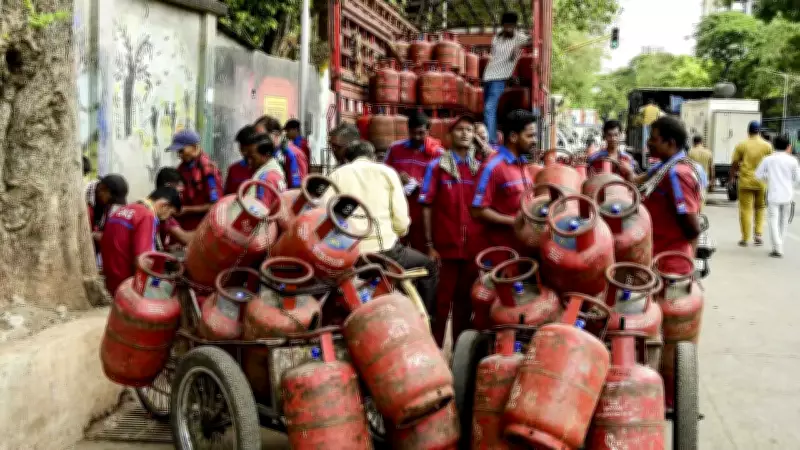
However, the crisis has laid bare structural weaknesses within the distribution systems. Issues such as limited infrastructure, reliance on informal supply channels, and pricing disparities between public and private outlets have exacerbated the impact on vulnerable populations. Migrant workers and daily wage earners, particularly in urban-industrial clusters, have been disproportionately affected, as they depend heavily on low-cost, informal fuel access that has now been significantly curtailed.

Urban Transport Disruptions in Bengaluru
Urban transport ecosystems have demonstrated fragility, with Bengaluru's autorickshaw network facing severe disruption due to concentrated pressure on limited LPG dispensing infrastructure. This situation underscores how localized bottlenecks can persist despite overall supply sufficiency at the national level. In Bengaluru, nearly half of the city's autorickshaws are reportedly idle, as drivers struggle with long queues and erratic supply, forcing many to wait for up to four to five hours at fuel stations. The closure of approximately 80% of private auto LPG outlets in Karnataka, linked to global supply disruptions from West Asia tensions, has worsened the scenario.
Policy Measures and Demand Management
At the policy level, measures including rationing refill intervals, promoting alternative fuels, and tightening enforcement against black marketing indicate a shift toward demand management alongside supply augmentation. For instance, authorities have advised autorickshaw drivers to temporarily switch to petrol, noting that nearly 70% of Bengaluru's autos have dual-fuel capability. Similar trends are emerging in smaller towns, reflecting broader behavioral shifts.
Industrial and MSME Challenges
The crisis has also impacted industries, especially Micro, Small, and Medium Enterprises (MSMEs). With piped natural gas (PNG) supply capped at nearly 55% of average consumption, many units are operating below capacity, disrupting production cycles. Industry bodies report that restricted supply, rising gas prices, and delays in new connections have compounded the crisis, forcing several to scale down output or explore alternative fuels. To manage financial pressure, MSME representatives have proposed shifting from a one-month advance deposit system to a weekly billing and payment cycle linked to actual consumption, arguing this would improve liquidity and support smoother operations.
Regional Disparities and Consumer Shifts
At the consumer level, states such as Maharashtra, Gujarat, and Rajasthan have reported adequate fuel and LPG availability, supported by robust supply chains, monitoring systems, and enforcement actions against hoarding and black marketing. Officials have repeatedly urged citizens to avoid panic buying, while promoting digital booking and alternative fuels to ease pressure. In contrast, ground realities in urban clusters like the National Capital Region (NCR) and Bengaluru reveal a more acute crisis. In NCR, the collapse of the LPG black market—once a key source for low-income migrant workers—has triggered reverse migration, as daily wagers struggle to afford cooking fuel and food.

Overall Impact and Future Outlook
The situation ultimately reflects a dual reality: while India's energy system demonstrates resilience at a national level, ensuring equitable access and affordability at the grassroots remains a formidable challenge, particularly during periods of global uncertainty. Behavioral shifts, including increased reliance on alternative fuels like petrol and kerosene, and a return to traditional cooking methods in some areas, highlight the adaptive responses of affected communities. Overall, macro-level supply remains stable and under control, but uneven distribution, infrastructure bottlenecks, and affordability challenges are driving localized disruptions, emphasizing the vulnerability of informal workers and transport sectors during energy shocks.