

Global Equity Markets Sink into Red Zone Amid Economic and AI Headwinds
A confluence of negative factors has sent shockwaves through global financial markets, pushing major equity indices into a sea of red. Disappointing economic data from key economies, the disruptive launch of a new AI tool by Anthropic, and persistent geopolitical uncertainties have collectively fueled investor anxiety and triggered widespread sell-offs.
Worldwide Market Declines Reflect Broad-Based Concerns
On Thursday, the bearish sentiment was palpable across continents. In Asia, Japan's Nikkei index closed 0.9% lower, while China's Shanghai Composite and India's Sensex each fell by 0.6%. European markets followed suit, with the UK's FTSE declining 0.8% and Germany's DAX dropping 1% in late trading sessions.
The downturn extended to the United States, where early trades saw significant losses. The tech-heavy Nasdaq Composite plunged 1.6%, the Dow Jones Industrial Average fell 1.1%, and the S&P 500 dropped 1.2%. Amid this global retreat, Brazil's iBovespa index emerged as a rare bright spot, gaining 0.5% in early trading.

Anthropic's AI Launch Adds to Market Volatility
The financial turbulence was exacerbated by Anthropic's introduction of a new artificial intelligence tool, which market analysts fear could threaten the established business models of numerous software services companies worldwide. This technological disruption has introduced additional uncertainty into an already jittery investment landscape.
Commodities and Metals Experience Heavy Sell-Off
In the commodities space, a strengthening US dollar triggered a substantial sell-off across precious and industrial metals. During mid-session trading on the New York Commodity Exchange, silver prices plummeted by 13%, gold fell 2.4%, and copper declined 1.4%.
Economic Data Points to Growing Employment Concerns
According to a leading debt fund manager, rising unemployment rates in developed economies are causing central bankers and policymakers to reconsider their economic strategies. Recent labor data from the United States revealed troubling trends, with employment rates, job losses, and jobless claims all reaching multi-year highs, while job openings hit multi-year lows.
"This deteriorating employment landscape is making investors increasingly nervous about future economic stability," the fund manager noted.
Central Bank Decisions Reflect Economic Uncertainty
The Bank of England's recent decision to maintain its interest rate at 3.75% highlighted the prevailing economic uncertainty. Market observers pointed out that this decision was reached with a narrow 5:4 majority among the bank's rate-setting panel, indicating significant internal disagreement about the appropriate monetary policy path forward.
Indian Markets Mirror Global Downturn
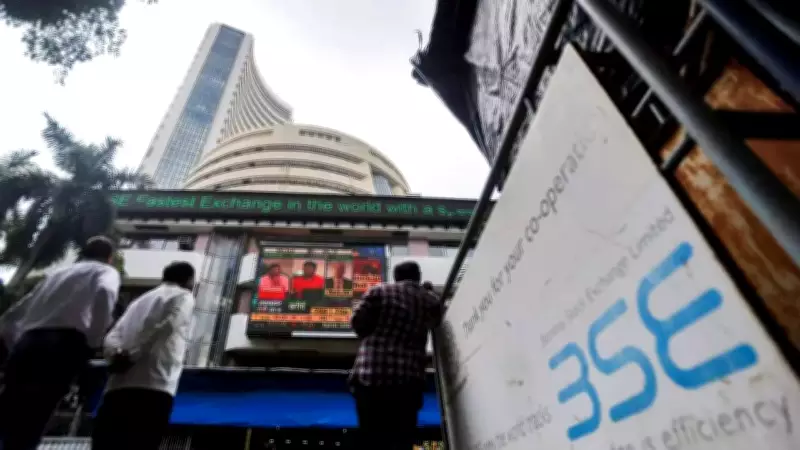
India's benchmark indices were not immune to the global sell-off. The Sensex closed at 83,314 points, down 504 points, while the Nifty on the National Stock Exchange fell 133 points to settle at 25,643 points. This decline reflects how interconnected global markets have become in responding to shared economic and technological challenges.
The combination of weak economic indicators, disruptive technological innovation, geopolitical tensions, and commodity market volatility has created a perfect storm for global investors. As markets continue to digest these developments, analysts warn that further turbulence may lie ahead until clearer economic signals emerge.






