

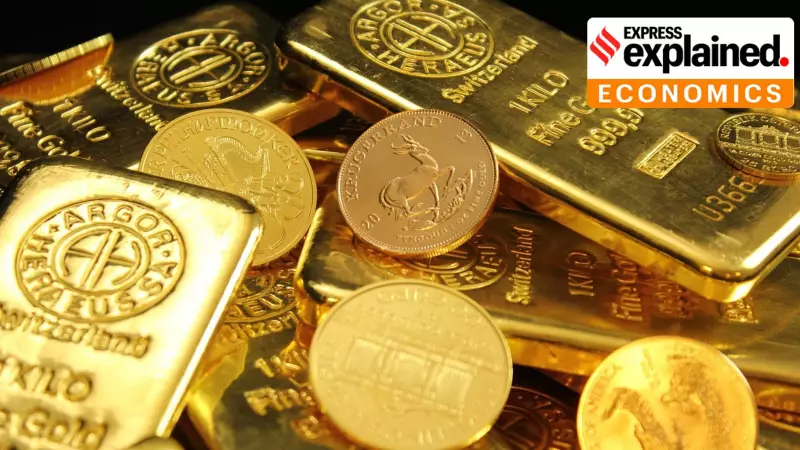
Gold Price Soars Past $5,000 Per Ounce in Unprecedented Rally
In a historic milestone, the price of gold has surged beyond $5,000 per ounce for the first time ever, marking a breathtaking rally that has seen its value increase by 90% since US President Donald Trump's inauguration in January 2025. This meteoric rise is attributed to a combination of factors, including fears of US dollar instability, geopolitical turmoil, and concerns over an impending debt crisis, which have collectively eroded investor confidence in traditional financial systems.
Geopolitical Chaos and Economic Uncertainty Fuel Safe Haven Demand
The Trump administration's actions have significantly contributed to the surge in gold prices. Demand for gold as a safe haven asset has escalated following a series of geopolitical disruptions. In January alone, President Trump removed Nicolas Maduro as President of Venezuela, threatened military action in Greenland, and considered initiating conflict with Iran. On the economic front, he has imposed tariff threats on European nations, Canada, and South Korea, creating volatility in global markets.
These actions, coupled with subsequent reversals, have heightened uncertainty, driving investors towards gold as insurance against currency failure and economic instability. Traditionally, gold price increases have been linked to a depreciating US dollar, falling interest rates, or economic crises, but the current rally defies conventional logic by occurring alongside rising interest rates and a weaker dollar.

Central Bank Stockpiling and Diversification Away from the Dollar
Central banks worldwide have been actively stockpiling gold since 2022, following the outbreak of the Russia-Ukraine war. This shift from net sellers to net buyers has been a key driver of sustained demand. According to a JP Morgan Global Research analysis, gold purchases by central banks averaged 400-500 tonnes annually before 2022 but have exceeded 1,000 tonnes each year since, more than doubling the pre-2022 average.
This stockpiling reflects a broader trend of de-dollarisation, as countries seek to diversify their reserves away from the US dollar. The dollar's share in global reserves has declined from 71% in 2000 to 58% today, indicating a slow erosion of trust in the currency's dominance. Gold, which served as the basis for currencies until 1971, is now being reclaimed as a reliable store of value amid geopolitical and economic uncertainties.
Federal Reserve Autonomy and Debt Crisis Concerns
Investor anxiety is further compounded by concerns over the autonomy of the Federal Reserve. President Trump's contentious relationship with Fed Chair Jerome Powell and his firing of Board of Governors member Lisa Cook, currently challenged in the Supreme Court, have raised fears of political interference in monetary policy. Trump's push for rate cuts to boost spending could weaken the dollar by encouraging inflation, prompting foreign investors to seek higher returns elsewhere.
Additionally, the risk of a US government shutdown over funding disputes, such as the recent tensions involving the Department of Homeland Security, adds to the economic instability. The previous shutdown in 2025 lasted 43 days, with projected declines in GDP growth and permanent economic losses, highlighting the potential catastrophic impact of repeated shutdowns.
Gold as a Debasement Hedge and Non-Yielding Competitor
The current gold rally is unique because it functions as both a debasement hedge and a non-yielding competitor to US Treasury securities. As the US government debt balloons to $38.49 trillion, growing faster than the economy, investors question the government's ability to back its debt without resorting to money printing, which could exacerbate inflation. Gold offers protection against currency debasement and serves as an alternative to bonds, which are traditionally seen as safe investments but now carry increased risk.
Interestingly, both gold and bonds are rising together, suggesting that investors are losing faith in paper promises and hedging against a system they no longer fully trust. This phenomenon underscores the deepening crisis of confidence in the global financial framework.

Divergent Views on the Surge: Central Bank Buying vs. Debt Crisis Fears
Not all analysts agree on the primary driver of the gold rally. While central bank stockpiling explains sustained demand, some experts, like Robin J Brooks of the Brookings Institution, argue that the timing points to escalating fears of an actual debt crisis rather than planned diversification. Brooks notes that the explosive rally materialised in 2025, coinciding with surges in other metals like silver and palladium, indicating significant retail investor speculation alongside central bank accumulation.
Regardless of the cause, the gold rally, expected to continue through 2026, signals declining confidence in the traditional financial system comprising the US dollar, Treasury bonds, and Fed autonomy. Whether driven by strategic diversification or genuine crisis fears, the message is clear: investors are seeking refuge in gold as a safeguard against an uncertain future.





