

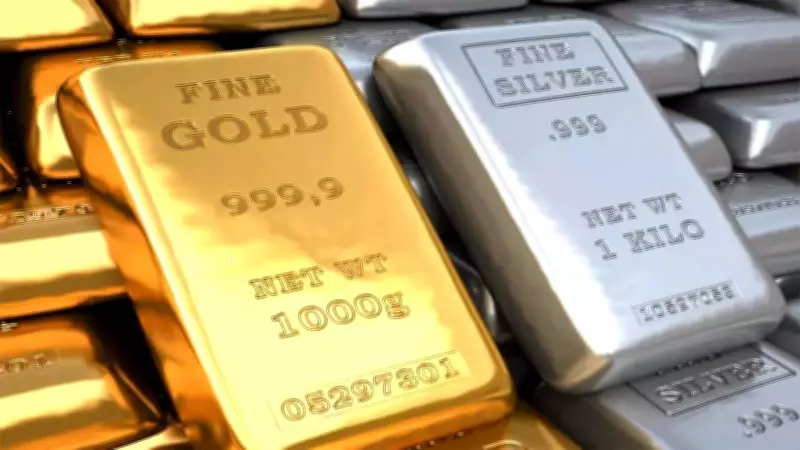
Divergent Trends in Gold and Silver Imports Impact India's Trade Balance
Recent data from India's commerce department reveals a stark contrast in the import patterns of gold and silver, two key precious metals that significantly influence the country's trade dynamics. Despite both commodities experiencing price surges, their demand trajectories have moved in opposite directions, creating complex implications for the trade balance.
Gold Imports: Volume Declines as Prices Soar
During the nine-month period from April to December, gold imports into India witnessed a notable decline in volume. Official statistics show that import volumes dipped by 18.3%, falling to 522 tonnes. This contraction in demand is largely attributed to the sharp increase in gold prices, which made buyers more cautious.
The average price of gold rose nearly 25% on a year-on-year basis, reaching $94,554 per kilogram. This substantial price hike discouraged purchases, as consumers and investors reevaluated their spending on the precious metal, traditionally viewed as a safe-haven investment.

However, the higher unit value meant that the overall value of gold imports still increased by 1.8%, totaling $49.4 billion for the period. This paradoxical situation highlights how price inflation can offset volume declines in trade calculations.
Silver Imports: Volume and Value Skyrocket
In stark contrast, silver imports experienced a dramatic surge during the same timeframe. Import volumes shot up by an impressive 56%, reaching 5,727 tonnes. This growth occurred despite a significant rise in silver prices, with the unit value soaring 46.7% to $1,357 per kilogram.
The combination of higher volumes and elevated prices resulted in silver import values more than doubling. The total import bill for silver jumped to $7.8 billion during April-December, compared to $3.4 billion in the corresponding nine-month period of the previous year.
Underlying Factors Driving the Divergence
Experts point to fundamental differences in the usage patterns of these two precious metals as a key reason for their contrasting import trends. Gold is predominantly seen as an investment instrument and a store of value, making it more sensitive to price fluctuations. When prices rise sharply, as they did during this period, investment demand tends to soften as buyers become more price-conscious.
Conversely, silver has substantial industrial applications beyond its role as a precious metal. It is widely used in electronics, solar panels, medical devices, and various manufacturing processes. This industrial demand appears to be less elastic to price increases, explaining why imports continued to grow robustly despite the nearly 47% price hike.
Implications for India's Trade Balance
The surge in imports of both gold and silver, particularly the dramatic increase in silver import values, has contributed to pressure on India's trade balance. While gold imports showed some restraint in volume terms, their high value still represents a significant outflow of foreign exchange.
The silver import boom, with values more than doubling, adds substantially to the import bill. This divergent trend between the two metals creates a complex scenario for policymakers who must balance trade considerations with domestic demand for these important commodities.
As India continues to navigate global economic uncertainties, monitoring these precious metal import patterns will remain crucial for understanding broader trade dynamics and formulating appropriate economic policies.






