

Senior Indian officials have expressed strong confidence that the International Monetary Fund's (IMF) evaluation of the country's official statistics is poised for a significant positive shift in the coming year. This optimism follows the IMF's recent report, which maintained an overall 'B' grade for India's statistical system and a 'C' grade specifically for its Gross Domestic Product (GDP) data.
Confidence in Upcoming IMF Review
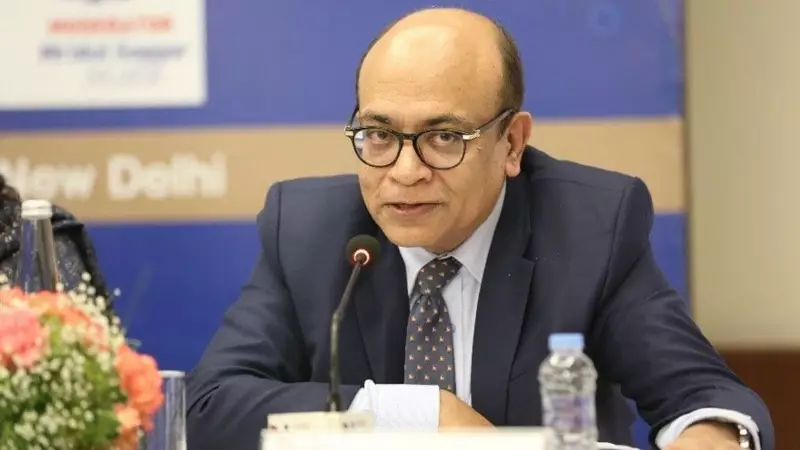
Mridul Saggar, Chairman of the Technical Advisory Committee on the Index of Industrial Production (IIP), stated that a "remarkable change" is expected in the IMF's next assessment. He made these remarks at a workshop organized by the Ministry of Statistics and Programme Implementation (MoSPI) on Tuesday. "We started this workshop with a note about IMF assessment. You wait for next year’s assessment – I am sure there will be a remarkable change in the assessment," Saggar asserted.
The IMF's latest review, released last month, acknowledged the government's efforts to update key datasets like GDP and the Consumer Price Index (CPI) while retaining the existing grades. Officials now indicate that a comprehensive statistical overhaul currently underway will directly address the fund's primary concerns.

Addressing Core Methodological Concerns
Narendra Kumar Santoshi, MoSPI’s Director General of Central Statistics, outlined the three main issues raised by the IMF: the old base year for GDP, the absence of the double-deflation method for computing real GDP, and statistical discrepancies. He confirmed that the new data series are tackling these problems to the "best possible extent."
A major component of this update is the new Consumer Price Index (CPI) series, scheduled for release on February 12, 2026. Santoshi emphasized that this series will be "fully aligned with international standards." The revision involves shifting the base year to 2024 from 2012 and updating the basket of goods and services using the 2023-24 Household Consumption Expenditure Survey, replacing the outdated 2011-12 basket.
Simultaneously, the GDP data is undergoing a substantial revision. The base year will move to 2022-23 from 2011-12, and new data sources will be incorporated to measure the final value of goods and services more accurately. The first set of revised GDP numbers, for the October-December quarter, will be published on February 27, 2026.
Revamping Industrial Data and Embracing Critique
Parallel reforms are also targeting the Index of Industrial Production (IIP). To better capture industrial growth, MoSPI has proposed replacing defunct factories in its sample with new, active ones. Officials are also considering expanding the fixed panel of factories used in the IIP calculation annually to align it more closely with the Annual Survey of Industries (ASI).
Ankita Singh, a Deputy Director General at MoSPI, explained that this move aims to correct underestimation by accounting for new significant producers. Mridul Saggar added that the plan is to add new factories to the panel once a year, but only as an exception for cases involving entirely new production processes.
The recent high GDP growth prints of 7.8% and 8.2% for the first two quarters of the current fiscal year have sparked debate among economists. While Chief Economic Advisor V. Anantha Nageswaran cautioned against "half-baked" questions sowing doubt, Niti Aayog Vice Chairman Suman Bery highlighted the value of "a series of fierce and knowledgeable critiques" to drive methodological improvements and bolster public credibility.
Ila Patnaik, a member of the IIP review committee, offered a realistic perspective, noting that while progress is being made, new challenges will inevitably arise in a rapidly growing economy like India's. She pointed out that international best practices sometimes lack guidance for a country with India's unique combination of growth speed and income level.
The collective message from the statistical establishment is clear: a concerted, multi-pronged effort is being made to modernize India's data infrastructure. The anticipated payoff is a substantially improved report card from international institutions like the IMF in 2026.






