India Maintains Robust Energy Preparedness Amid West Asia Conflict
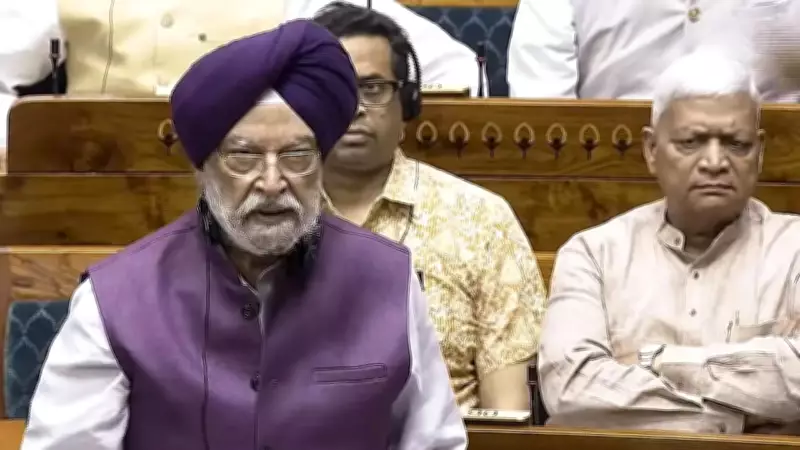
Union Minister for Petroleum and Natural Gas Hardeep Singh Puri addressed the Lok Sabha on Thursday, delivering a comprehensive assurance that India remains well-prepared to manage disruptions in global energy supplies triggered by the ongoing West Asia conflict. Amid protests from Opposition members, Puri emphasized that domestic fuel availability and power generation are fully protected, while urging stakeholders to avoid spreading rumours during this critical period.
Diversified Crude Sourcing and Supply Stability
Puri highlighted that the hostilities have effectively shut commercial shipping through the Strait of Hormuz, a key route that typically carries about 20 per cent of the world’s crude oil, natural gas, and LPG. Despite this disruption, with around 45 per cent of India’s crude imports previously passing through this route, the country has successfully stabilized supplies by increasing alternative sourcing.
He revealed that non-Hormuz sourcing has risen to approximately 70 per cent of crude imports, up from 55 per cent before the conflict began. This resilience is partly attributed to long-term diversification of crude suppliers, with India now importing oil from 40 countries compared to just 27 in 2006-07.

"India has sufficient gas production and supply arrangements to sustain this position even in the event of a prolonged conflict. Power generation for every household and for industry is fully protected," Puri stated confidently.
Assured Fuel Availability and Refinery Operations
The minister assured the House that there is no shortage of essential fuels, including petrol, diesel, kerosene, aviation turbine fuel (ATF), or fuel oil. He emphasized that domestic refineries are operating at high capacity utilization, in some cases exceeding 100 per cent, ensuring continuous supply.
"The availability of petrol, diesel, aviation turbine fuel, kerosene, and fuel oil is fully assured," Puri declared, addressing concerns about potential shortages.
Prioritized Natural Gas Allocation System
On natural gas supplies, Puri detailed that the government has introduced a prioritized allocation system under the Natural Gas Control Order issued on March 9. While a major facility in Qatar has declared force majeure on 30 MMSCMD of gas imports, domestic production remains steady at 90 MMSCMD.
The allocation system ensures:
- Domestic piped gas to homes and CNG for vehicles receive 100 per cent supply with no cuts
- Industrial and manufacturing consumers will receive up to 80 per cent of their previous six-month average
- Fertilizer plants will receive up to 70 per cent, protecting the agricultural input chain ahead of the sowing season
- Refineries and petrochemical units absorb a managed reduction, with that gas redirected to higher-priority sectors
"I am pleased to inform the House that the shortfall has been substantially offset through alternative procurement," Puri added.
Enhanced LPG Production and Distribution Measures
The government has taken significant steps to safeguard LPG availability for approximately 33 crore households. According to the minister, domestic LPG output has been ramped up by 28 per cent in the past five days following refinery directives.
To curb hoarding and regulate demand, authorities have implemented several measures:
- A minimum 25-day gap between LPG cylinder bookings in urban areas
- Expansion of the Delivery Authentication Code system to cover 90 per cent of consumers
Puri clarified that the delivery cycle for domestic LPG remains unaffected: "Domestic supply is fully protected, and the delivery cycle is unchanged. The standard time from booking to delivery for domestic LPG cylinders remains 2.5 days, unchanged from pre-crisis norms."

Alternative Fuel Options and Crisis Management
To further reduce pressure on gas supplies, the government has activated alternate fuel options. Kerosene is being made available through public distribution system channels, while the Ministry of Environment, Forest and Climate Change has advised State Pollution Control Boards to permit, for the duration of this crisis period, the use of biomass, RDF pellets, and kerosene/coal as alternate fuels for the hospitality and restaurant segment for one month.
"This would enable a wider range of establishments to switch and free up LPG for priority consumers," Puri explained.
Call for Unity and Avoidance of Misinformation
Puri strongly urged the public and political stakeholders to avoid spreading misinformation during the ongoing energy crisis, stressing that the government’s preparedness and response mechanisms are working effectively.
"This is not the moment for rumour-mongering or fake narratives. India is navigating the most severe global energy disruption in recorded history. Fuel supply is flowing, gas is prioritized for homes and farms, and LPG production has been stepped up by 28%. Consumer prices are being held far below what market trends and regional competitors would otherwise dictate," he stated.
The minister concluded with a call for national unity: "Schools are open and petrol is available at fuel stations... India must stand united behind the energy workers, behind the institutions managing the crisis, and behind the national interest. The record of preparation and the record of response speak for themselves."