

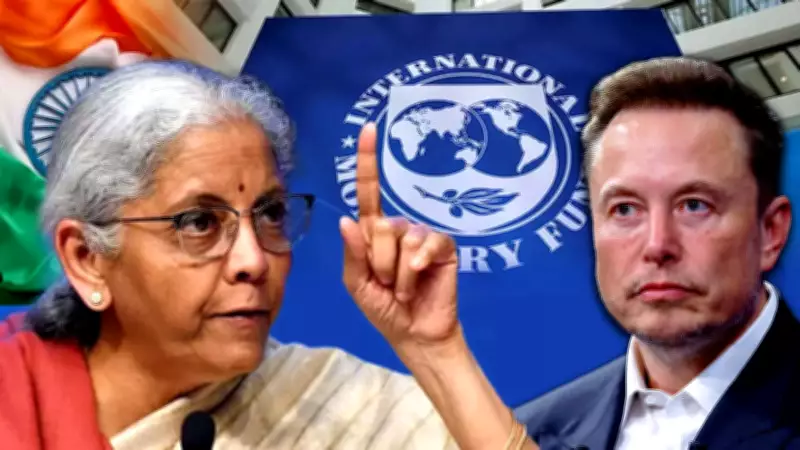
In a significant address to students in Parliament following the presentation of the Union Budget 2026–27, Finance Minister Nirmala Sitharaman emphatically declared that India has become a central pillar of global economic expansion. Her remarks were bolstered by a reference to a recent repost by tech billionaire Elon Musk, which highlighted International Monetary Fund (IMF) growth projections underscoring India's pivotal role.
India's Substantial Contribution to Global GDP Growth
Sitharaman provided concrete data to support her assertion, revealing that India now contributes an impressive 17 percent to global GDP growth. This positions the nation just behind China and notably ahead of economic powerhouses like the United States and Europe. The Finance Minister stressed that this is not merely a perception but a fact grounded in robust, data-backed evidence of India's burgeoning economic strength.
A Call for Recognition and Acknowledgment
During her speech, Sitharaman directly urged the Opposition to acknowledge this significant economic shift. She expressed unwavering confidence in India's trajectory, outlining a clear path to bridge the existing gap with China. This vision is anchored in sustained structural reforms, substantial infrastructure investment, and a focused drive towards productivity-led growth.

Navigating Global Economic Headwinds
The broader context of the IMF outlook, which Sitharaman referenced, projects a steady global expansion but also cautions against potential risks. These include geopolitical tensions, uncertainties in international trade, and mounting debt levels in various economies. The Indian government, however, argues that the nation is exceptionally well-positioned to absorb such external shocks.
Pillars of India's Economic Resilience
This resilience is attributed to several key factors championed by the current administration. Policy continuity provides a stable environment for long-term planning and investment. A concerted push to boost manufacturing, part of initiatives like 'Make in India', aims to enhance self-reliance and export potential. Furthermore, strategic long-term capital spending on infrastructure projects is seen as a critical driver shaping the country's economic future and insulating it from global volatility.
Sitharaman's address, therefore, served a dual purpose: it celebrated India's current economic achievements on the world stage while charting a confident course for its future, emphasizing that the nation's growth story is now inextricably linked to global prosperity.






