

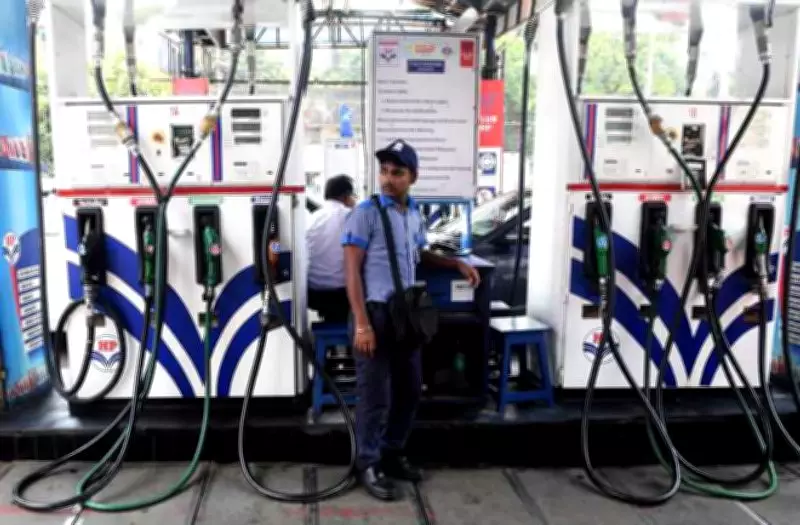
India Announces Major Fuel Tax Reforms to Shield Consumers from Price Hikes
The Government of India has implemented significant changes to its fuel taxation policy, aiming to provide immediate relief to domestic consumers while ensuring adequate supplies within the country. Union Finance Minister Nirmala Sitharaman announced on Friday that the central excise duty on petrol and diesel has been reduced by Rs 10 per litre each for domestic consumption.
Export Benefits Withdrawn for Key Petroleum Products
In a parallel move, the government has withdrawn tax rebate and duty exemption benefits on exports of petrol, high-speed diesel, and aviation turbine fuel. The amendments to the Central Excise Rules, 2017, take effect immediately and represent a substantial shift in India's approach to fuel exports.
"Prime Minister Modi has consistently prioritized protecting citizens from fluctuations in essential commodity prices and supply chains," stated Finance Minister Sitharaman. "To further safeguard domestic availability, we have imposed export duties of Rs 21.5 per litre on diesel and Rs 29.5 per litre on aviation turbine fuel."

Specific Exclusions Added to Excise Rules
The notification, issued by the Department of Revenue under the Ministry of Finance, introduces specific exclusion clauses into Rule 18 and Rule 19 of the Central Excise Rules. These amendments explicitly bar motor spirit (petrol), high-speed diesel oil, and aviation turbine fuel from previously available tax benefits for exporters.
The changes effectively close two key provisions that fuel exporters had utilized to either claim refunds on excise duty paid or to export goods without paying duty upfront. The notification was authorized under Section 37 of the Central Excise Act, 1944, and bears the signature of Dheeraj Sharma, Under Secretary in the Tax Research Unit.
Strategic Exemptions for Neighboring Countries
Despite the broad withdrawal of export benefits, the government has carved out an important exemption for public sector oil companies supplying fuel to four neighboring nations:
- Nepal
- Bhutan
- Bangladesh
- Sri Lanka
State-owned oil companies exporting these three fuels to these countries will continue operating under the previous tax regime, unaffected by the withdrawal of benefits. This exemption underscores New Delhi's commitment to maintaining strategic fuel supply arrangements with immediate neighbors while tightening the overall export framework.
Immediate Implementation Without Transition Period
The revised rules have taken effect immediately, providing no transition window for affected exporters to adjust their operations or financial planning. While the government has not issued an official explanation for the sudden policy shift, industry analysts interpret the move as a strategic effort to discourage fuel exports by private players.
The timing of these measures coincides with ongoing concerns about global energy security, particularly in light of the West Asia crisis mentioned by the Finance Minister. By making exports less financially attractive, the government aims to ensure sufficient domestic availability of these critical petroleum products and prevent potential misuse of export promotion incentives on strategically sensitive commodities.
Parliament has been formally notified of these changes, which represent a comprehensive approach to balancing domestic consumer protection with strategic export management in India's evolving energy landscape.






