

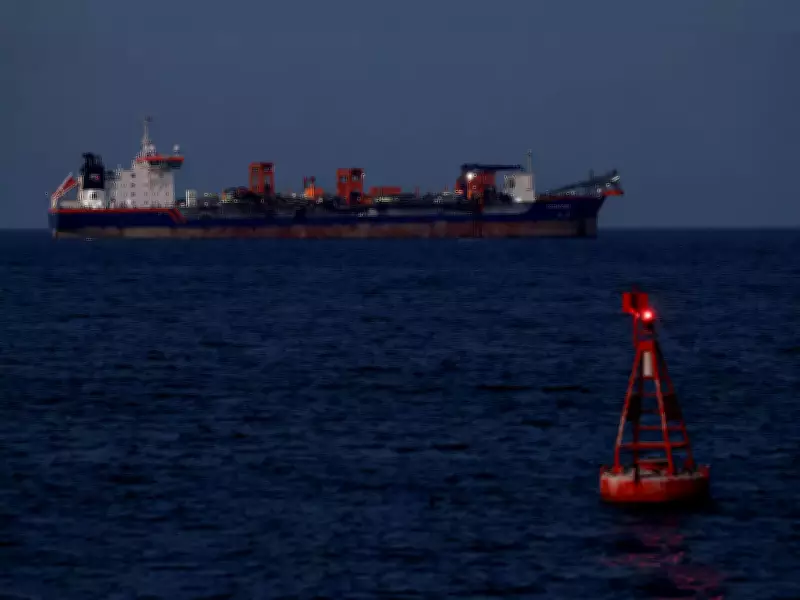
The Ministry of Petroleum and Natural Gas has firmly rejected recent media reports and social media speculation alleging that a shipment of Iranian crude oil destined for India was diverted to China because of payment-related obstacles. In an official statement released on Saturday, the ministry labeled these claims as "factually incorrect" and provided a detailed clarification to counter the circulating rumors.
Ministry's Official Clarification on Crude Oil Imports
The ministry explicitly stated, "The news reports and social media posts of an Iranian crude cargo being diverted from Vadinar, India to China due to 'payment issues' are factually incorrect." It emphasized that India maintains a diverse and flexible sourcing strategy for its crude oil needs, importing from over 40 countries worldwide. Indian companies possess full commercial autonomy to select oil sources based on economic and operational considerations, ensuring a robust and adaptable supply chain.
Assurance of Secure Energy Supplies
In a post on social media platform X, the ministry reassured the public and stakeholders that Indian refiners have already secured their energy requirements for the upcoming months. "Amid Middle East supply disruptions, Indian refiners have secured their crude oil requirements, including from Iran; and there is no payment hurdle for Iranian crude imports, contrary to the rumors being circulated," the statement read. It further reiterated, "India’s crude oil requirements remain fully secured for the coming months," highlighting the nation's preparedness in the face of global market volatility.

Explanation of Vessel Destination Changes
The ministry also addressed the specific allegations regarding the diversion of the Aframax tanker Ping Shun, which had initially indicated Vadinar in Gujarat as its destination but was later reported by ship-tracking firm Kpler to be heading towards Dongying in China. The ministry explained that such changes are not unusual in the global oil trade. "Claims on vessel diversion ignore how oil trade works. Bills of Lading often carry indicative discharge ports destinations and on-sea cargoes can change destinations mid-voyage based on trade optimisation and operational flexibility." This clarification underscores the dynamic nature of maritime logistics in the energy sector.
Background on India-Iran Oil Trade
The cargo in question was anticipated to be India's first import of Iranian crude since 2019, a significant development given the historical context. In the past, India was a major buyer of Iranian oil, importing approximately 518,000 barrels per day in 2018, which accounted for about 11.5 percent of its total crude imports. However, volumes declined in 2019 during a sanctions waiver period and eventually halted due to geopolitical and financial constraints.
Current Challenges and US Waiver
Despite a recent U.S. waiver permitting limited purchases of Iranian oil at sea for a 30-day period, financial hurdles persist. Iran's exclusion from the SWIFT international banking system continues to complicate transactions, affecting payment mechanisms. The waiver is set to expire on April 19, with an estimated 95 million barrels of Iranian oil currently stored on vessels at sea, highlighting the ongoing complexities in global energy trade.
Clarification on LPG Supplies
In addition to crude oil, the ministry also addressed related claims concerning liquefied petroleum gas (LPG) supplies from Iran. It stated, "On LPG too, some claims being made are incorrect as LPG vessel Sea Bird carrying around 44 TMT Iranian LPG berthed at Mangalore, India on April 2 and is currently discharging." This further reinforces the ministry's stance that India's energy imports from Iran are proceeding without the alleged disruptions.
The ministry's comprehensive response aims to dispel misinformation and assure stakeholders of India's stable and secure energy procurement strategy, amidst a backdrop of global supply chain uncertainties and geopolitical tensions.






