

India Announces Cooking Fuel Relief Measures Amid West Asia Supply Disruptions
In response to mounting pressure from the hospitality sector and widespread consumer anxiety, the Indian government has unveiled a series of strategic interventions to stabilize cooking fuel availability. These measures come as energy supplies from West Asia remain severely disrupted due to ongoing military conflicts, impacting global trade routes.
Immediate Actions for Commercial and Domestic Consumers
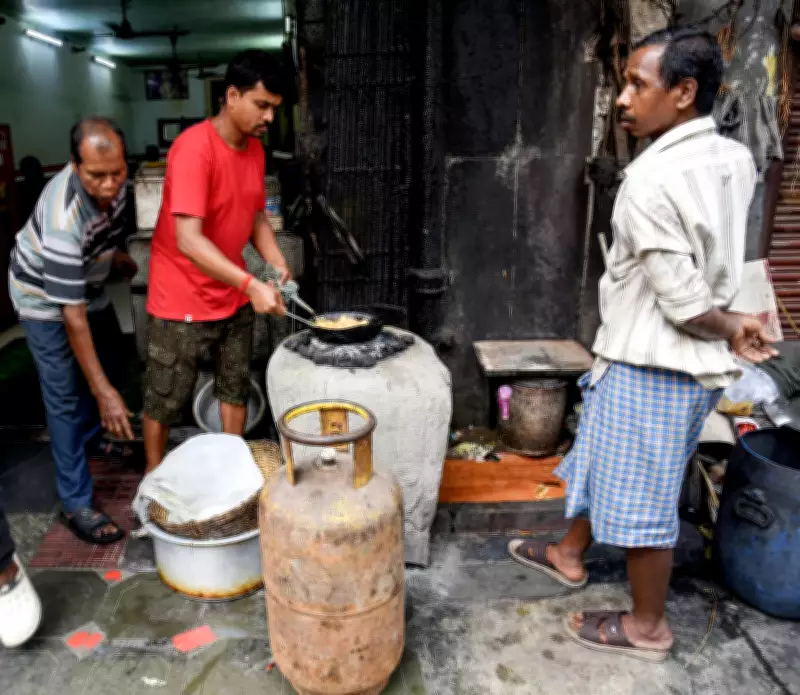
The government has authorized a three-member committee of oil marketing companies to permit commercial establishments, such as hotels and restaurants, to access up to 20% of their average monthly LPG consumption. This targeted allocation aims to prevent complete operational halts in the hospitality industry, which has been vocal about supply constraints.
Simultaneously, in rural areas, the mandatory gap between booking two LPG cylinders has been extended from 25 days to 45 days. This adjustment is designed to curb panic buying and ensure a more equitable distribution of available stocks, as reports indicate a surge in bookings driven by consumer fear rather than actual scarcity.

Alternative Fuel Sources Temporarily Reintroduced
To further alleviate the strain, the petroleum ministry has allocated an additional 48,000 kilolitres of kerosene to states, supplementing the regular quota of one lakh kilolitres. This kerosene is designated for use as a cooking fuel, with state and Union Territory governments tasked with identifying beneficiaries for its distribution.
In a notable move, pollution control boards across states and UTs have been instructed to allow the temporary use of biomass, RDF pellets, and coal as alternate fuels in the hospitality and restaurant sectors for one month. This decision reflects a pragmatic approach to maintaining essential services amid the crisis, albeit with environmental considerations temporarily relaxed.
Government Assurance and Monitoring Mechanisms
Despite these measures, government officials maintain that domestic cooking gas supplies are sufficient, with 50 lakh cylinders distributed daily. Sujata Sharma, Joint Secretary of the Ministry of Petroleum and Natural Gas, emphasized, "It's a difficult situation. But govt is making all efforts to ensure that supply to domestic consumers is maintained. We urge citizens to avoid panic booking and all efforts have to be made to conserve fuel wherever possible."
A high-level three-member group of ministers, headed by Home Minister Amit Shah and including External Affairs Minister S. Jaishankar and Petroleum Minister Hardeep Singh Puri, has been established to review developments and coordinate necessary actions. Additionally, consumer complaints related to cooking gas cylinders are being tracked through the National Consumer Helpline for swift redressal.
Parliamentary Insights on Supply Security
In the Lok Sabha, Petroleum Minister Hardeep Singh Puri provided detailed updates on the situation. He highlighted that the Strait of Hormuz, a critical chokepoint through which India imports over half of its crude oil, 55% of LPG, and 30% of LNG, has been disrupted for 13 days. "For the first time in recorded history, the Strait of Hormuz has been effectively closed to commercial shipping," Puri stated, noting that India's crude supply remains secure due to diversified sourcing.
Puri assured Parliament that procurement has been broadened to include the US, Norway, Canada, Algeria, and Russia, alongside available Gulf sources. He confirmed that the availability of petrol, diesel, aviation turbine fuel, kerosene, and fuel oil is fully assured, with retail outlets across the country adequately stocked.

Addressing Market Distortions and Hoarding
The minister pointed out that commercial LPG, which operates in a deregulated market without government subsidy, has become a channel for hoarding and price inflation in the current constrained environment. "In a supply-constrained environment where public anxiety is elevated, this deregulated structure creates a direct and uncontrolled pathway for hoarding, diversion and resale at inflated prices... The govt has taken the responsible course: to regulate this channel with clear priorities and a transparent allocation mechanism," Puri explained.
He reiterated that the standard delivery time for domestic LPG cylinders remains at 2.5 days, unchanged from pre-crisis norms, and attributed the rush-booking pressure to demand distortion rather than supply failure.
These comprehensive steps underscore the government's proactive stance in navigating the complex fallout from the West Asia conflict, balancing immediate relief with long-term energy security strategies.





