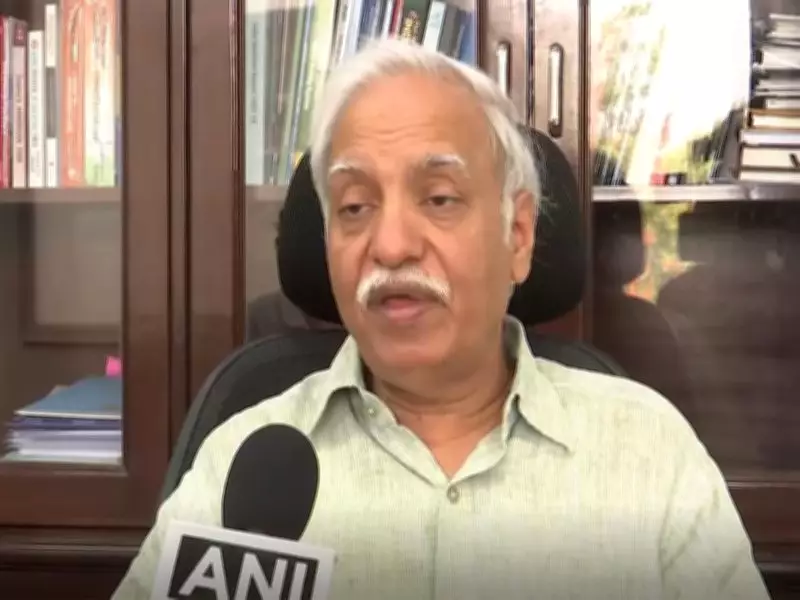
India is rapidly positioning itself as an alternative investment destination to China amid growing global uncertainty, according to the Vice Chancellor of the Indian Institute of Foreign Trade (IIFT). The shift is driven by a combination of policy reforms, a skilled workforce, and a stable political environment, making India an attractive option for foreign investors seeking diversification away from China.
Policy Reforms and Ease of Doing Business
The Indian government has implemented a series of policy reforms aimed at improving the ease of doing business. These include the introduction of the Goods and Services Tax (GST), the Insolvency and Bankruptcy Code, and the reduction of corporate tax rates. Such measures have significantly enhanced India's appeal as an investment hub. The IIFT VC emphasized that these reforms have created a more transparent and predictable regulatory environment, which is crucial for long-term investments.
Skilled Workforce and Demographic Dividend
India's large pool of skilled professionals, particularly in the technology and services sectors, is another key factor. The country's demographic dividend, with a young and increasingly educated population, provides a competitive edge. Many multinational companies are looking to tap into this talent pool, especially in areas like information technology, pharmaceuticals, and engineering. The IIFT VC noted that India's workforce is not only cost-effective but also highly adaptable to changing market demands.

Geopolitical Stability and Strategic Alliances
Amidst rising geopolitical tensions and trade wars, India's stable political environment and strategic alliances have become significant advantages. The country has maintained a neutral stance in global conflicts while strengthening ties with major economies like the United States, Japan, and European nations. This has led to increased foreign direct investment (FDI) from countries seeking to reduce their dependence on China. The IIFT VC highlighted that India's participation in regional trade agreements and its proactive diplomacy further enhance its attractiveness.
Sectoral Opportunities and Infrastructure Development
Specific sectors such as electronics manufacturing, renewable energy, and automotive components have seen a surge in interest from foreign investors. The government's Production Linked Incentive (PLI) schemes have been instrumental in boosting domestic manufacturing. Additionally, infrastructure development, including the expansion of highways, ports, and digital connectivity, has improved logistics and reduced operational costs. The IIFT VC pointed out that these developments are creating a robust ecosystem for investment.
Challenges and the Road Ahead
Despite the positive outlook, challenges remain, including bureaucratic hurdles, land acquisition issues, and regulatory complexities. However, the government is actively addressing these through continuous reforms and digitalization of processes. The IIFT VC expressed confidence that with sustained efforts, India can become a top global investment destination. The country's focus on self-reliance and the 'Make in India' initiative are likely to further boost its position.
In conclusion, India's emergence as an alternative to China is not just a short-term reaction to global uncertainty but a long-term strategic shift. The combination of policy support, a skilled workforce, and geopolitical stability positions India well to attract significant foreign investment in the coming years. The IIFT VC's remarks underscore the growing confidence in India's economic potential and its ability to offer a viable alternative to investors worldwide.