

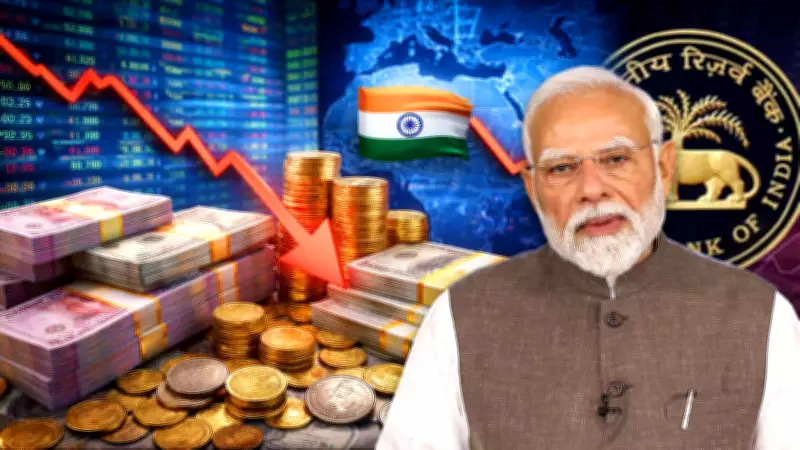
India's Economic Ranking Shift: A Deeper Look Beyond the Headlines
Recent data from the International Monetary Fund has indicated that India has slipped to become the world's sixth largest economy, a development that has sparked widespread discussion and concern among analysts and the public alike. However, this statistical shift requires careful examination, as it reflects complex global economic dynamics rather than a fundamental weakening of India's economic momentum.
The Currency and Technical Factors Behind the Ranking Change
The primary drivers behind India's changed position in the global economic hierarchy are currency valuation fluctuations and methodological revisions in how economic output is calculated. When comparing economies across different nations, the standard practice involves converting local currency GDP figures into US dollars. The relative strength or weakness of the Indian rupee against the dollar significantly impacts these comparative rankings.
Additionally, the IMF periodically updates its assessment methodologies and data sources, which can lead to revisions in historical economic figures. These technical adjustments, combined with currency movements, have created the appearance of a ranking shift that doesn't necessarily correspond to changes in actual economic activity within India's borders.

India's Growth Trajectory Remains Strong
Despite the changed ranking, multiple authoritative institutions continue to project robust economic growth for India in the coming years:
- The International Monetary Fund maintains growth projections for India in the range of 6-6.5%
- The World Bank's assessments align closely with these optimistic forecasts
- The Reserve Bank of India's own analysis supports this positive outlook
These consistent projections from diverse economic institutions underscore that India continues to be the fastest-growing major economy globally, maintaining its position ahead of other large economies in terms of growth rate.
What the Ranking Change Really Means
The shift in India's global economic ranking should be understood within its proper context:
- Relative positioning: The change reflects how other economies have performed relative to India, not necessarily India's absolute economic decline
- Measurement challenges: Cross-country economic comparisons face inherent limitations due to different accounting methods and currency conversion issues
- Temporary nature: Currency fluctuations that affect rankings can reverse direction as global financial conditions evolve
Economic analysts emphasize that India's long-term growth story remains fundamentally intact. The country continues to benefit from demographic advantages, increasing digitalization, infrastructure development, and ongoing economic reforms that position it well for sustained expansion in the coming decades.
While headline rankings capture attention, the more meaningful indicators of economic health include employment generation, investment flows, productivity improvements, and living standards enhancement—areas where India continues to make measurable progress despite the statistical repositioning in global rankings.






