India Maintains Fuel Price Stability Amid Global Oil Market Turmoil
As geopolitical tensions escalate in the Middle East, particularly involving the US, Israel, and Iran, countries worldwide are grappling with soaring fuel costs. Many nations have implemented price hikes or rationing measures to manage the crisis. However, India has taken a different approach, prioritizing consumer protection and market stability through strategic government intervention.
Government's Decisive Action to Cushion Impact
Despite global crude oil prices climbing to approximately $120 per barrel, state-run refiners in India have refrained from increasing petrol and diesel prices. This stability is largely attributed to a significant excise duty reduction announced by the government last week. The move effectively cushions consumers from potential price hikes while alleviating pressure on oil marketing companies.
The government has implemented a dual strategy: reducing excise duty on petrol and diesel by Rs 10 per litre while imposing export duties of Rs 21.50 per litre on diesel and Rs 29.50 per litre on aviation turbine fuel. This comprehensive approach aims to strengthen domestic supply chains and ensure fuel availability remains uninterrupted.

Current Fuel Prices Across Major Indian Cities
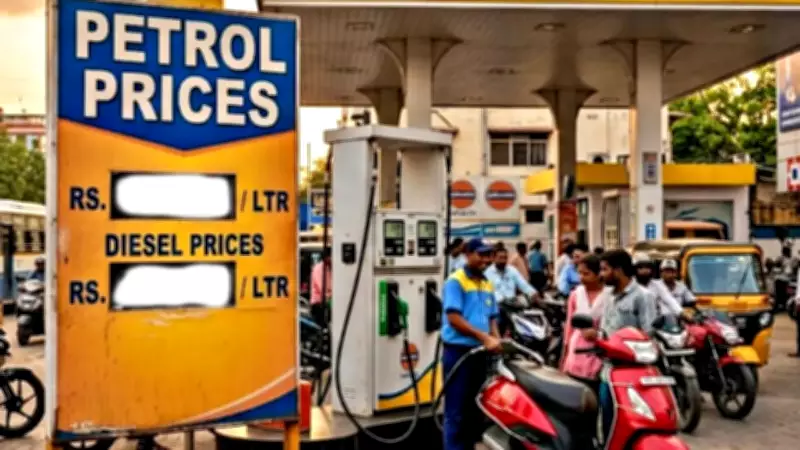
Despite rising global oil prices on Monday, March 30, 2026, retail fuel prices in India remained unchanged. In the national capital, petrol continues to be priced at Rs 94.77 per litre, with diesel holding steady at Rs 87.67 per litre. Mumbai maintains its rates at Rs 103.54 per litre for petrol and Rs 90.03 per litre for diesel.
The excise duty cut ensures these retail prices remain stable, directly benefiting consumers while supporting public sector oil marketing companies. These corporations—including Indian Oil Corporation, Bharat Petroleum Corporation, and Hindustan Petroleum Corporation—have been selling fuel domestically at prices substantially below their actual supply costs.
Substantial Financial Relief for Oil Marketing Companies
At current global crude levels, oil marketing companies face estimated losses of about Rs 26 per litre on petrol and Rs 81.90 per litre on diesel. This translates to a combined daily under-recovery of nearly Rs 2,400 crore. The Rs 10 per litre excise duty reduction helps absorb a portion of these losses, enabling continued supply without altering pump prices for consumers.
This situation stands in stark contrast to global trends, where fuel prices have surged dramatically. Across South and South-East Asia, prices have climbed between 30 and 50 percent, while North America has seen approximately 30 percent increases, and Europe about 20 percent since the current crisis began.
Government Assurance on Fuel and Gas Availability
The oil ministry issued an official update on Sunday regarding the evolving West Asia conflict situation, emphasizing that domestic refineries are operating at elevated capacity levels with sufficient crude stocks. Supplies of petrol and diesel remain adequate nationwide, with fuel outlets functioning normally despite isolated incidents of panic buying.
The ministry clarified: "There were certain rumours, which led to panic buying at some retail outlets in a few states, resulting in unusually high sales and heavy crowding. However, it is informed that there are adequate stocks of petrol and diesel available at all petrol pumps in the country."
Natural Gas Sector Management and Priorities
In the natural gas segment, the government has implemented priority allocation systems to ensure essential services continue uninterrupted. Full supply is directed towards piped natural gas and CNG consumers, while industrial and commercial users receive approximately 80 percent of their usual consumption. Fertilizer units are being supplied at 70 to 75 percent levels, with additional efforts underway to procure extra LNG cargoes.
The ministry also highlighted accelerated expansion of city gas networks through simplified approvals and incentives for transitioning from LPG to piped natural gas. In March alone, over 290,000 new PNG connections were added, with companies like Indraprastha Gas, Mahanagar Gas, GAIL Gas, and BPCL offering various incentives to encourage adoption.

LPG Supply Management and Enforcement Measures
While LPG supply has been affected by geopolitical developments, distribution continues without reported shortages. Daily refill deliveries have exceeded 55 lakh cylinders, with monitoring measures tightened to prevent diversion. Commercial LPG supply has recovered to about 70 percent of pre-crisis levels, with priority given to hospitality, food services, and key industrial users.
The government has increased kerosene allocations to states and intensified enforcement against hoarding and black marketing. Nearly 2,900 inspections have been carried out recently, resulting in approximately 1,000 cylinders being seized. State governments have received instructions to enhance oversight, conduct daily reviews, counter misinformation, and expedite approvals for gas infrastructure development.
The government's final message to the public remains clear: "The government reiterates its advice to the public not to believe rumours. The government is making all efforts to ensure the availability of petrol, diesel and LPG. Avoid panic purchases of petrol, diesel and booking of LPG."