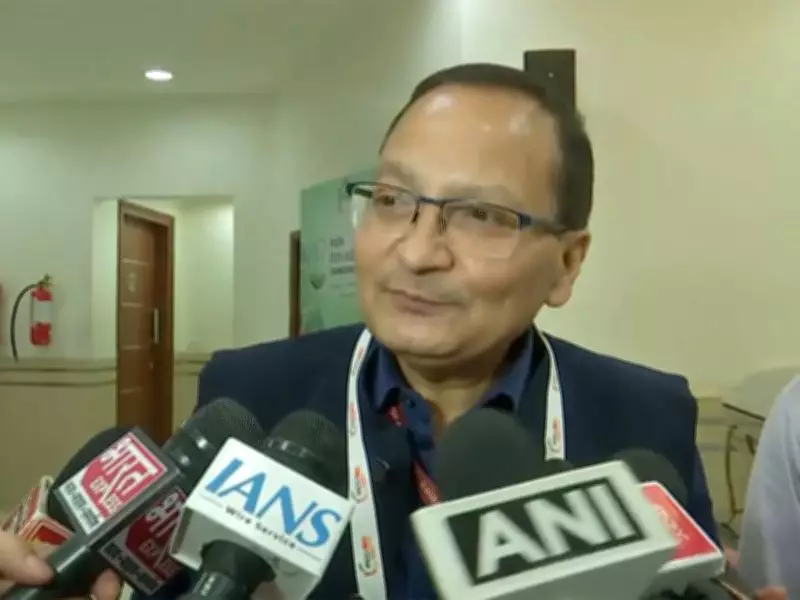
India's Agriculture Commissioner PK Singh announced that district-level monsoon contingency plans are ready, based on India Meteorological Department (IMD) inputs, to address a 40% rainfall deficit so far. The plans will be implemented wherever and whenever rainfall conditions necessitate them.
El Nino Conditions and Irrigation Infrastructure
Singh noted that current conditions resemble the 2015 El Nino, but India's expanded irrigation network and healthy foodgrain stocks leave it well-placed to handle any crop shortfall. Since 2015, irrigation facilities have increased significantly across the country.
"Conditions are similar to the El Nino of 2015, but our irrigation infrastructure has expanded significantly since then," Singh said. "We have ample reserves. Stocks of rice and wheat are very healthy."

Food Security and Imports
On food security, Singh underlined that buffer stocks are comfortable. "Your rice wheat bhandar is very good. Chana was a very good crop this time. The bhandar is also very good. Where there is a shortage, it will be seen. If there is a need to import, it will be imported. Taur has been imported before. If there is a need this time, it will happen," he said.
Shifts in Cropping Patterns
Singh pointed to a positive shift in cropping patterns due to delayed or deficient rain. Farmers are moving towards less water-intensive pulses and oilseeds. "If the condition of dryness is a little monsoon delay, then the pulses shift. Since it is a crop that takes less water for a short duration, it has a little increased area. In comparison to last year, this year the area is still increased. Especially in places like Moong. The area has increased a lot. The area in oil seed has also increased," Singh said.
Fertilizer Management and Future Forecasts
The Agriculture Commissioner said the IMD's second monsoon forecast will come on 27-28 July, which will clarify the season's trajectory. On fertilizers amid the West Asia crisis, Singh said the focus remains on integrated nutrient management and stopping excess diversion. With soil health cards in place, farmers are being guided to use inputs based on soil tests, and crop diversification itself reduces fertilizer demand.
"If 125 kgs of nitrogen is required in corn, then 12.5 kgs of Kewal is required far away. Or 25 kgs is required in soybean," he noted. Missions for pulses, oilseeds and cotton are pushing farmers towards lower-input crops, while rice areas with high water and nutrient demand are being reviewed for diversion.