

India Enters New Fiscal Era with Debt-to-GDP Target of 55.6% for 2026-27
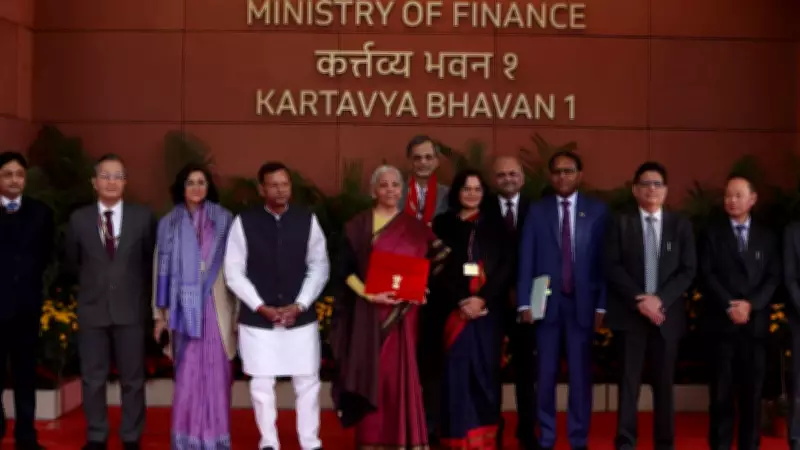
In a significant shift in fiscal policy, the Indian government has announced a debt-to-GDP target of 55.6% for the financial year 2026-27, marking a departure from over two decades of focusing primarily on reducing the fiscal deficit. This move, unveiled by Finance Minister Nirmala Sitharaman during the Union Budget presentation in Parliament, sets a new benchmark for the country's economic management.
Strategic Pivot in Fiscal Anchoring
The transition to debt-to-GDP as the key fiscal indicator comes after extensive deliberation and was initially proposed last year. According to Sitharaman, this approach aims to gradually free up resources for priority sector expenditure by reducing the burden of interest payments. The target for 2026-27 represents a slight reduction from the current year's ratio of 56.1%, based on an assumed nominal GDP growth of 10%, which would bring the economy to approximately Rs 393 lakh crore.
However, this target is slightly higher than economists' expectations, which had hovered around 55%. The government has also outlined a medium-term goal of achieving a debt-to-GDP ratio of 50% by 2030-31, with a flexible band of 49-51% to accommodate economic uncertainties.

Fiscal Deficit and Borrowing Dynamics
Despite the new focus, the fiscal deficit remains a critical component of fiscal policy. Sitharaman confirmed that the Centre has successfully met its fiscal deficit target of 4.4% of GDP for 2025-26. For the upcoming year, the government has set a fiscal deficit target of 4.3% of GDP, which the Finance Minister described as a responsible and realistic number.
To finance this deficit, gross government borrowing is projected to increase sharply to Rs 17.2 lakh crore in 2026-27, up from Rs 14.61 lakh crore in the previous year. This rise is partly driven by significant debt repayments due next year, amounting to Rs 5.47 lakh crore, as per Reserve Bank of India data. After accounting for these repayments, net borrowing is estimated at Rs 11.73 lakh crore, slightly higher than the current year's Rs 11.33 lakh crore.
Impact on Interest Payments and Expenditure
The high level of public debt has long been a concern for global ratings agencies, citing it as a barrier to improved sovereign ratings that could lower borrowing costs. In 2026-27, interest payments on existing debt are expected to rise from Rs 12.74 lakh crore to Rs 14.04 lakh crore, consuming a substantial 26% of the government's total projected expenditure of Rs 53.47 lakh crore.
This highlights a critical challenge: interest payments will surpass the Centre's capital expenditure target of Rs 12.22 lakh crore for next year, potentially limiting investments in productive areas such as infrastructure and social sectors.
Expert Perspectives and Global Context
Christian de Guzman, Senior Vice President at Moody's Ratings, noted that the Budget leaves India's sovereign credit profile largely unchanged, with no significant progress expected on debt reduction in the near term. He pointed out that the proposed reduction in the fiscal deficit is minor and remains wider than levels seen during the government's first term.
The Economic Survey for 2025-26, presented earlier, emphasized that the debt-to-GDP target provides a concrete commitment with specific timelines while allowing flexibility to adjust fiscal policy in response to volatile global conditions. Reflecting this uncertainty, the Budget documents did not provide rolling targets for the debt-to-GDP ratio for the next two years, citing geopolitical and geoeconomic risks.
Future Outlook and Challenges
Looking ahead, the Centre's debt repayments are projected to rise further, reaching Rs 9.06 lakh crore by 2030-31. This underscores the importance of the new debt-to-GDP framework in ensuring sustainable fiscal management. Sitharaman emphasized a gradual approach to fiscal consolidation, stating that drastic changes could harm certain sectors, and a steady pace is essential for economic stability.

The shift to debt-to-GDP targets represents a nuanced strategy to balance fiscal prudence with growth imperatives, as India navigates a complex global economic landscape. This policy evolution aims to enhance transparency and long-term planning, though its success will depend on effective implementation and adaptability to emerging challenges.





