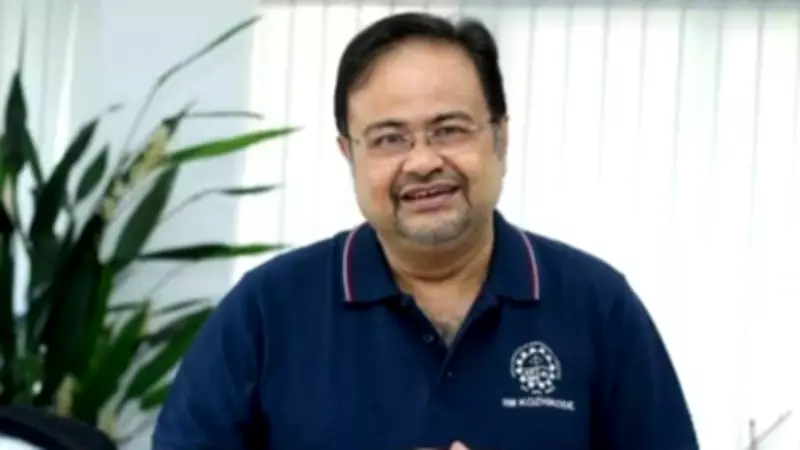
IIM Kozhikode Director Forecasts Major Capital Redistribution from West Asia Conflict
In a significant economic analysis, Debashis Chatterjee, the Director of the Indian Institute of Management (IIM) Kozhikode, has projected that the ongoing conflict in West Asia is set to trigger a widespread dispersion of global economic power centers. This geopolitical turmoil, according to Chatterjee, could lead to a substantial shift of capital away from the volatile Gulf region, with India emerging as a prime beneficiary due to its unique advantages.
India's Strategic Advantages in a Turbulent Global Landscape
Chatterjee emphasized that India's position as a relatively safer country with a stable political environment makes it an attractive destination for investors seeking security. He highlighted three core strengths that position India favorably:
- A Vast and Growing Market: With over 1.4 billion people, India offers immense consumer potential and domestic demand, providing a resilient economic base.
- Abundant and Skilled Labour Force: The country's demographic dividend, including a young and increasingly educated workforce, supports productivity and innovation.
- Rapid Technological Progress: Advances in digital infrastructure, fintech, and IT services enhance India's competitiveness on the global stage.
Implications of Capital Flight from the Gulf Region
The conflict in West Asia has created uncertainty in traditionally capital-rich areas like the Gulf, prompting investors to reassess risk. Chatterjee noted that this could accelerate a trend of capital diversification, where funds are redirected to more stable economies. India, with its robust economic policies and growth trajectory, stands to gain from this redistribution, potentially boosting sectors such as:

- Infrastructure development
- Technology and startup ecosystems
- Manufacturing and export industries
Broader Economic Shifts and Global Power Dynamics
This analysis underscores a larger transformation in global economic geography. As power centers become more dispersed, nations with strong fundamentals like India may see increased foreign direct investment (FDI) and enhanced geopolitical influence. Chatterjee's insights suggest that the West Asia conflict could serve as a catalyst for redefining economic alliances and investment patterns worldwide.
In summary, the IIM Kozhikode Director's remarks highlight a pivotal moment where India's safety, market size, labor force, and technological advancements position it to capitalize on capital shifts driven by regional conflicts, potentially reshaping its role in the global economy.