

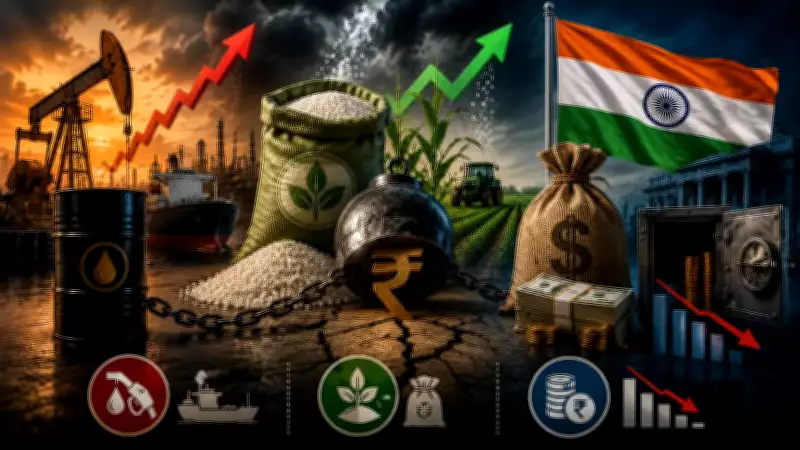
India is focusing on the 3Fs: fuel, fertilisers, and foreign exchange (forex). The US-Iran war has put the global economy at risk, and India is vulnerable due to its external dependencies for crude oil and fertilisers. A large portion of the population depends on agriculture, which requires fertilisers. Fuel powers economic growth and daily life.
Finance Minister's Call
Finance Minister Nirmala Sitharaman recently urged the country to focus on fuel, fertiliser, and foreign exchange, emphasizing that Prime Minister Narendra Modi's appeal to conserve foreign exchange was "very important" amid the Middle East conflict. She stressed that the 3Fs should be viewed in this context.
Why Are the 3Fs Important?
Fuel
India imports over 85% of its crude oil needs, much from the Middle East. The US-Iran conflict has led to skyrocketing global crude oil prices and supply constraints due to the closure of the Strait of Hormuz. Petrol, diesel, CNG, and LPG prices have risen, with the government losing over Rs 1 lakh crore annually from excise duty cuts. Higher crude prices increase the import bill, fuel inflation, and impact growth.

DK Srivastava, Chief Policy Advisor at EY India, notes that even after resolution, supply and price normalization may take two to three quarters. India's near 90% dependence on imported crude makes it vulnerable, with higher prices putting pressure on forex reserves.
Fertilisers
India imports a significant portion of its fertiliser needs, including DAP, potash, and NPK. The Middle East supplies about 50% of India's DAP and urea imports. Supply constraints via the Strait of Hormuz come ahead of monsoon season, exacerbated by El Nino predictions. Fertiliser prices have surged, with urea up 120% since the conflict began. The government's fertiliser subsidy bill could reach Rs 3.8 lakh crore, more than double the budgeted amount.
DK Srivastava explains that India's import dependence for fertilisers averages about 31%, and in 2026-27, vulnerability is material due to a likely below-normal monsoon from severe El Nino.
Forex
India's forex reserves, with an import cover of around 11 months, are under pressure from a falling rupee and higher import bills. Net portfolio investment was negative at $16.7 billion in 2025-26, and net FDI was negative from August 2025 to January 2026. PM Modi appealed to citizens to avoid buying gold to conserve forex. RBI Governor Sanjay Malhotra stated that as of May 29, 2026, reserves stood at $682.3 billion, but they have fallen from an all-time high.
How the 3Fs Interconnect
Dependency on fuel and fertilisers leads to higher forex outflow due to rising global prices, pressuring forex reserves and potentially triggering a vicious cycle. High fuel prices with a depreciating rupee further deplete reserves, leading to more depreciation. Government subsidies increase, and inflation rises, lowering growth.
DK Srivastava warns of a vicious cycle: higher crude and fertiliser prices, rupee depreciation, inflation, lower growth, and higher current account and fiscal imbalances.
Structural Risks
Economists are divided on structural risks. Vivek Kumar of QuantEco sees no structural risk yet, citing India's policy experience and ongoing measures like trade diversification and internationalization of the rupee. However, DK Srivastava cautions that the world trade order is undergoing structural changes, with higher tariffs and restrictions. India should build strategic reserves and augment domestic capacity for crude oil and fertilisers.
Ranen Banerjee of PwC India views these as structural challenges, requiring policy measures like diversifying energy mix and enhanced fertiliser production from coal gas.
The government has eased taxation on bonds and announced measures to attract foreign capital. Imports of gold and silver have been disincentivized. If these yield results, India can handle rising crude and fertiliser bills. Long-term steps include building strategic fuel reserves and reducing fertiliser import dependency.






