

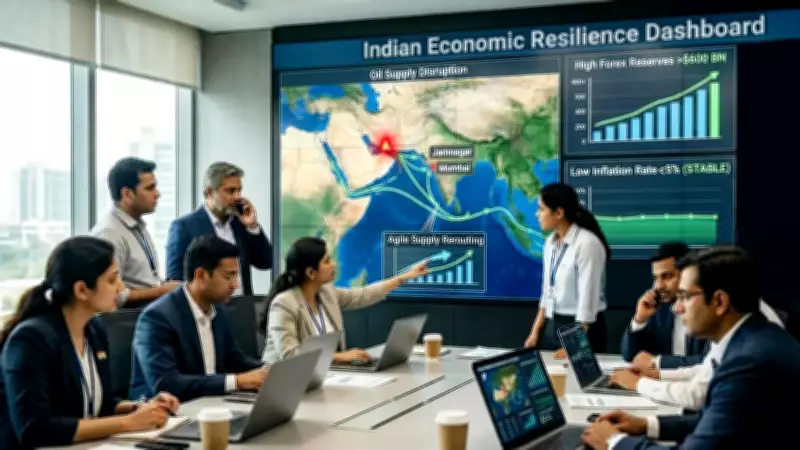
India's Economic Resilience Tested by Iran War Fallout
The so-called "goldilocks moment" for India's economy appears to have vanished, according to economic analysts. The ongoing conflict involving Iran has introduced substantial turbulence into India's economic landscape, with immediate effects visible across multiple sectors.
Energy Import Challenges and Currency Depreciation
India's import bills for oil and gas have been climbing steadily amid significant supply uncertainties stemming from the war. This energy market disruption has created ripple effects throughout the economy, particularly impacting the Indian rupee's stability.
The rupee has depreciated by 3.5% in the single month since the Iran conflict began, and has weakened by a substantial 10% over the past year. This currency depreciation increases the cost of imports and creates inflationary pressures that could affect consumer spending and business investment decisions.

Official Economic Assessment and Growth Concerns
Anantha Nageswaran, India's chief economic adviser, has acknowledged that the war will result in "considerable downside to FY27 growth estimate of 7-7.4%". While he refrained from specifying the exact magnitude of this downward revision, his statement confirms official recognition of the conflict's economic impact.
The economic adviser's cautious assessment reflects growing concerns within government circles about how sustained conflict might affect India's economic trajectory in the coming fiscal year.
Global Financial Institutions Revise Forecasts
Leading global investment banks and rating agencies have responded to the developing situation with revised economic projections. These institutions have moved quickly to adjust their outlooks based on the war's implications for India's economy.
Goldman Sachs and Moody Analytics have both significantly downgraded their GDP growth forecasts for India. Their revised projections now hover around 5.9-6.1%, representing a substantial reduction from previous estimates and highlighting the severity of the economic impact anticipated from the ongoing conflict.
Broader Economic Implications
The combination of rising energy import costs, currency depreciation, and revised growth forecasts paints a challenging picture for India's economic management in the coming months. Policymakers will need to navigate these headwinds while maintaining economic stability and supporting growth in key sectors.
The situation underscores how geopolitical conflicts in distant regions can have immediate and tangible effects on emerging economies like India, particularly through energy markets and financial channels. As the conflict continues, economists will be closely monitoring additional indicators including inflation rates, trade balances, and foreign investment flows for further signs of economic stress.






