

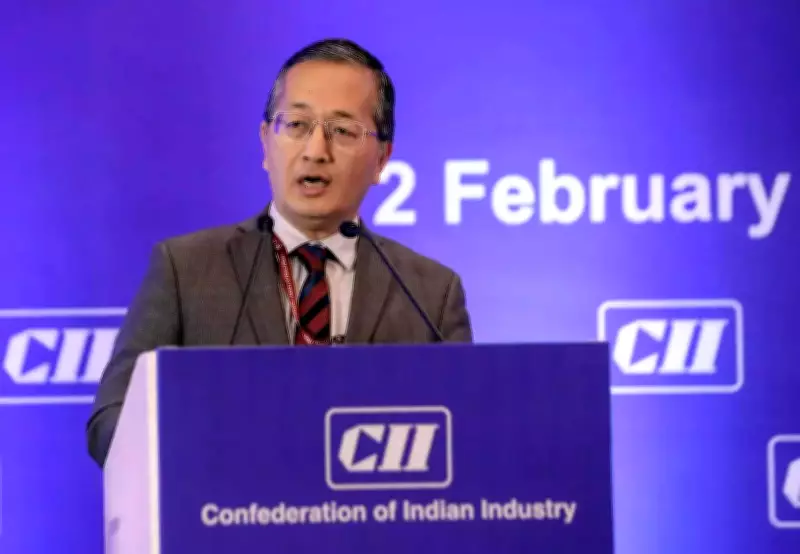
Fiscal Prudence Remains Central to Government's Spending Strategy
Expenditure Secretary V. Vualnam has underscored that maintaining fiscal discipline is a clear and unwavering priority for the government. Despite the inherent constraints of the Budget, the administration has successfully rolled out targeted support for critical sectors essential to India's economic growth.
Strategic Focus on Capital Expenditure Amidst Fiscal Constraints
When questioned about the overall strategy behind the spending plan and the flexibility to raise capital expenditure (capex) given committed outlays for salaries, pensions, and interest payments, Vualnam provided insightful clarity. The key point is that the focus on capex is clear, he stated. In the midst of global and domestic uncertainties, the importance of capex and infrastructure development is universally recognized.
He elaborated on the multiplier effect of such investments, noting how they positively impact all segments of the economy. This recognition underpins the government's commitment to not only continue but also increase capex allocations, aligning with this strategic line of thinking.

Navigating Committed Spending and Prioritizing Key Interventions
Addressing the reality of committed spending, Vualnam acknowledged that the constraint or tightness remains. However, he highlighted that within these limitations, the government has managed fairly well. The finance minister and the entire government have placed fiscal prudence at the forefront, enabling a focused approach to support priority sectors and interventions.
One notable example cited is the rare earth corridor, illustrating how strategic allocations are made to bolster critical areas despite budgetary pressures.
Infrastructure Development and Evolving Financing Models
When asked if infrastructure spending has peaked, given that targets were nearly but not fully achieved in the past two years, Vualnam refrained from a definitive yes or no. He emphasized that infrastructure creation is an ongoing necessity, with the Budget providing for capex. Importantly, financing structures are evolving, with new modalities emerging.
He pointed to the highways sector as a benchmark, where public-private partnerships (PPPs) have advanced significantly. The approximately Rs 2 lakh crore allocated is often supplemented or stretched through annuities, enhancing project execution. These are the benefits of this kind of collaboration, he noted, adding that such models improve not only financing but also construction quality, as stakeholders have a long-term interest in maintenance.
Absorptive Capacity and PPP Expansion in Railways
On the absorptive capacity in sectors like Railways and metro rail networks, Vualnam expressed confidence, particularly in railways. He highlighted transformative projects like the Dedicated Freight Corridor, which promises to double the average speed of freight trains, marking a significant leap forward.
The financing structure is shifting away from traditional engineering, procurement, and construction (EPC) contracts. Vualnam advocated for more PPPs in railways, stating, In Railways it should start. Once it starts it will move well. He praised the engineering expertise and operational bandwidth of the railways team, noting that a cabinet note on PPPs has already been prepared.
Potential Projects and Future Directions
Regarding the types of projects suitable for PPPs in railways, Vualnam indicated that it can be practically anything. Station development is identified as an immediate possibility, with immense potential given the high volumes of passenger and cargo traffic. Initiatives in Bhopal serve as a beginning, with valuable learnings expected to guide future endeavors, including plans for New Delhi station.
This approach reflects a broader strategy to leverage private sector efficiency and investment, ensuring sustainable infrastructure growth while adhering to fiscal prudence.






