

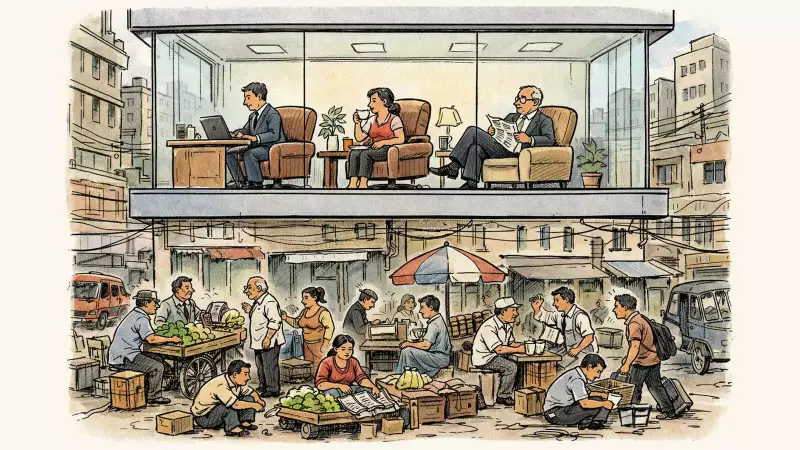
A recent analysis has revealed a stark and troubling picture of economic disparity in India, placing the country in an unexpected global league. The data shows that the chasm between the richest and the poorest has widened to levels not seen in modern history.
The Staggering Scale of the Divide
The core of the issue lies in two critical metrics: income and wealth. When it comes to annual earnings, the top 1% of Indians make approximately 150 times the income of the entire bottom 50% of the population. This figure alone paints a picture of profound imbalance. However, income is only part of the story.
The true measure of entrenched inequality is wealth—the accumulated assets and resources. Here, the gap becomes even more astronomical. The wealth held by the top 1% is a staggering 622 times greater than the total wealth of the bottom half of the country. This means the economic security and power concentrated at the very top vastly overshadows the collective holdings of hundreds of millions of citizens.

A Historical Low Point
Perhaps the most alarming aspect of this report is its historical context. Researchers indicate that this level of inequality has not been higher in at least the past two centuries. This suggests that contemporary India is experiencing peak economic disparity in its modern history, surpassing even periods under colonial rule or early post-independence eras.
The implications of such a deep divide are multifaceted, affecting social cohesion, economic mobility, and the overall health of the democracy. When such a vast portion of the population holds a minuscule share of the nation's wealth, it can lead to reduced consumer demand, limited investment in human capital, and increased social tension.
Looking Beyond the Numbers
While the numbers for income and wealth inequality are stark, they represent more than just statistics. They reflect access to quality education, healthcare, nutrition, and opportunity. A gap this wide can perpetuate cycles of poverty and limit the nation's overall growth potential by excluding a significant part of its population from the economic mainstream.
Addressing this challenge requires a multi-pronged approach focusing on job creation, equitable access to resources, and policies aimed at inclusive growth. The data serves as a crucial benchmark, highlighting an urgent need for economic strategies that ensure the benefits of development are shared more broadly across Indian society.






