India's Retail Inflation Accelerates in February on Food Price Pressures
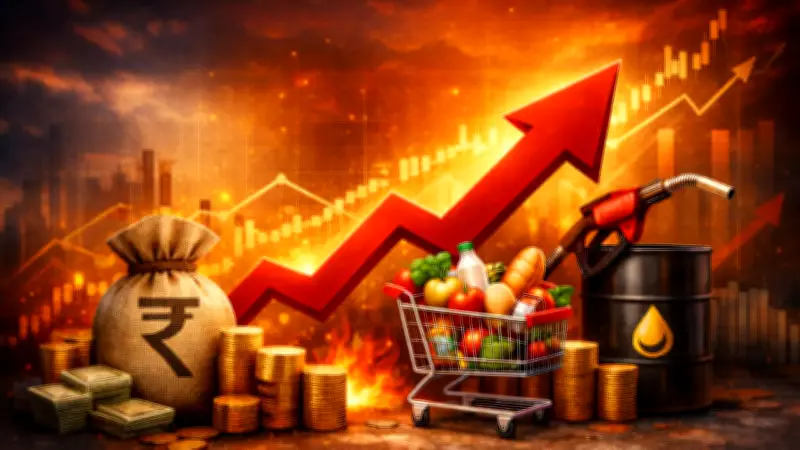
India's retail inflation experienced a notable uptick in February, primarily driven by escalating food prices, as per official data released on Thursday. The National Statistics Office (NSO) reported that inflation measured by the Consumer Price Index (CPI) rose to 3.21 per cent in February, marking an increase from 2.74 per cent recorded in January. Despite this rise, the headline inflation figure remains comfortably within the target range established by the Reserve Bank of India (RBI).
State-Wide Variations and Revised CPI Series
State-level data revealed significant disparities, with Telangana registering the highest inflation at 5.02 per cent, while Mizoram reported the lowest at a mere 0.1 per cent. The February inflation numbers are particularly significant as they represent the first calculation using the revised CPI series, which now employs 2024 as the base year, a methodology introduced just last month.
Under the government's mandate, the RBI aims to maintain inflation at 4 per cent, with a tolerance band of 2 percentage points on either side, ensuring economic stability. The current figures, though higher, still fall well within this acceptable range, indicating controlled inflationary pressures overall.

Food Inflation and Commodity Price Movements
Food inflation showed a pronounced sequential increase, climbing to 3.47 per cent in February from 2.13 per cent in January, according to the NSO data. This surge was attributed to accelerating prices of several key commodities, including silver, gold, diamond, and platinum jewellery, as well as essential food items like coconut-copra, tomato, and cauliflower.
However, not all food categories experienced price hikes. Items such as garlic, onion, potato, arhar, and litchi recorded disinflation during the period, providing some relief to consumers. Regionally, inflation was slightly higher in rural areas, which recorded 3.37 per cent, compared to urban centres at 3.02 per cent, reflecting varying economic conditions across different demographics.
Expert Analysis and Core Inflation Trends
Aditi Nayar, Chief Economist at ICRA, highlighted that the rise in inflation was largely concentrated in food categories. She noted, "The uptick in inflation was almost entirely led by the food and beverages (F&B) segment, which accounted for as much as 44 bps of the 47 bps rise in the headline print between these months." This underscores the dominant role of food prices in driving the overall inflation figure.
Core inflation, which excludes volatile components such as food and beverages, electricity, gas, and other fuels, remained unchanged at 3.4 per cent between January and February. This stability suggests that underlying price trends remain moderate, despite the headline increase.
Future Outlook and Monetary Policy Implications
Sujan Hajra, Chief Economist & Executive Director at Anand Rathi Group, commented on the data, stating, "CPI inflation edged up to 3.2% in February from 2.7% in January, led largely by food, with food inflation rising to 3.5% from 2.1%. Core inflation, however, remained broadly stable at 3.4%, indicating that the underlying price trend remains moderate."
He further added, "The recent spike in oil and gas prices raises some upside risks to inflation in the coming months. However, these pressures are likely to be transitory. If anything, the RBI may respond with a more accommodative liquidity stance to smoothen financial market volatility arising from geopolitical uncertainties. The latest inflation print may nevertheless have mildly negative near-term implications for the debt, equity, and foreign exchange markets."
According to ICRA's estimates, movements in crude oil prices could significantly influence future inflation trends, adding an element of uncertainty to economic forecasts. The next meeting of the Monetary Policy Committee of the Reserve Bank of India is scheduled for April 6–8, where these inflation dynamics will likely be a key topic of discussion, potentially shaping monetary policy decisions in the near term.