

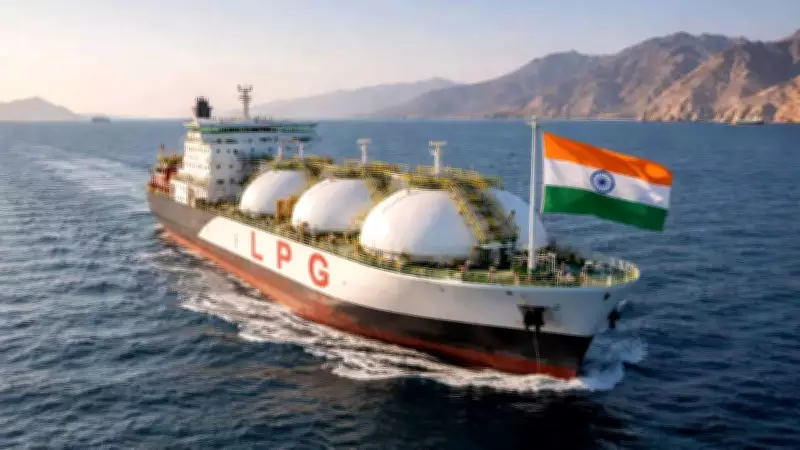
India Grapples with Severe LPG Crisis Amid Middle East Conflict Disruptions
India is confronting one of its most severe Liquefied Petroleum Gas (LPG) crises in decades, as disruptions stemming from the ongoing Middle East conflict ripple through global energy supply chains and begin to impact domestic availability. With imports slowing, prices rising, and distribution systems under strain, the government has moved to prioritize household supply, cutting allocations for industries and commercial users. This has resulted in widespread panic buying, long queues outside gas agencies, and mounting anxiety across multiple states.
Widespread Panic and Disruption Across Major Cities
Across cities such as Delhi, Gurgaon, Mumbai, Kolkata, Lucknow, and Chennai, long queues outside LPG distribution centers have become a common sight. Women carrying empty cylinders, elderly residents, and office-goers are waiting for hours to secure refills. The shortage has triggered panic buying, with consumers rushing to book cylinders through mobile apps, websites, and IVRS systems, overwhelming booking platforms. Many reported technical glitches, including system crashes or "server down" messages, forcing people to visit agencies in person.
At the peak of the crisis last week, several restaurants temporarily shut down after running out of LPG stocks. Small businesses, especially those dependent on commercial cylinders, have been hit the hardest. Meanwhile, induction cookers have seen a surge in demand as households seek alternatives. Although the Centre maintains that domestic LPG supplies remain adequate, disruptions in commercial cylinder distribution and reports of shortages have created widespread concern.

Root Causes: Middle East Tensions and Supply Chain Vulnerabilities
The current crisis can be traced back to early March 2026, when military strikes by the United States and Israel on Iran escalated tensions in the region. In response, Tehran effectively tightened control over the Strait of Hormuz, a crucial shipping route through which a significant portion of the world's energy supplies pass. For India, the impact has been immediate, as a large portion of the country's LPG imports from the Middle East pass through this narrow corridor. Any disruption to traffic through Hormuz directly affects India's supply chain.
India consumed about 31.3 million metric tonnes of LPG last year, with imports accounting for around 60–65% of total demand. Of this, nearly 87% is used in household kitchens, while the rest goes to commercial establishments such as hotels and restaurants, according to Reuters. The crisis has highlighted India's heavy dependence on LPG imports, a structural vulnerability that has grown over the years.
Import Dependence and Storage Limitations Exposed
Data from the Petroleum Planning and Analysis Cell (PPAC) shows a wide gap between domestic production and consumption. In the first half of FY 2025–26, India produced 6,219 thousand metric tonnes (TMT) of LPG, while consumption stood at 16,200 TMT. Imports filled the gap at 10,731 TMT, translating into an import dependency of around 62%. Over the long term, LPG imports have surged dramatically, from just 1,722 TMT in 1998–99 to over 20,667 TMT in 2024–25, a nearly 12-fold increase.
Another key weakness exposed by the crisis is India's limited LPG storage capacity. Unlike crude oil, LPG is difficult and expensive to store, requiring specialised infrastructure such as pressurised cylinders, spherical tanks, and underground caverns. India's total LPG storage capacity is estimated at around 1.9 million tonnes, equivalent to roughly 22 days of supply. High infrastructure costs and geological constraints have limited expansion, making the system vulnerable to disruptions.

Price Hikes and Black Marketing Emerge
The crisis has led to a rise in prices, with domestic LPG cylinder rates increased by Rs 60 recently and commercial cylinder prices rising by Rs 114.5 nationwide. As of March 16, 2026, a 14.2 kg domestic LPG cylinder in New Delhi costs Rs 913, up from Rs 853 earlier. However, consumers report that availability is a bigger issue, with commercial LPG cylinders reportedly being sold on the black market for nearly double the normal price. Cylinders that typically cost around Rs 1,400 are being sold for as much as Rs 3,000, pushing many small businesses to the brink.
Government Interventions and Recovery Efforts
In response, the government has taken several measures to stabilise supply and minimise disruption. Refineries have been directed to maximise LPG production and divert hydrocarbon streams away from petrochemical feedstocks. The government has also invoked provisions under the Essential Commodities Act to prioritise household consumption, with supplies prioritised for households, hospitals, and educational institutions, while commercial use has been restricted.
India is also working to recover stranded shipments, with 24 Indian-flagged vessels, including LPG carriers, stranded in the Persian Gulf due to disruptions. Two ships, Shivalik and Nanda, have already reached India, while others such as Pine Gas and Jag Vasant are expected to arrive shortly. Rajesh Kumar Sinha, a senior official in the shipping ministry, noted that five tankers carrying 230,000 metric tonnes of LPG are currently in the Strait of Hormuz, with efforts underway to ensure safe passage.
Government Reassurances and Push for Alternatives
Despite the disruptions, the government has repeatedly assured that there is no shortage of LPG for households. The petroleum ministry dismissed reports about changes in refill booking timelines as false, stating that existing systems remain unchanged. Sujata Sharma, joint secretary in the ministry of petroleum and natural gas, emphasised that refineries are operating at high capacity with adequate crude inventories, and domestic LPG production has been stepped up.
Prime Minister Narendra Modi described the situation as "worrisome," noting that the Middle East conflict zone is an important route for India's trade. He highlighted that India imports 60% of its LPG needs and that the government is prioritising domestic supply while increasing production. Amid the crisis, the government is accelerating efforts to promote piped natural gas (PNG) as an alternative, with states urged to fast-track approvals and reduce charges to expand coverage.
Broader Economic Concerns and Future Outlook
Experts warn that if the Middle East conflict continues, consequences could extend beyond LPG shortages. A report by Morgan Stanley indicated that supply disruptions could impact multiple sectors across Asia, including manufacturing, agriculture, and transport. The crisis underscores a deeper structural issue in India's energy landscape: heavy reliance on imports routed through geopolitically sensitive regions. While diversification efforts are underway, including increased sourcing from the US and other regions, supply chains remain vulnerable to global shocks.
For millions of Indian households, the crisis is immediate, defined by rising prices and uncertain supply. As tensions in the Middle East continue into their fourth week, the coming days will be critical in determining how India works to stabilise supplies and address long-term energy security challenges.





