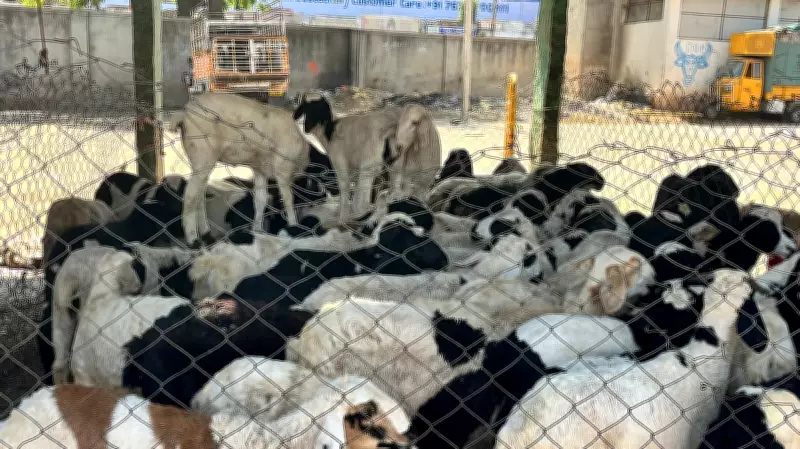
The acute mutton shortage in Kashmir has officially ended after the Punjab government revoked the 4 per cent tax imposed on vehicles transporting livestock through the state. The decision, announced on 3 July 2026, comes after weeks of severe supply disruptions that sent mutton prices soaring across the Kashmir Valley.
Tax Revocation Brings Immediate Relief
The Punjab government's withdrawal of the 4 per cent tax on livestock-carrying vehicles has restored the flow of sheep and goats into Kashmir. Local traders and butchers reported that supply chains resumed within hours of the announcement, with trucks once again moving freely from Punjab's livestock markets to Srinagar and other districts.
According to the Jammu and Kashmir administration, the tax had been imposed by Punjab in late June 2026, causing transporters to halt operations as the additional cost made shipments unviable. The resulting shortage led to mutton prices rising by over 40 per cent in some areas, with retail rates exceeding Rs 800 per kilogram in Srinagar.

Impact on Kashmir's Meat Market
Kashmir relies heavily on livestock imports from Punjab, which supplies nearly 70 per cent of the region's mutton. The tax disruption created a ripple effect, with local slaughterhouses operating at reduced capacity and many families forced to substitute mutton with chicken or fish.
“The revocation is a huge relief for both traders and consumers,” said Mohammad Shafi, a meat seller in Srinagar's Nowhatta area. “We were losing customers daily because of the high prices. Now supply is back to normal.”
The crisis also affected the wedding season, where mutton dishes are a staple. Several event caterers reported cancellations or menu changes due to the unavailability and high cost of meat.
Government Response and Future Measures
The Punjab government stated that the tax was withdrawn after discussions with the Jammu and Kashmir administration and transporters' associations. A spokesperson for the Punjab finance department said the tax was intended to generate revenue for road maintenance but acknowledged the unintended consequences.
“We have decided to revoke the tax effective immediately to ensure the smooth supply of essential commodities to our neighbouring state,” the spokesperson said. “We will explore alternative revenue sources that do not disrupt inter-state trade.”
The Jammu and Kashmir administration has also formed a committee to monitor livestock supply and prevent similar disruptions in the future. Officials said they are working on a long-term agreement with Punjab to ensure stable transport conditions.
Economic and Social Ramifications
The mutton crisis highlighted the vulnerability of Kashmir's food supply chains, which depend heavily on imports from other states. Local economists noted that the region produces only about 30 per cent of its mutton needs, making it susceptible to policy changes in exporting states.
With the tax removed, traders expect prices to stabilize within a week. The wholesale price of mutton in Kashmir has already dropped by 15 per cent since the announcement, and retail rates are predicted to return to pre-crisis levels of around Rs 550-600 per kilogram.
The resolution has been welcomed by consumer groups and political leaders in Kashmir, who had urged both state governments to resolve the issue quickly. The episode serves as a reminder of the interconnectedness of regional economies and the need for coordinated policies on essential goods.