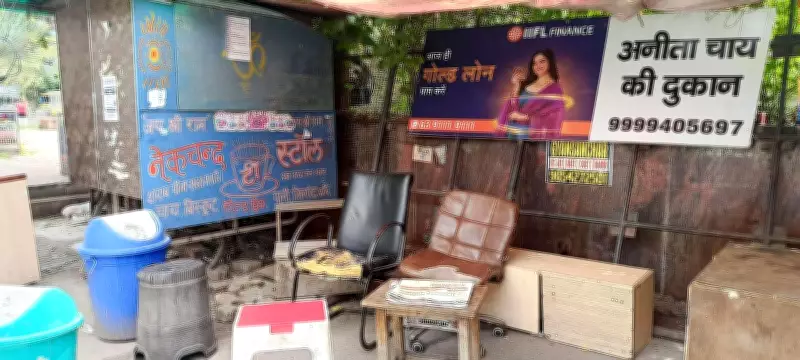
LPG Supply Crunch Forces Street Vendors in Noida and Ghaziabad into Desperate Measures
In the bustling streets of Noida and Ghaziabad, a severe LPG supply crisis has plunged small food vendors into a dire struggle for survival. The disruption, which began in March, has left many facing impossible choices between keeping their businesses afloat and ensuring their families are fed.
Personal Stories of Hardship and Adaptation
Nand Lal, a tea and cigarette seller in Noida's Sector 57, saw half his business vanish when his gas cylinder ran out on March 15. With his usual black market supplier unable to help, he resorted to using his domestic cylinder at the shop. "If I am not selling tea, consider my shop closed," he lamented. After exhausting that cylinder by March 20, he only secured a replacement this month, highlighting the precarious nature of his livelihood.
Similarly, Rajkumar, a chhole bhature vendor in Khoda Colony, made the opposite choice. When commercial LPG supplies tightened, he shut his shop for 15 days and took his cylinder home to cook for his children. "When the crisis began, I had to choose between feeding my children at home or running the cart. I used up my savings in those 10 days," he shared, noting that this situation feels worse than the Covid-19 pandemic because at least then their kitchens were operational.

Widespread Impact and Innovative Solutions
The crisis has forced numerous vendors to adapt in creative yet costly ways:
- Many have shifted to alternative fuels like coal-fired stoves or machine oil burners. Coal prices have surged from Rs 15 to Rs 25 per kilogram, with vendors burning about 20kg per shift, significantly raising daily expenses.
- RK Gupta of "Gupta Ji Ke Mashoor Parathe" in Sector 57 invested Rs 25,000 in a machine oil stove to continue serving lunch. Owner Hari Gupta explained, "The flame is slower and lighter than gas, but for parathas this is the only workable option."
- Raju Sahu, another vendor in Sector 57, has been cooking on a coal kiln for 20 days, a first in his 15-year career. "Cylinder prices went up to Rs 4,000. We had no option but to move to coal," he stated.
Some vendors have even left their businesses entirely. In Film City, Sector 16A, a paratha seller returned to his village in Bihar after struggling without gas, as parathas cannot be made on wood or cow dung. Pawan, a neighboring tea stall owner, recalled the gradual decline, "He somehow managed for a week, then shut shop and went back."
Financial Strain and Price Adjustments
The financial toll is severe, with many vendors absorbing rising costs or increasing prices to stay afloat:
- Adarsh, who runs a bhojanalaya cart in Sector 57, raised his thaali prices, calling this crisis worse than Covid-19 due to the added pressure on kitchens.
- Shrikant, a poha seller in Sector 18, now pays Rs 400 per kg for refills, up from Rs 50 per kg. He increased plate prices from Rs 20 to Rs 30, but it barely covers daily expenses.
- Vendors noted that 5kg cylinders are too expensive at Rs 1,581, making them unaffordable in times of crisis.
Limited Alternatives and Official Response
Few vendors have access to reliable electricity, limiting transitions to electric alternatives. Ashok, a stall owner, replaced his gas stove with an electric coffee machine, saying, "We had an electricity connection, so I switched. I couldn't manage to get LPG." However, most roadside vendors lack such options.
Official data indicates that demand surged sharply in recent weeks, with supply now stabilizing unevenly. In Ghaziabad, bookings have eased to around 30,000, with 20,000-25,000 cylinders delivered daily and a turnaround time of 48-50 hours. In Noida, supply has increased to roughly 23,000 a day, but bookings remain high at around 48,000, with similar delivery timelines.
Adding to the constraints, applications for new domestic LPG connections have been paused since March 14, and agencies are instructed to keep at least 50 small cylinders in stock for emergencies.
This crisis underscores the vulnerability of street vendors, who feed many but remain on the frontline of such disruptions, improvising ways to sustain their businesses and families amidst ongoing challenges.