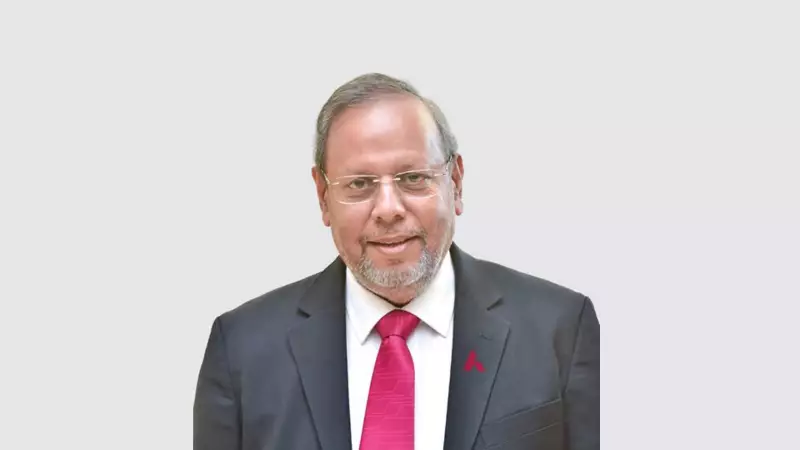
The Chairman of the Economic Advisory Council to the Prime Minister (EAC-PM), S Mahendra Dev, has made a compelling case for the simultaneous growth of India's manufacturing and services sectors, stating they are complementary and not in competition. His comments, made during the first day of the Delhi School of Economics' Public Policy Conference, directly address an ongoing debate on India's economic priorities.
Dev countered the view, notably held by former RBI Governor Raghuram Rajan, that India should focus more on services. "I feel that both are needed, both are complementary," Dev asserted. He elaborated that the services sector itself requires an expanding manufacturing base to sustain its growth, highlighting the "backward and forward linkages" between the two.
Defending Manufacturing's Performance
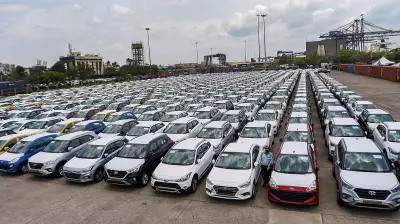
In his speech, Dev strongly defended the performance of the Indian manufacturing sector against claims of stagnation. He acknowledged that the sector's share in the GDP has remained around 17 percent, with employment at about 11 percent. However, he argued that focusing solely on these relative shares is misleading.

"It is not stagnant," Dev stated, pointing to absolute growth figures. He revealed that the manufacturing sector has grown from Rs 17 trillion to Rs 30 trillion over the last decade, marking a 75 percent increase in absolute terms. He also noted that manufacturing employment has risen to approximately 72 million people.
The Services Duality and Formalization
Commenting on the services sector, which accounts for about 50 percent of India's real GDP, Dev highlighted its dual nature. The sector encompasses high-skilled professions like information technology as well as low-skill occupations such as roadside vendors.
This duality, according to Dev, underscores the critical importance of formalisation within the sector to ensure better regulation, security, and growth.
Vision for a Developed India 2047
On the government's ambitious goal of making India a developed nation by 2047, known as the Viksit Bharat mission, Dev emphasized that the objective extends beyond just achieving a high growth rate. He stated that the growth must be inclusive, sustainable, and climate resilient.
For Dev, "inclusive growth is the quality of employment." He elaborated on the challenges, including the rise of gig workers, low female labour force participation rates, and the potential impact of Artificial Intelligence (AI) on jobs.
Despite these challenges, he remained optimistic, suggesting that AI could be a net positive if it leads to upskilling. "It may replace the low-skilled people but it can increase the high-skilled employment," he said. He also identified potential for boosting labour-intensive manufacturing in sectors like garments.
The debate on economic strategy was further contextualized by referencing Raghuram Rajan's past criticism of large subsidies for manufacturing, such as the Production-Linked Incentive (PLI) scheme. Rajan has argued that such funds could be better deployed in education and services.
Nevertheless, the government continues to aim for a 25 percent GDP share for manufacturing by 2035, a significant increase from the current 16 percent. The recent GDP data for the first quarter of 2025-26, which showed growth at a five-quarter high of 7.8 percent, featured a 7.7 percent expansion in manufacturing, while the services sector grew at a faster 9 percent.